
Blog
- Home
- Blog
Why Choose a Single Valve for Industrial Applications?
Choosing a single valve for an industrial application can simplify a system, but only when the valve matches its duty. In a crowded process line, fewer components may mean fewer joints, less installation space, and a clearer maintenance routine. The benefit is practical, not automatic.
Grand View Research’s Industrial Valves Market report estimated the global market at approximately USD 78.1 billion in 2023. It forecast a 4.8% compound annual growth rate from 2024 to 2030. That scale reflects the importance of valves across water, energy, chemical, and manufacturing operations. Yet market growth does not prove that one valve suits every process. A single valve can combine functions only when its design supports the required flow, pressure, temperature, and shutoff performance.
Details matter. The International Energy Agency’s Global Methane Tracker 2024 estimated that fossil fuel operations released about 120 million tonnes of methane in 2023. That figure is not specific to valve leakage, but it shows why equipment selection and leak management deserve careful attention in relevant facilities. A well-chosen valve may reduce connection points; it cannot replace sound installation, inspection, or maintenance.
The right choice starts with the process medium, operating range, failure position, and service access. Compare lifecycle needs, not just purchase price. One valve may reduce complexity. It may also become a single point of failure, so the design deserves a second look.
Understanding the Role of a Single Valve in Industrial Systems
Why Choose a Single Valve for Industrial Applications?
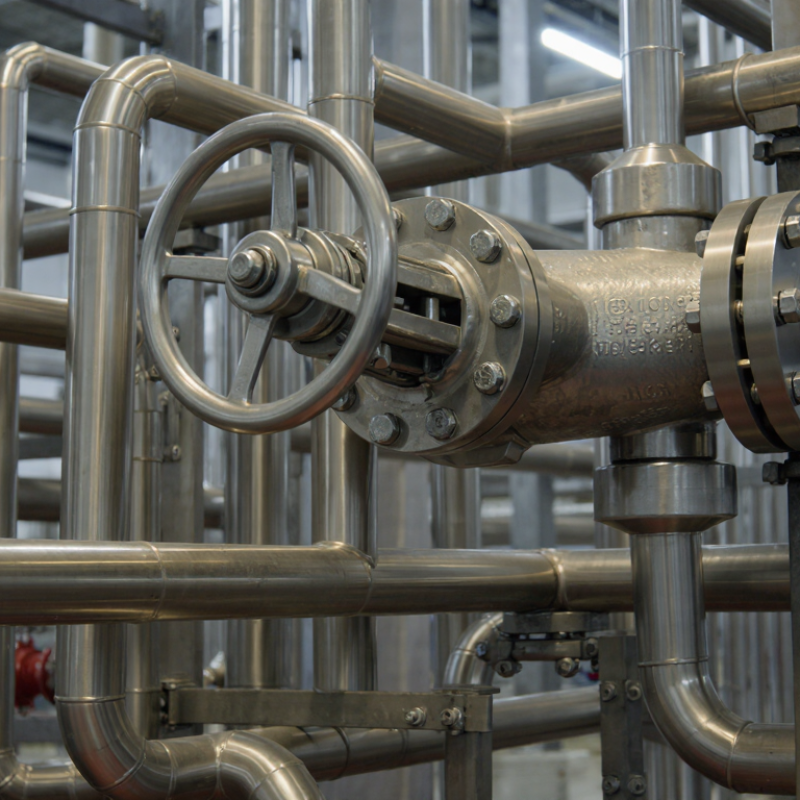
In an industrial system, a single valve is where process intent meets moving fluid. It may isolate a pump for maintenance, trim cooling-water flow, or stop backflow near a sensitive instrument. That small component matters. The U.S. Department of Energy’s 2012 sourcebook, Improving Steam System Performance, estimates that steam systems use about 30% of industrial energy. This is system-level context, not a valve-savings estimate. A leaking or poorly sized valve can add losses, but the report does not assign those losses to valves.
Valve selection also shapes how operators diagnose trouble. A clearly placed isolation valve lets a technician separate a line, check a strainer, and restore service without draining an entire loop. On compressed-air lines, isolation can help locate leaks. The DOE sourcebook Improving Compressed Air System Performance reports that compressed air accounts for about 10% of industrial electricity use, reaching 30% at some facilities. A valve alone will not deliver those savings. Pressure rating, fluid compatibility, flow range, and actuator response still need checking against actual conditions. A useful caution: engineers can focus on the valve body and overlook access, orientation, or a stuck handle. That is not a minor detail.
How a Single Valve Regulates Flow, Pressure, and Direction
A single valve can influence flow, pressure, and direction, but its exact role depends on its internal design. A spool valve, for example, shifts between ports to route fluid toward a cylinder or back to a reservoir. A throttling valve narrows the passage, changing flow rate and creating a pressure drop. These functions can work together in one assembly.
Watch the gauges. A pressure reading before and after the valve can reveal whether a restriction is causing an unexpected loss. At the same time, the actuator and valve position determine how much fluid passes through. Small changes matter. A slight spool movement may alter cylinder speed, while a different port connection can reverse its travel. In a real system, hoses, temperature, and contamination also affect performance.
One valve can reduce fittings and simplify a control panel, which helps during installation and troubleshooting. Yet compactness has limits. A valve selected to handle high flow may offer less precise adjustment at low flow. That trade-off is easy to miss on a clean schematic. Check the operating range, pressure rating, and required response before choosing a configuration; the best choice depends on the machine, not just the valve.
Key Benefits of Using One Valve in Industrial Applications
In a compact process line, choosing one well-specified valve for a defined duty can reduce complexity. Fewer valve bodies mean fewer joints, supports, and potential leak paths. That matters. Operators can learn one handwheel position or actuator response, while technicians keep a narrower range of seals and spare parts. During a shutdown, this can make inspection and replacement more predictable, especially where access is tight and isolation time matters.
A consistent valve arrangement can also simplify procurement and documentation. Maintenance records are easier to compare when the same design appears across similar lines, and training becomes more focused. Still, “one valve” should mean a suitable choice for each duty, not forcing one model into every service. A valve handling abrasive slurry faces different demands from one controlling hot steam or precise flow. Check pressure and temperature ratings, media compatibility, flow characteristics, and shutoff requirements against real operating data. Review failure history, too. Standardization may reduce inventory, but an overly narrow specification can increase wear or limit control.
Industries and Processes That Commonly Use Single Valves
Single valves serve practical duties across water treatment, chemical production, energy, and food processing. In treatment plants, operators use them to isolate pumps, filter housings, and dosing lines during maintenance. The United Nations World Water Development Report 2023 estimates that industry accounts for about 16% of global freshwater withdrawals. That scale helps explain why reliable shutoff points matter, even on modest utility lines.
Chemical facilities often use single valves to control or isolate flows between vessels, pumps, and transfer pipes. The International Energy Agency’s 2018 report, The Future of Petrochemicals, notes that chemicals production uses roughly 14% of global oil and 8% of global gas as feedstock. These demanding services require careful attention to fluid compatibility, pressure, temperature, and leakage risk. A valve suited to clean water may fail prematurely in a hot, corrosive process stream.
Power plants use valves on cooling-water, steam, and fuel systems, while food processors need cleanable equipment on ingredient and washdown lines. The details matter. Material choice, access for inspection, and the consequences of a leak should guide selection—not just pipe size. One limitation is easy to overlook: a single valve does not replace a complete isolation plan. Real operating conditions can also differ from design assumptions, so maintenance teams should verify performance in service.
Why Choose a Single Valve for Industrial Applications? - Industries and Processes That Commonly Use Single Valves
| Industry | Common Process or Service | Typical Single-Valve Type | Typical Function | Why a Single Valve May Be Suitable | Key Selection Consideration |
|---|---|---|---|---|---|
| Water and wastewater | Water distribution, treatment lines, and wastewater transfer | Gate, butterfly, or check valve | Isolates a line, regulates flow where appropriate, or prevents reverse flow | Many routine pipeline duties need a straightforward shutoff or flow-direction function. | Check pressure, flow conditions, water quality, solids content, and required shutoff performance. |
| HVAC and building services | Chilled-water, heating-water, and cooling-tower circuits | Ball, butterfly, or balancing valve | Isolates equipment or helps manage circulation and system balancing | A single valve can provide a practical isolation or balancing point at equipment and branch connections. | Confirm the valve is suitable for the fluid, operating temperature, pressure, and control duty. |
| Food and beverage processing | Transfer of water, ingredients, and cleaning solutions | Sanitary butterfly or diaphragm valve | Controls or isolates product and process lines | Simple valve arrangements can support accessible operation and routine cleaning in suitable process layouts. | Verify hygienic design, material compatibility, cleanability, and applicable sanitation requirements. |
| Pharmaceutical and biotechnology | Utility lines, process-fluid transfer, and clean-in-place circuits | Diaphragm or sanitary ball valve | Provides isolation or flow control in a defined process section | A single valve may be appropriate where the process design requires one isolation point and the valve meets cleanliness needs. | Assess cleanability, drainability, material suitability, validation needs, and the consequences of leakage. |
| Chemical processing | Transfer of compatible liquids, process water, and utility fluids | Ball, plug, diaphragm, or lined valve | Isolates or controls flow through process equipment and piping | One valve can simplify a line arrangement for services that do not require redundant isolation. | Check chemical compatibility, temperature, pressure, corrosion risk, and the required level of containment. |
| Oil and gas operations | Utility systems, non-critical transfer lines, and equipment isolation | Ball, gate, or globe valve | Provides shutoff or throttling, depending on valve design | A single valve can serve a defined duty where the system risk assessment and operating requirements permit it. | For hazardous service, confirm applicable codes, fire-safe requirements, emissions limits, and isolation procedures. |
| Power generation | Cooling-water, compressed-air, and auxiliary service lines | Butterfly, gate, globe, or check valve | Isolates equipment, regulates flow, or prevents reverse flow | Many auxiliary systems use individual valves at branches and equipment connections for routine operation and maintenance. | Account for service temperature, pressure, cycling frequency, and the system’s required reliability. |
| Mining and mineral processing | Slurry, process-water, and tailings lines | Knife-gate, pinch, or slurry-rated butterfly valve | Isolates or controls flow in services that may contain suspended solids | A suitable single valve can provide a compact isolation point where its design matches the abrasive or solids-laden medium. | Evaluate solids size, abrasion, erosion, blockage potential, and maintenance access. |
| Agriculture and irrigation | Irrigation mains, distribution branches, and pump connections | Gate, butterfly, or check valve | Shuts off a section, directs flow, or helps protect pumps from reverse flow | A single valve is often sufficient for simple branch isolation or flow-direction duties. | Consider water quality, debris, outdoor exposure, pressure variation, and seasonal operating conditions. |
| Compressed-air systems | Plant air headers, drops, and equipment connections | Ball or check valve | Isolates equipment or limits reverse flow | Individual shutoff points make it possible to service equipment without unnecessarily interrupting other branches. | Use valves rated for the system pressure and ensure isolation is supported by safe depressurization procedures. |
Note: A single valve is generally suited to a defined isolation, flow-control, or non-return duty. Critical, hazardous, or maintenance-sensitive services may require additional isolation, bleed arrangements, or other safeguards based on applicable codes and a documented risk assessment.
Factors for Selecting the Right Single Valve for an Application
Why Choose a Single Valve for Industrial Applications?
Factors for Selecting the Right Single Valve for an Application
Choosing a single valve starts with the job it must perform. Will it isolate a line, regulate flow, or prevent reverse movement? These duties call for different valve designs. A simple on-off valve may not control flow reliably. Write down the required function before comparing specifications. It sounds obvious, but this step is often rushed.
Next, match the valve to the process conditions. Record the fluid, operating pressure, temperature range, and expected flow rate. A hot, abrasive slurry places different demands on a valve than clean water. Check body and seal materials for compatibility, and confirm that pressure and temperature ratings cover normal operation and foreseeable fluctuations. A specification can look complete yet overlook startup conditions. Those matter.
Consider the installation, too. Measure the available space, connection type, and access for maintenance. Decide whether manual or automated operation is practical, and check how quickly the valve must respond. Ask what happens if power or instrument air is lost. Fit matters. Review leakage requirements, inspection needs, and the consequences of a valve sticking open or closed. No selection is perfect; a compact option may be harder to service, while a robust one may cost more than the duty requires. Confirm assumptions with process data and qualified engineering review before purchase.
Related Posts
-
China Top Single Valve Manufacturers for Global Buyers?
-
Exploring the Advantages of Single Valve Systems for Efficient Fluid Control
-
Understanding Single Valve Systems: The Key to Efficient Fluid Control in Modern Engineering
-
Top 10 Flow Valves Buyers Guide for Global Suppliers?
-
Why Choose Gate Valves for Your Industrial Applications?
-
How to Choose the Right T Valve for Your Plumbing System?

(780) 669-9420