
What is a Wafer Roll Machine and How Does It Work?

The Wafer Roll Machine is essential in the food industry. It produces thin and crispy wafers for various snacks. According to a recent market report by Mordor Intelligence, the global wafer market was valued at over $9 billion in 2022, with a steady growth projection. This highlights the importance of wafer production efficiency.

While the technology behind the Wafer Roll Machine is advanced, some operators still face challenges. Machine maintenance and quality control are often overlooked. A small error in temperature can lead to inconsistent wafer quality. Thus, it's crucial to regularly audit production processes to ensure standards.

Additionally, emerging trends in snack preferences push manufacturers to innovate. Health-conscious consumers demand lighter, more nutritious wafer options. Adapting the Wafer Roll Machine to meet these needs may require investment and technical reflection. Balancing tradition with innovation remains a constant struggle in this sector.
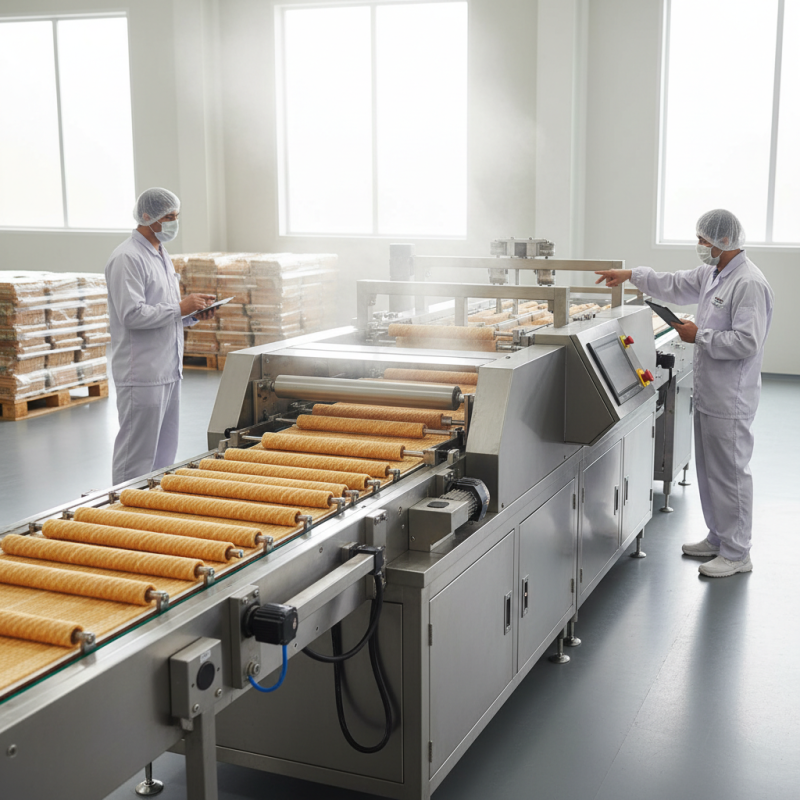
What is a Wafer Roll Machine and How Does It Work?

What is a Wafer Roll Machine?

A wafer roll machine is an innovative piece of equipment designed for creating wafer rolls. These delicious snacks are made from a thin batter formed into cylindrical shapes. The machine automates much of the process, making it efficient and consistent.

The operation begins with pouring the batter onto heated plates. These plates are preheated to ensure proper cooking. Once the batter is laid out, the heated plates start to cook it until it becomes golden brown. After this, the machine automatically rolls the cooked wafer into a perfect cylindrical shape. This is where precision is crucial; uneven rolling can lead to imperfect products.

Despite the automation, challenges still arise. For instance, adjusting the cooking time is essential. Too short may yield soft wafers, while too long could result in burnt edges. Operators need to monitor the process closely to guarantee quality. Ultimately, while wafer roll machines offer efficiency, a human touch is often still needed to achieve perfection.
Key Components of a Wafer Roll Machine

A wafer roll machine is an essential tool in confectionery production. Its key components include the dough mixer, forming section, baking plates, and cooling conveyor. Each part plays a crucial role in creating delicious wafer rolls. The dough mixer combines ingredients, ensuring the perfect texture. The forming section shapes the dough into delicate rolls.

Baking plates then heat the dough, giving it a crisp exterior. According to industry reports, these machines can produce over 2,000 wafer rolls per hour. That’s impressive efficiency for large-scale operations. After baking, rolls pass through a cooling conveyor to maintain their shape.

Tip: Regular maintenance of the baking plates can prevent uneven cooking and prolong the machine's lifespan. An overlooked aspect is the baking time. If too short, rolls may remain soft. If too long, they could burn. Adjust settings based on dough consistency and humidity. In the end, optimization and testing are key to achieving the best results in wafer production.

The Operating Principle of a Wafer Roll Machine

A wafer roll machine is designed to produce crispy and delicate wafer rolls. It operates on a relatively straightforward principle. The key elements include batter preparation, cooking, and rolling. The machine heats plates where the batter is poured. According to industry reports, the global wafer market has seen steady growth, projected to reach USD 5 billion by 2028.

The working process starts with mixing flour, sugar, and water to create a thin batter. This is poured onto heated plates. As the batter cooks, it becomes crispy and golden. The temperature is crucial; too high or too low can ruin the texture. After cooking, the wafer sheets are removed and quickly rolled into cylinders. This stage requires precise timing. If not done promptly, the wafers may become brittle and break.

Quality control is essential at every step. The final product should be uniform in size and texture. A variation in thickness can lead to uneven cooking. Moreover, the machine's maintenance plays a vital role. Regular cleaning prevents cross-contamination. Neglecting this can affect taste and quality. Industry standards emphasize cleanliness to ensure consumer safety. Keeping the machine in optimal condition is not just about productivity; it’s about reputation.

Wafer Roll Machine Production Efficiency

Common Applications of Wafer Roll Machines

Wafer roll machines play a crucial role in various sectors, especially in food production. The global wafer market is expected to reach $5.1 billion by 2025, highlighting the demand for efficient machinery. These machines are often used to produce wafer rolls, which serve primarily as snacks or dessert components. A significant portion of their applications can be found in ice cream parlors, bakeries, and restaurants, where they enhance the presentation of desserts.

In addition, wafer roll machines are found in the confectionery industry. They produce hollow wafers filled with cream or other mixtures. According to industry reports, the rise of snack consumption is driving growth in this area. These machines can also create custom shapes and sizes, allowing for variation in products. However, maintaining consistent quality can be challenging. Factors like ingredient quality and machine settings must be optimized to avoid defects.

Moreover, the versatility of wafer roll machines opens doors for innovation in flavors and fillings. Companies often experiment with new combinations to attract consumers. However, this experimentation can lead to inconsistencies. Balancing creativity with reliability requires careful consideration of production processes. As the market evolves, the need for these machines will only grow. Yet, the need for strict quality control remains essential.

Benefits of Using a Wafer Roll Machine in Production

Wafer roll machines play a crucial role in modern production. These machines efficiently create thin, crisp wafers that can be used in various snacks and desserts. They work by heating and shaping a dough mixture, transforming it into perfectly rolled wafers. The process is swift and can adapt to different recipes with ease.

Using a wafer roll machine offers several advantages. One major benefit is consistency. Each wafer produced has a uniform thickness and shape. This uniformity improves the overall appearance of products, making them more appealing to consumers. Another perk is efficiency; these machines can produce a high volume of wafers in a short time. This speed can increase production rates and reduce labor costs.

However, the technology is not without its challenges. Machines require regular maintenance, which can lead to downtime. Operators need training to handle these machines effectively. Mismanagement can cause production delays or product inconsistency. Finding a balance between efficiency and careful operation is key to maximizing the machine's potential.

What is a Wafer Roll Machine and How Does It Work? - Benefits of Using a Wafer Roll Machine in Production

Feature Description Benefit
Automated Production Machine automates the wafer rolling process Increases efficiency and reduces labor costs
High Precision Ensures consistent thickness and size of wafers Improves product quality and reduces waste
Versatility Can produce various types of wafer rolls Caters to diverse market demands
User-Friendly Interface Intuitive controls for easy operation Reduces training time for operators
Energy Efficient Designed to use less power during operation Lowers production costs and environmental impact

Article Source:

×
img

    Contact Info

    Phone number

    661-392-8948

    Address info

    3451 Pegasus Drive, Bakersfield, CA USA