

Blog
- Home
- Blog
Top 10 Light Beam Lamps for Global Buyers
Choosing the right Light Beam Lamps can shape a room’s mood, visibility, and operating costs. Global buyers often compare more than brightness. They review beam angle, color temperature, CRI, wattage, heat control, and housing quality. A narrow beam can highlight artwork. A wider beam can soften a retail display. Small details matter.
This guide presents ten Light Beam Lamps for different commercial, residential, and professional applications. Each option should be judged against its intended environment, mounting position, and daily operating hours. Buyers should verify lumen output under real conditions, not rely only on attractive product images. A warm 3000K beam may suit hospitality spaces, while 4000K or 5000K light can support clearer work areas. IP ratings, driver performance, warranty terms, and replacement access also deserve careful review.
No ranking is perfect. A lamp that performs well in a showroom may disappoint in a high-ceiling warehouse. Product samples, technical sheets, and supplier communication remain essential before bulk purchasing. I have seen minor details, such as glare or loose connectors, affect an otherwise promising installation. That experience encourages a practical approach here. The selection considers performance, durability, energy efficiency, installation flexibility, and supplier reliability. Buyers should still confirm regional voltage, plug standards, certifications, and shipping conditions independently. Good lighting is measured in use. Not just appearance.
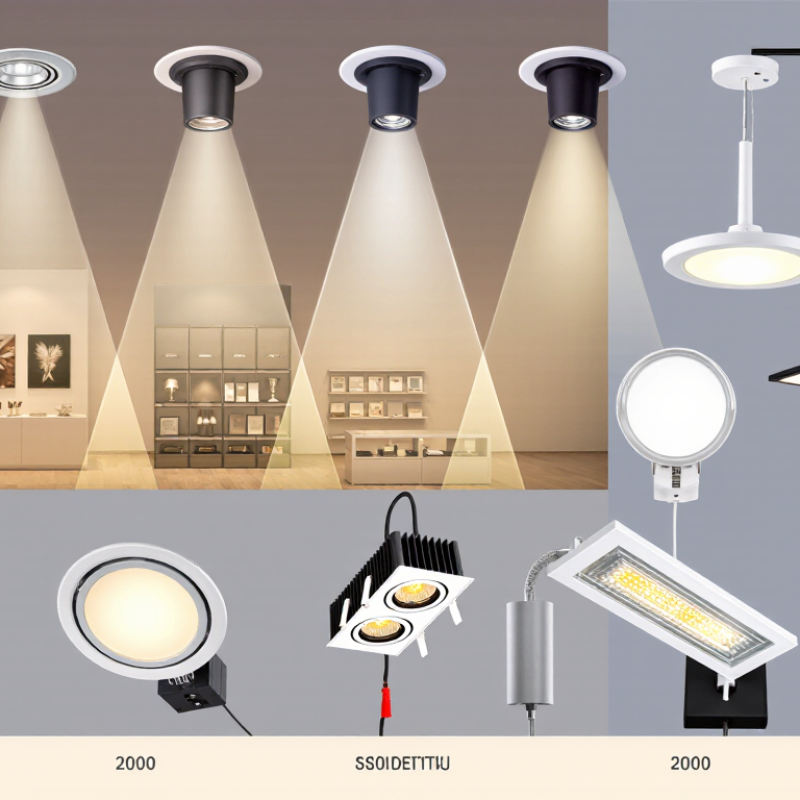
Light Beam Lamp Basics: 15°–60° Beams, Lumens, CCT, and CRI ≥80
Choosing among the top light beam lamps starts with beam geometry, not appearance. A 15° beam creates a tight pool for artwork, shelves, or architectural details. A 24°–36° beam suits counters and small displays. A 60° beam spreads light across wider work areas.
Beam angle changes everything. I have seen a bright lamp perform poorly when its narrow beam created harsh shadows. Lumens show total light output, but they do not explain how much light reaches a table or floor. Check beam intensity and mounting height together. A simple lux meter can reveal problems that product photographs hide.
CCT affects atmosphere and visual comfort. Around 2700K–3000K feels warm and works well in hospitality or residential spaces. Near 4000K appears neutral for offices and retail counters. Higher CCT values can feel crisp, but sometimes they look cold. CRI should reach at least 80 for general lighting. For clothing, food, artwork, or skin tones, CRI 90 or higher is safer. Measure, do not guess. My own first comparison focused too much on lumens and missed glare from a low ceiling. Dimming quality, flicker control, heat management, and accurate specifications also deserve attention. Not always. A lamp with impressive numbers may still need repositioning.
| No. | Generic Lamp Type | Typical Wattage | Beam Angle | Typical Light Output | Available CCT | CRI | Input Voltage | Dimming | Ingress Protection | Recommended Applications |
|---|---|---|---|---|---|---|---|---|---|---|
| 1 | Adjustable LED Spotlight | 7–12 W | 15°–24° | 550–950 lm | 2700 K, 3000 K, 4000 K | ≥90 | 220–240 V AC | Phase-cut compatible | IP20 | Retail displays, artwork, accent lighting |
| 2 | Recessed LED Downlight | 10–18 W | 24°–36° | 800–1,500 lm | 3000 K, 4000 K, 5000 K | ≥80 | 100–240 V AC | Non-dimmable or phase-cut | IP20–IP44 | Hotels, corridors, offices, residential interiors |
| 3 | Track-Mounted LED Spotlight | 12–25 W | 15°–36° | 900–2,200 lm | 2700 K, 3000 K, 3500 K, 4000 K | ≥90 | 220–240 V AC | Phase-cut or DALI, model dependent | IP20 | Galleries, shops, showrooms, hospitality spaces |
| 4 | Surface-Mounted LED Spotlight | 8–20 W | 24°–40° | 650–1,800 lm | 3000 K, 4000 K, 6000 K | ≥80 | 100–240 V AC | Optional phase-cut dimming | IP20 | Low-ceiling spaces, shops, residential rooms |
| 5 | LED Cylinder Beam Lamp | 10–30 W | 15°–60° | 800–2,700 lm | 2700 K, 3000 K, 4000 K | ≥90 | 220–240 V AC | Phase-cut or 0–10 V | IP20–IP44 | Commercial interiors, restaurants, reception areas |
| 6 | Outdoor LED Projector | 20–50 W | 30°–60° | 1,800–5,000 lm | 3000 K, 4000 K, 5000 K, 6500 K | ≥80 | 100–277 V AC | Usually non-dimmable | IP65 | Facades, signs, gardens, outdoor walls |
| 7 | LED Wall Washer | 18–36 W | 24°–45° | 1,500–3,600 lm | 2700 K, 3000 K, 4000 K, RGB/RGBW | ≥80 | 24 V DC or 100–240 V AC | DMX, 0–10 V, or PWM | IP65–IP66 | Building facades, landscape lighting, architectural features |
| 8 | High-Bay LED Beam Light | 80–150 W | 30°–60° | 10,000–20,000 lm | 4000 K, 5000 K, 6500 K | ≥80 | 100–277 V AC | 0–10 V or DALI | IP65 | Warehouses, factories, sports and logistics facilities |
| 9 | LED Cabinet and Display Light | 3–8 W | 30°–45° | 200–700 lm | 2700 K, 3000 K, 4000 K | ≥90 | 12 V DC or 24 V DC | PWM or inline controller | IP20–IP44 | Retail shelving, cabinets, counters, display cases |
| 10 | Portable LED Work Light | 10–30 W | 30°–60° | 900–3,000 lm | 4000 K, 5000 K, 6500 K | ≥80 | 100–240 V AC or rechargeable battery | Multi-level brightness control | IP54–IP65 | Workshops, construction sites, maintenance areas |

Ranking Method: 80–150 lm/W Efficacy, L70 Life, Glare, and Heat Control
Top 10 Light Beam Lamps for Global Buyers
Our top ten ranking focuses on measurable performance, not attractive packaging. We compare tested efficacy between 80 and 150 lm/W, then examine L70 life, beam consistency, glare, and thermal behavior. A lamp producing 120 lm/W may appear excellent, but poor heat control can reduce brightness much earlier than expected. L70 estimates when output falls to 70% of its original level, so buyers should request test conditions, ambient temperature, and operating hours. Real project experience shows that these details often matter more than catalog claims.
Tips: Check the beam angle beside the lumen figure. Narrow beams can create sharp hotspots and uncomfortable reflections on polished floors. Look for shielding, a suitable UGR rating, and a housing with visible heat paths. Ask for LM-80 or equivalent evidence when available. Small details matter.
The strongest products balance efficiency with comfortable visual performance. Some lamps rank highly for efficacy but lose points for glare or unstable temperatures. This method is not flawless; installation height, ceiling color, and local voltage can change results. A carefully chosen 95 lm/W lamp may outperform a 140 lm/W model in a warm retail space. Buyers should also verify warranty terms, replacement access, photometric files, and regional electrical compliance before ordering. Performance is never only one number.
Top 10 Picks by Application: Spot, Track, Stage, Retail, and Outdoor
Top 10 Light Beam Lamps for Global Buyers
For focused displays, my first two picks are narrow spot lamps with adjustable beam angles. They suit artwork, product details, and museum-style installations. Beam control matters. A sharp beam highlights texture without flooding nearby surfaces. Check color rendering above 90 for accurate material appearance. I once used a fixed-angle lamp in a small gallery, and the bright spill weakened the display. Adjustable optics would have solved it.
Track lighting needs flexibility. Picks three and four should offer rotatable heads, replaceable drivers, and secure track adapters. This setup supports changing layouts in shops and exhibitions. Pick five and six target stage use, where smooth dimming and stable color are essential. Silent cooling is valuable in theaters. Test flicker with a camera before installation. It is not always visible.
Retail spaces benefit from picks seven and eight, combining wide coverage with controlled accents. Neutral white light often supports clothing and packaging better than extreme color temperatures. Outdoor picks nine and ten require sealed housings, strong heat management, and reliable mounting hardware. Look for suitable ingress protection and corrosion-resistant finishes. Weather changes quickly. Power compatibility also deserves careful checking across markets. Specifications can look convincing, yet field performance may differ. Measure the beam, temperature, and glare after installation, then adjust the plan when real conditions expose weaknesses.
Top 10 Light Beam Lamps for Global Buyers
Top 10 picks by application: spot, track, stage, retail, and outdoor lighting.
The chart compares representative beam-angle midpoints used for common lighting applications. Narrow angles create concentrated spot effects, while wider angles provide broader coverage for retail, architectural, landscape, and outdoor areas. Actual specifications vary by fixture optics, mounting height, and project requirements.
Global Standards: IEC 60598, LM-79, IP65, CE, UL, and RoHS
Top 10 Light Beam Lamps for Global Buyers
Global Standards: IEC 60598, LM-79, IP65, CE, UL, and RoHS
Choosing among the top ten light beam lamps requires more than comparing brightness and price. IEC 60598 addresses luminaire safety, including insulation, wiring, heat resistance, and mechanical protection. Ask for the relevant test report, not only a printed compliance claim. Check the paperwork.
LM-79 evaluates electrical and photometric performance for solid-state lighting products. It can reveal measured lumen output, power consumption, color characteristics, and beam performance. These results help buyers compare lamps under controlled conditions. However, laboratory data may not reflect a dusty warehouse or a cold outdoor site. That gap matters.
IP65 means the enclosure is dust-tight and protected against water jets. It does not confirm safe immersion. CE marking indicates conformity with applicable European requirements, while UL recognition or certification depends on the exact product and intended market. RoHS controls restricted substances in electrical and electronic equipment. Buyers should verify the model number, testing scope, report date, and destination requirements. A lamp can meet one standard and still fail another market’s installation rules. In practical sourcing reviews, missing documents often create more risk than a modest lumen difference. Beam angle, glare, thermal management, cable quality, and replacement access also deserve inspection. A brighter beam is not automatically a better beam.
Measure twice.
Global Buyer Matrix: 100–240 V, 2200–6500 K, Warranty, and Total Cost
Choosing among the top 10 light beam lamps requires more than comparing brightness. Global buyers should verify 100–240 V input before reviewing beam angle, output, and plug compatibility. A lamp rated for both voltage ranges reduces regional replacement risk. It also simplifies warehouse planning.
Color temperature changes the buying decision. The 2200–3000 K range creates a warmer, hospitality-style atmosphere, while 4000–6500 K supports retail, workshops, and detailed inspection. The IEA’s Energy Efficiency 2023 report states that LED lighting can use up to 90% less electricity than incandescent lighting. However, efficiency claims often ignore heat, driver losses, and actual operating hours. That gap deserves attention.
Warranty length should be read beside its conditions. Check rated lifetime, allowable daily use, driver coverage, and repair responsibility. A five-year warranty is weak if shipping costs remain with the buyer. For total cost, calculate purchase price, freight, duties, energy use, spare units, and expected replacement labor. The U.S. Department of Energy’s 2023 Solid-State Lighting R&D Opportunities report highlights continuing gains in LED efficacy, but laboratory performance may not match crowded, hot installations. I would score each lamp across voltage, CCT, warranty, and lifetime cost. The cheapest unit can still become expensive. Mistakes happen.
(780) 669-9420