
Top 10 Dual Exhaust System Manufacturers for Global Buyers

Choosing a Dual Exhaust System is not simply a matter of adding a second tailpipe. Buyers need to compare materials, pipe diameter, muffler design, fitment, sound, and manufacturing support. A system that looks polished on a product page still has to clear the chassis, connect securely, and suit the engine’s operating range. Small details matter. A tight bend near a suspension arm can complicate installation; a poorly matched muffler can make highway driving tiring. These are practical checks, not showroom decoration.

Automotive engineer and educator Jason Fenske is known for explaining vehicle systems through engineering principles. As a paraphrase of that approach, rather than a verified direct quotation: “Choose exhaust components for the engine and intended use, not appearance alone.” That is a useful lens for this comparison. The following top 10 manufacturers are considered through product range, material choices, application coverage, technical information, and buyer support. Global buyers should also check local fitment, shipping, warranty terms, and emissions requirements before ordering. Those details vary by vehicle and market. No single brand fits everyone. Manufacturer specifications help, but they do not replace confirming compatibility with the exact model and year. This overview offers a starting point, not a final verdict; product lines change, and claims deserve a careful second look.
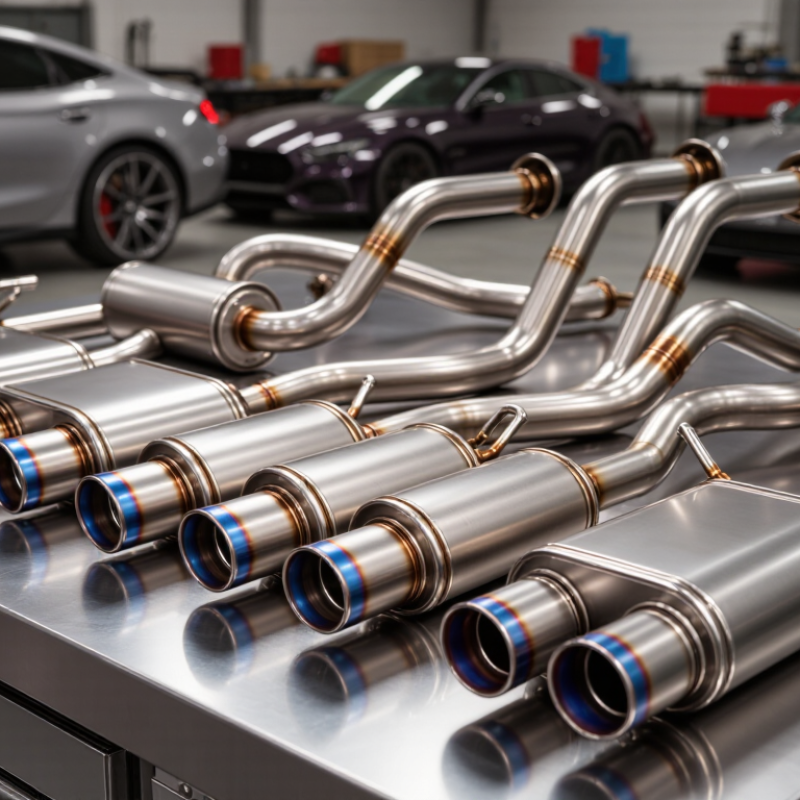
Top 10 Dual Exhaust System Manufacturers for Global Buyers

How Dual Exhaust Systems Work and Where They Are Used

Dual exhaust systems use two routes to carry exhaust gases away from an engine. On a V-shaped engine, each cylinder bank may feed its own manifold, pipe, catalytic converter, and muffler. The layout varies. Some systems merge before the rear axle, while true dual setups keep both paths separate to the outlets. Exhaust pulses travel through the pipes, and bends, diameter, and muffler design affect flow and sound. Bigger is not automatically better.

A well-matched system may reduce restriction and produce a deeper tone, but performance gains depend on the engine and its tuning. During installation, technicians check hanger clearance, heat shields, welds, and space around the fuel tank. A pipe touching a crossmember can rattle over rough pavement. Fitment matters. Emissions equipment should remain correctly positioned and functional for the vehicle’s intended use.

Dual exhaust is found on some performance cars, pickups, and larger engines where space allows two routes. Some buyers choose it for appearance, but polished tips do not prove better performance. For a towing truck, low-speed response and a quiet cabin may matter more than a louder note. There is a trade-off. Compare pipe routing, corrosion-resistant materials, and documented vehicle fitment instead of relying on sound clips alone. Road conditions and maintenance can still change how a system ages.

How to Evaluate Manufacturers for Global Purchasing

Top 10 Dual Exhaust System Manufacturers for Global Buyers

How to Evaluate Manufacturers for Global Purchasing

Choosing a manufacturer takes more than comparing unit prices. Ask for material specifications, weld inspection records, and clear details about pipe diameter, wall thickness, and surface finish. A sample can reveal fitment issues that a catalog photo will not. Check whether the supplier can explain how each system is tested for leaks and vibration. Request production lead times, packaging dimensions, and replacement-part availability in writing. A polished catalog is not proof of consistent quality.

Tips: Compare a pre-production sample with the approved drawing. Confirm who pays for testing, tooling, and shipping. Ask how defects are recorded and resolved.

Communication matters after the first quotation. Send the same technical requirements to each candidate, then compare how precisely they answer. Vague replies can signal process gaps, though one slow email alone proves little. Review inspection checkpoints and ask whether reports can be tied to a specific order batch. Clarify payment milestones and delivery terms before production starts. If possible, speak with a customer who has received repeat shipments. Even then, past performance cannot guarantee the next batch will match perfectly. Build in time for inspection; global purchasing rarely runs as neatly as a spreadsheet suggests.

Top 10 Dual Exhaust System Manufacturers Worldwide

Top 10 Dual Exhaust System Manufacturers Worldwide is best treated as a sourcing comparison, not a fixed ranking. Global buyers should assess fabrication capacity, material traceability, fitment coverage, and documented quality checks. OICA reported 93.5 million motor vehicles produced worldwide in 2023, underscoring the scale and diversity of vehicle platforms manufacturers may need to serve. Yet production volume alone does not prove exhaust-system expertise.

A strong supplier can provide clear drawings, consistent flange dimensions, and corrosion-resistance test results. Ask how it checks weld quality and verifies exhaust routing against a specific vehicle configuration. The IEA’s Global EV Outlook 2024 reported nearly 14 million electric-car sales in 2023, about 18% of global car sales. That shift makes long-term demand harder to predict, so buyers should verify a manufacturer’s current product mix rather than assume every factory serves the same market. No shortlist is perfect; regional testing and service support can be easy to overlook.

Tips: Request a sample assembly and inspect its bends, welds, and mounting points before approving a large order. Confirm the steel grade and coating in writing. Small details matter. A polished finish cannot replace accurate fitment or reliable production records.

Top 10 Dual Exhaust System Manufacturers for Global Buyers - Top 10 Dual Exhaust System Manufacturers Worldwide

Regional sourcing overview of automotive manufacturing hubs relevant to exhaust-system buyers. Entries describe broad regional capabilities, not named companies or a verified ranking of individual manufacturers.

No. Manufacturing region Relevant automotive base Common exhaust-system scope Typical materials and processes Buyer considerations
01 China Large automotive and component-manufacturing sector serving domestic and export markets. Complete exhaust assemblies and components such as pipes, mufflers, resonators, and catalytic-converter housings. Commonly formed stainless and aluminized steel; tube bending, stamping, welding, and assembly. Confirm material grade, corrosion requirements, production traceability, and export-market compliance.
02 Japan Established automotive production base with extensive precision-component supply chains. Vehicle-specific exhaust assemblies and precision-formed pipes and silencers. Metal forming, robotic or controlled welding, and dimensional inspection are widely used in automotive production. Check vehicle fitment data, engineering-change control, and consistency between prototype and production parts.
03 Germany Major European automotive engineering and manufacturing center. Original-equipment and replacement-system components, including complex pipe assemblies and mufflers. Stainless and coated steels; precision bending, stamping, joining, and inspection processes. Review applicable European vehicle requirements, documentation, and validation evidence for the intended application.
04 United States Large vehicle market with manufacturing and aftermarket supply chains. Replacement exhaust systems, performance-oriented dual layouts, and vehicle-specific assemblies. Common processes include mandrel or conventional tube bending, cutting, welding, and muffler fabrication. Verify state and federal emissions rules, noise limits, vehicle compatibility, and intended road-use status.
05 Mexico Integrated with North American vehicle and automotive-component production networks. Production exhaust components and assemblies for vehicle supply chains and cross-border sourcing. Automotive metal fabrication commonly includes stamping, tube forming, welding, and assembly. Assess logistics routes, customs documentation, supplier quality systems, and delivery continuity.
06 South Korea Developed automotive manufacturing base with a broad domestic component sector. Vehicle-specific exhaust pipes, silencers, and related exhaust assemblies. Typical automotive methods include automated welding, formed-metal fabrication, and production-line inspection. Confirm application coverage, production capacity for the required program, and export documentation.
07 India Substantial vehicle and component manufacturing sector serving domestic and international markets. Exhaust assemblies and fabricated components for passenger vehicles and commercial applications. Steel tube forming, stamping, welding, and assembly are common manufacturing operations. Specify corrosion protection, dimensional tolerances, emissions-market requirements, and inspection criteria.
08 Thailand Important Southeast Asian automotive production and export location. Vehicle-production components and exhaust assemblies supplied within regional automotive networks. Automotive fabrication commonly uses formed steel, welded subassemblies, and production-line quality checks. Consider regional shipping schedules, export terms, and compatibility with the destination vehicle specification.
09 Czech Republic Central European automotive manufacturing location connected to regional supplier networks. Automotive exhaust components and assemblies for European vehicle programs. Metal stamping, tube bending, welding, and assembly are established automotive processes in the region. Check required European regulatory documentation, production traceability, and cross-border delivery arrangements.
10 Poland Central European manufacturing base with automotive suppliers serving regional and export markets. Fabricated exhaust parts and assemblies for automotive production and replacement channels. Common capabilities include steel forming, welding, machining, and assembly operations. Evaluate material certificates, quality-control procedures, lead times, and the supplier’s ability to meet the required specification.

How Manufacturer Capabilities and Markets Compare

For global buyers, dual-exhaust manufacturers differ less by catalog size than by production depth. OICA reported 93.5 million motor vehicles produced worldwide in 2023, but that figure covers many vehicle types and does not measure exhaust-system demand directly. It does show why suppliers serving high-volume vehicle regions may prioritize repeatable output, automated welding, and stable tube sourcing. Smaller specialists may offer more flexible bends, muffler layouts, and fitment support. Ask for material specifications, corrosion-test results, dimensional tolerances, and batch traceability—not just polished product photos. Details matter.

Markets also shape what factories can support. Suppliers focused on replacement parts often need broad vehicle coverage and practical installation guidance; those serving original-equipment programs usually emphasize validation, production consistency, and close engineering coordination. The IEA’s Global EV Outlook 2024 reports nearly 14 million electric-car sales in 2023, about 18% of global car sales. This is not a direct measure of exhaust demand, but it signals a changing vehicle mix. Buyers should compare a manufacturer’s combustion-vehicle expertise with its export reach and capacity planning. The comparison is imperfect: published capacity may not reflect available production slots, and quoted lead times can shift with material supply. Ask for recent delivery records and sample inspection reports.

What Global Buyers Should Check Before Placing an Order

Before ordering a dual exhaust system, confirm the exact vehicle year, engine, body style, and existing pipe layout. A small mismatch can mean extra fabrication, delayed installation, or a return that costs more than expected. OICA reported 93.5 million motor vehicles produced worldwide in 2023, but that broad figure does not guarantee a part will fit a specific market or trim. Request a fitment list and dimensional drawings, including pipe diameter, inlet position, hanger locations, and outlet spacing.

Material and testing records matter. Ask whether the tubing is aluminized steel or stainless steel, and request corrosion or durability test details rather than relying on a polished sample. Check weld consistency, flange flatness, and whether clamps and gaskets are included. The IEA’s Global EV Outlook 2024 reported nearly 14 million electric car sales in 2023, about 18% of total car sales. Buyers should therefore verify that each system is designed for the stated powertrain and application. Sound targets, emissions documentation, packaging protection, warranty terms, minimum order quantity, and lead time should be confirmed in writing. One detail is easy to miss: carton dimensions can affect freight cost.

Tips: Ask for production samples or inspection photos before shipment. Compare the approved sample with the bulk order. Keep one question open: what happens if fitment differs on arrival?

×
img

    Contact Info

    Phone number

    661-392-8948

    Address info

    3451 Pegasus Drive, Bakersfield, CA USA