7 Tips for Choosing the Right Refrigeration Chiller?
Choosing the right Refrigeration Chiller affects product quality, energy use, maintenance costs, and daily operating confidence. A unit may look efficient in a brochure yet struggle beside a hot loading door or during summer production peaks. Real conditions matter.
This guide presents seven practical tips for evaluating cooling capacity, temperature stability, refrigerant considerations, water quality, controls, service access, and total ownership cost. Start with the actual heat load, not guessed tonnage. Measure room temperature, product intake temperature, operating hours, ambient conditions, and future expansion plans. Small details help. A chilled-water system serving a food plant needs different priorities from one supporting laboratory equipment or process machinery.
Reliable selection also requires evidence. Compare manufacturer performance data at your expected entering and leaving temperatures. Check certifications, warranty terms, parts availability, and the supplier’s commissioning experience. Ask how the Refrigeration Chiller performs under partial load, because equipment rarely runs at full capacity all day. Listen for unclear answers. They may reveal gaps.
No model is perfect. A lower purchase price can hide difficult cleaning, unstable controls, or expensive downtime. Conversely, the largest chiller is not automatically the safest choice; oversized equipment may cycle frequently and waste energy. The best decision balances verified performance with practical serviceability. These tips support careful review, although local regulations, professional engineering checks, and site-specific testing remain essential.
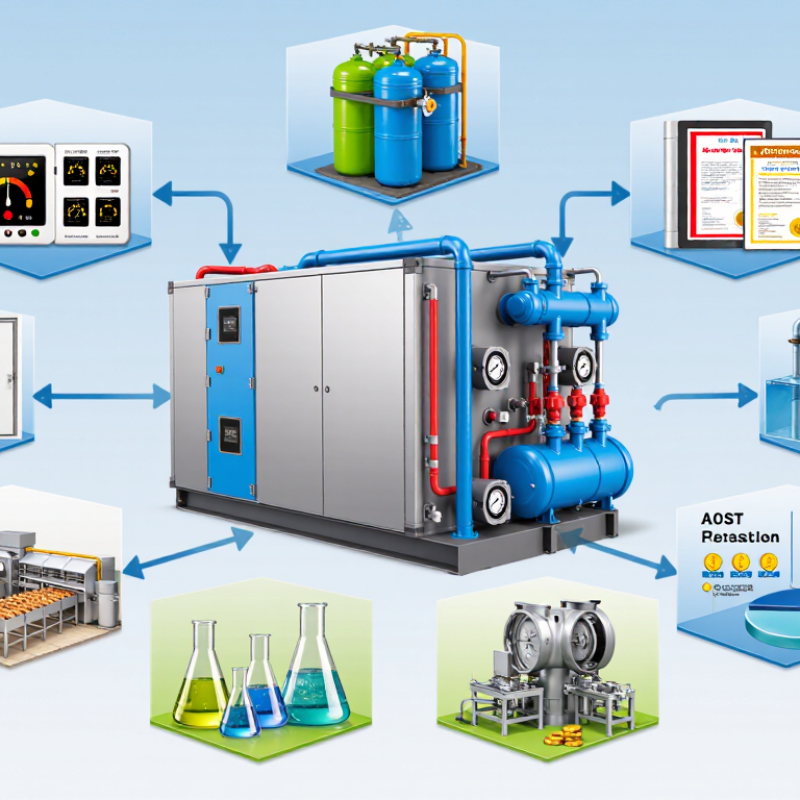
Understanding Refrigeration Chillers and Their Main Applications
Refrigeration chillers remove heat from water, glycol, or another circulating fluid. The cooled fluid then serves a specific process or space. In practical terms, a chiller is the heart of a controlled cooling system. It is not simply a colder version of an air conditioner.
Food processing often uses chillers for product cooling, fermentation control, and cold-water production. Cold storage facilities depend on stable temperatures during loading and unloading. Commercial buildings use chilled water for indoor comfort. Data centers require continuous heat removal from dense equipment rooms. Pharmaceutical production may need tighter temperature control, documented performance, and clean operating conditions. Each application has a different risk profile.
Start by measuring the real cooling load, not an optimistic estimate. Check the required supply temperature, return temperature, fluid flow, and seasonal ambient conditions. Decide whether an air-cooled or water-cooled design suits the site. Air-cooled units usually simplify installation, while water-cooled systems can perform efficiently with proper water management. Review energy use at partial load. Full-load efficiency alone can mislead. Confirm refrigerant requirements, electrical capacity, noise limits, and available service access. Plan for alarms, remote monitoring, and backup capacity where downtime is expensive.
Maintenance deserves equal attention. Dirty coils, poor water quality, and blocked filters quietly reduce performance. I have seen systems selected correctly but operated beyond their design assumptions. The spreadsheet looked convincing. The plant reality did not. Leaving room for future demand may cost more initially, yet it can prevent rushed expansion and unstable temperatures later.
Assessing Installation Conditions, Controls, and Maintenance Requirements
7 Tips for Choosing the Right Refrigeration Chiller
Tip 1: Assess the installation site before comparing capacity. Measure plant-room access, ceiling height, airflow, drainage, and noise limits. A chiller that fits the load may not fit the doorway. Check water quality, ambient temperature, and electrical supply under peak conditions.
Tip 2: Confirm the real operating profile. Review hourly loads, seasonal changes, standby needs, and partial-load performance. The International Energy Agency reported that global cooling electricity demand could rise from about 2,000 TWh in 2016 to 6,200 TWh by 2050. Efficiency matters beyond the nameplate rating.
Tip 3: Demand clear control logic. The system should stage compressors smoothly, protect against short cycling, and show alarms in plain language. Connect temperature, pressure, flow, and energy meters. ASHRAE guidance supports measurement-based commissioning, yet many projects still rely on factory settings. That is risky.
Tip 4: Plan maintenance before purchase. Confirm filter access, tube cleaning space, refrigerant monitoring, oil checks, and spare-part availability. Keep service records with dates and measured values. Operators often replace parts too early, while ignoring fouled heat exchangers.
Tip 5: Test the controls after installation. Compare sensor readings with calibrated instruments. Verify low-load operation, emergency stops, and restart sequences. UNEP’s 2023 Global Status Report states that buildings use about 30% of global final energy. Small control errors can become expensive.
Tip 6: Question optimistic assumptions. My checklist can miss future production changes. Recheck the design after six months of operating data. A slightly oversized chiller may look safe, but poor cycling can reduce efficiency and shorten equipment life.
7 Tips for Choosing the Right Refrigeration Chiller: Installation, Controls, and Maintenance
This chart shows typical planning intervals for key chiller selection and maintenance checks. Actual frequencies should be adjusted according to the equipment manual, operating hours, water quality, refrigerant type, ambient conditions, and local safety requirements.
Evaluating Safety, Operating Costs, and Supplier Support
7 Tips for Choosing the Right Refrigeration Chiller
Safety should guide the first screening. Check refrigerant classification, pressure limits, ventilation, leak detection, and emergency shutdown access. ISO 5149 and EN 378 provide practical safety frameworks for refrigeration systems. The U.S. Environmental Protection Agency also emphasizes refrigerant management, recovery, and leak prevention. Ask for documented testing, not verbal assurances. A crowded machine room is a warning sign.
Operating cost deserves more than a brochure’s rated efficiency. Compare full-load and part-load performance, seasonal efficiency, water use, pump energy, and maintenance intervals. The International Energy Agency reports that buildings consume about 30% of global final energy. Cooling loads can make a noticeable difference. Inspect condenser coils, filters, valves, and control settings during a site visit. Fouling may quietly increase power consumption. A cheaper purchase can become expensive after two summers.
Supplier support is the seventh filter. Request response-time commitments, spare-parts availability, commissioning records, training, and remote diagnostic procedures. The U.S. Department of Energy recommends measurement and verification for reliable energy savings. Require baseline readings before acceptance. Ask who answers at 2 a.m. Real support is measurable. One imperfect assumption remains: predicted savings may not match a humid, dusty site. Recheck performance after seasonal operation, and revise the maintenance plan when field data disagrees.
 (780) 669-9420