
What Is the Price of a 250 Amp Circuit Breaker?

What Is the Price of a 250 Amp Circuit Breaker? The answer depends on more than amperage. A new 250 amp molded-case circuit breaker commonly costs between $300 and $2,500. Premium electronic-trip models can exceed that range. Installation, testing, shipping, and panel compatibility may add several thousand dollars.

MarketsandMarkets reports that the global circuit breaker market is expanding as utilities, factories, and commercial buildings modernize electrical systems. Grand View Research also identifies industrial automation and renewable-energy projects as major demand drivers. These trends influence availability, lead times, and replacement pricing. A breaker with a 35 kA interrupting rating may cost far less than a comparable 65 kA model. Accessories matter too. Think shunt trips, auxiliary contacts, electronic trip units, and copper bus connections.

Safety changes the calculation. Jim Dollard, an NFPA electrical code expert and author of Electrical Safety-Related Work Practices, states, “Safety is not expensive; it is priceless.” His principle applies directly to 250 amp equipment. A low quotation may exclude infrared scanning, torque verification, or arc-flash assessment. That omission can become expensive later.

UL 489 certification, IEC 60947-2 compliance, enclosure type, brand, and breaker age should be checked carefully. Used equipment may look clean while hiding worn contacts or obsolete accessories. Honestly, no single online price proves value. The most reliable estimate combines the breaker specification, site conditions, labor rates, and documentation. This guide examines each factor, helping buyers judge the true 250 Amp Circuit Breaker Price rather than chasing the cheapest listing.
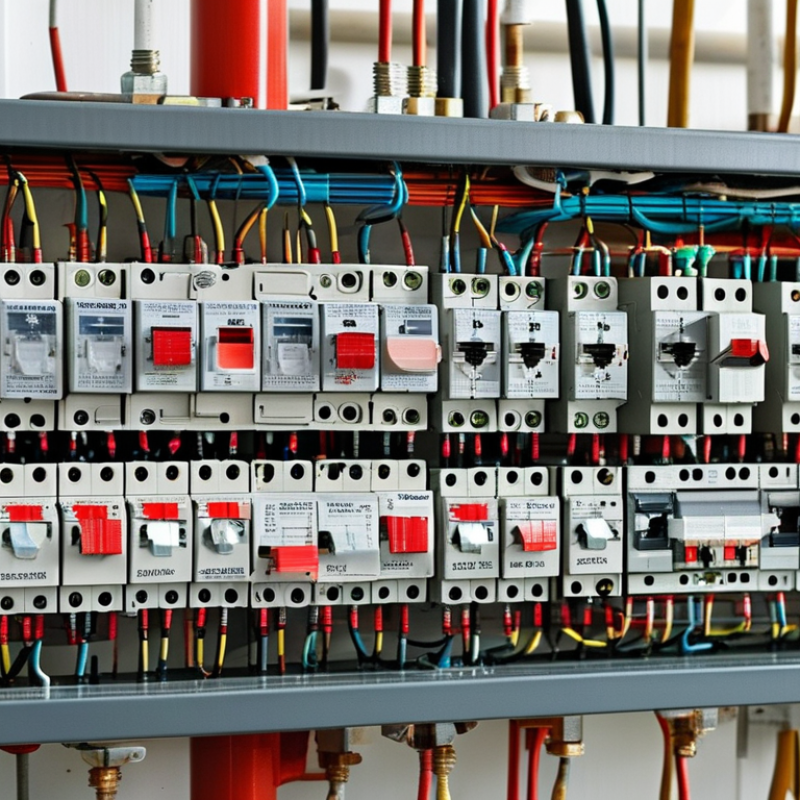
What Is the Price of a 250 Amp Circuit Breaker?

What Is a 250 Amp Circuit Breaker?

A 250 amp circuit breaker is a protective switching device rated to carry up to 250 amperes under specified conditions. It interrupts current when overloads or short circuits threaten conductors and equipment.

At 240 volts, a single-phase circuit could represent roughly 60 kilowatts.

At 208 volts, a three-phase system could approach 90 kilovolt-amperes, assuming balanced loading and ideal conditions.

That is substantial. The 2023 National Electrical Code, Section 240.6(A), recognizes 250 amperes as a standard circuit-breaker rating.

The rating alone tells only part of the story.

A 250 amp breaker may use two or three poles, thermal-magnetic protection, or an electronic trip unit. Its voltage rating, interrupting rating, enclosure, lug size, and short-circuit current rating also matter. A breaker marked 250A does not automatically suit every 250A installation.

Continuous loads commonly require 125% sizing under applicable electrical rules. Cable material, ambient temperature, installation method, and terminal temperature ratings can change the final selection.

Small details matter.

The International Energy Agency reported in Electricity 2024 that global electricity demand increased by about 2.2% in 2023 and may grow faster through 2026. That trend supports stronger distribution planning, but it does not make every high-current breaker interchangeable.

In practical inspections, technicians verify the nameplate, available fault current, conductor compatibility, and coordination study before discussing price. I would not quote a reliable price from amperage alone.

Used equipment may look economical, yet its test records or interrupting capability may be unclear. That is where a careful review becomes necessary.

What Factors Influence the Price of a 250 Amp Circuit Breaker?

A 250 amp circuit breaker usually costs about $300 to $1,500 for a standard molded-case model. Advanced versions may exceed $3,000. The price depends heavily on voltage, interrupting capacity, pole count, and trip technology. A 240-volt breaker for a small commercial panel is not comparable to a 600-volt breaker rated for high fault currents. That difference is easy to miss.

Copper and aluminum costs also influence pricing. The U.S. Geological Survey reported approximately 22 million metric tons of global mine copper production in 2023. Supply conditions affect conductor components, terminals, and manufacturing costs. The U.S. Bureau of Labor Statistics Producer Price Index also tracks electrical equipment pricing, showing why breaker prices can shift before project budgets are updated. Raw material costs are only part of the story.

Installation requirements add another layer. Adjustable electronic trips, shunt trips, auxiliary contacts, enclosure ratings, and certification testing can raise the purchase price. A weather-resistant enclosure may cost more than the breaker itself. Distribution shortages can create large price gaps.

In field purchasing, I would verify the panel compatibility first. A lower-priced breaker is useless if its bus connection or interrupting rating is wrong. Freight, inspection, labor, and replacement lead time should be included. Pricing is not perfectly linear. Sometimes, a basic 250 amp unit costs less than expected, while a small customization changes everything. NFPA 70 requirements and the manufacturer’s technical documentation should guide the final selection.

How Much Does Installation Typically Cost?

Installing a 250-amp circuit breaker usually costs more than buying the breaker itself. In the United States, a complete service upgrade commonly ranges from $2,500 to $6,500. Angi’s 2025 electrical panel cost data places many panel upgrades between $1,300 and $2,500, but a 250-amp system often requires additional service equipment.

Labor is a major variable. The U.S. Bureau of Labor Statistics reported a median annual wage of $61,550 for electricians in May 2023. That figure does not equal a contractor’s hourly charge. Contractors also cover insurance, travel, supervision, licensing, and testing. A typical installation may involve 8 to 16 labor hours, with rates commonly near $75 to $150 per hour. Permits and inspections can add $150 to $500. Utility coordination may cost more.

The physical site matters. A short indoor replacement is cheaper than a long outdoor run. Replacing undersized service conductors, upgrading grounding, or moving the meter can push the project above $8,000. Trenching adds another cost when the feeder runs underground. A load calculation is essential before accepting any quote. A 250-amp breaker does not automatically mean the property needs 250 amps. An experienced electrician should inspect the service entrance, panel space, conductor size, and local code requirements. A rough estimate can still be wrong. Ask for itemized labor, materials, permits, disposal, and possible repair allowances.

What Is the Price of a 250 Amp Circuit Breaker? - How Much Does Installation Typically Cost?
Cost Item Typical U.S. Price Range What Is Usually Included Typical Labor Time Main Cost Factors
250-amp circuit breaker only $150–$500 The breaker component sized for a compatible electrical panel; installation materials are usually excluded. Not applicable Breaker type, interrupting rating, panel compatibility, and local availability.
Standard 250-amp breaker replacement $350–$900 Removal of the existing breaker, installation of the replacement, connection checks, and basic testing. 1–3 hours Accessibility, service shutoff requirements, wiring condition, and electrician rates.
250-amp breaker installation in an existing panel $500–$1,200 Compatible breaker, installation labor, minor fittings, torque checks, and operational testing. 2–4 hours Available panel space, busbar compatibility, enclosure condition, and required alterations.
250-amp service panel upgrade $2,500–$6,500 New service panel, main disconnect, breakers, rewiring within the panel, labeling, and testing. 1–2 days Panel capacity, feeder size, grounding and bonding work, permits, and inspection requirements.
250-amp electrical service upgrade $4,000–$10,000+ Service equipment upgrade plus changes to the service entrance conductors and related equipment. 1–3 days Utility requirements, meter equipment, conductor length, trenching, exterior work, and permit fees.
Permit and inspection fees $50–$400 Typical municipal permit and inspection charges, when required by local regulations. Varies Location, project value, inspection schedule, and whether the utility must approve the work.
Grounding and bonding corrections $300–$1,500 Repairs or additions to grounding electrodes, bonding conductors, clamps, and related connections. 3–8 hours Existing grounding condition, soil access, building age, and conductor routing.
Additional circuit installation after the upgrade $300–$1,000 per circuit New breaker, wiring, boxes, receptacles or equipment connections, and circuit testing. 3–8 hours Circuit amperage, wire length, wall access, equipment type, and indoor or outdoor routing.

Planning note: A 250-amp breaker must match the panel, service rating, conductor size, and applicable electrical code. A qualified electrician should verify whether the existing service can safely support the breaker before installation. Prices are typical U.S. planning estimates and may vary by region, project complexity, and permit requirements.

What Types of 250 Amp Circuit Breakers Are Available?

What Is the Price of a 250 Amp Circuit Breaker?

A 250-amp breaker is not one universal product. Its design controls both protection and price. Thermal-magnetic molded-case breakers are common for commercial panels. They respond to heat during overloads and magnetic force during short circuits. Basic units often cost about $250 to $700, excluding installation. Prices vary with voltage, interrupting capacity, and enclosure requirements.

Electronic-trip breakers offer more precise protection. Their settings can manage long-time, short-time, instantaneous, and ground-fault functions. This flexibility suits factories, hospitals, and large buildings. Current-limiting models reduce fault energy and may protect downstream equipment more effectively. Draw-out versions cost more because they include a removable mechanism and stronger switching hardware. Fixed-mount versions are simpler. Often, simpler is safer for a small installation.

According to the International Energy Agency’s Electricity 2024 report, global electricity demand may grow by an average 3.4% annually through 2026. That growth increases attention on selective coordination and dependable distribution equipment. NFPA 70 and IEC 60947-2 provide important installation and performance references. A two-pole breaker may suit specific single-phase applications, while three-pole and four-pole designs support larger systems. DC applications require different testing and ratings. A neat price table can mislead. I would confirm available fault current, conductor size, trip settings, and local inspection requirements before comparing quotes. Even a cheaper breaker can become expensive when its accessories or installation constraints appear later.

How Can You Choose the Right 250 Amp Circuit Breaker?

Choosing the right 250 amp circuit breaker starts with the load, not the advertised price. Calculate connected demand, motor starting current, voltage, phase, and pole count. For a standard 80%-rated breaker, a continuous load usually should not exceed 200 amps. Local electrical rules may change this requirement.

Check the conductor before comparing quotations. NFPA 70, 2023 edition, Table 310.16, lists 250 kcmil copper at 255 amps under 75°C conditions. It lists 300 kcmil aluminum at 250 amps under the same conditions. Derating, ambient heat, conduit fill, and terminal ratings can reduce these values. Small details matter.

Interrupting capacity is equally important. A 250 amp frame rating does not automatically provide adequate fault protection. A qualified electrician should verify the available fault current and match it with the breaker’s interrupting rating. UL 489 covers molded-case circuit breakers, while IEC 60947-2 addresses low-voltage circuit-breakers. These standards help compare tested performance, not just marketing claims.

Price changes with poles, trip-unit features, enclosure type, certifications, and interrupting capacity. Request an itemized quotation. One missing accessory can distort the comparison. A tidy load schedule may still overlook future expansion, which is a mistake worth revisiting. I would also confirm terminal compatibility and coordination with upstream and downstream protection before purchase.

×
img

    Contact Info

    Phone number

    661-392-8948

    Address info

    3451 Pegasus Drive, Bakersfield, CA USA