

Top Power Substation Manufacturers for Global Buyers

Power Substation technology is becoming a strategic investment, not merely a construction requirement. Aging grids, renewable generation, electric vehicles, and data centers are increasing pressure on transmission networks. For global buyers, selecting a manufacturer now requires more than comparing transformer capacity or quoted prices.

The International Energy Agency’s Electricity Grids and Secure Energy Transitions report estimates that over 80 million kilometers of grids must be added or refurbished by 2040. Annual grid investment must also rise from approximately USD 600 billion today to more than USD 1 trillion by 2030. These figures reveal the scale of the challenge. They also explain growing demand for reliable Power Substation equipment, digital protection systems, and resilient automation.

Fatih Birol, Executive Director of the IEA, warned, “The world’s electricity grids are struggling to keep up with the rapid expansion of clean energy.” His statement reflects a practical concern. A substation may look impressive on a specification sheet, yet fail under heat, salt air, poor maintenance, or unstable supply chains.

Real projects expose the difference.

This guide examines leading Power Substation manufacturers for global buyers. It considers engineering experience, voltage range, testing capability, safety records, delivery performance, and after-sales support. Certifications matter, but they do not tell the entire story. Field references and transparent technical documentation matter more.

No ranking is flawless. Buyer priorities differ.

A utility in Europe may emphasize cybersecurity and grid-code compliance. A mining project in Africa may prioritize dust protection, spare parts, and rapid field service. Careful evaluation remains essential, especially when a low initial price hides expensive operational risks.
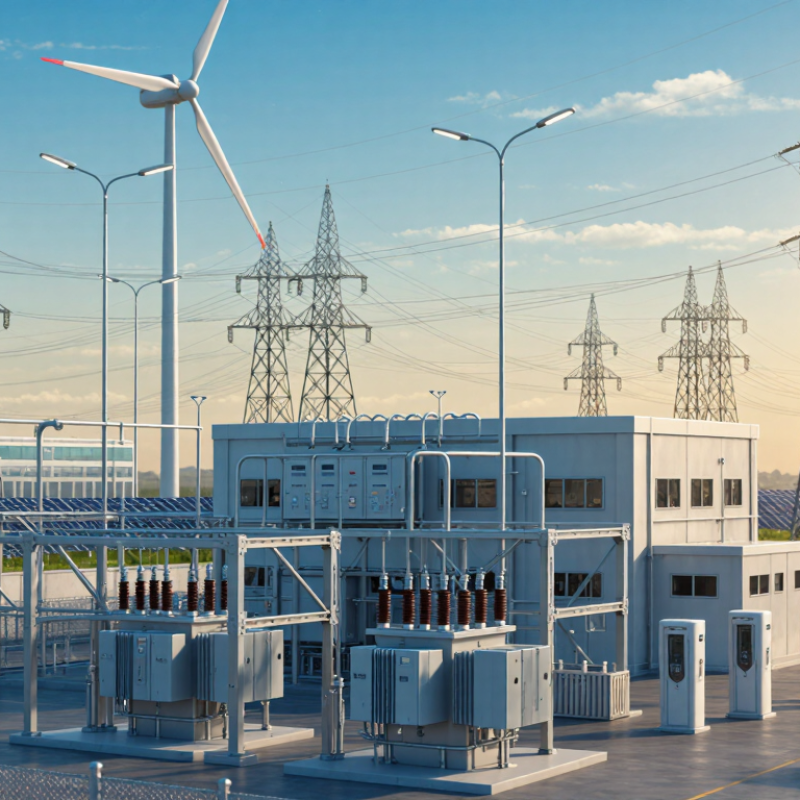
Top Power Substation Manufacturers for Global Buyers

Global Power Substation Manufacturers: Industry Scope and Market Role

Top Power Substation Manufacturers for Global Buyers

Global power substation manufacturers serve a market shaped by urban growth, renewable integration, and aging transmission networks. Their scope covers transformers, switchgear, protection systems, control panels, and digital monitoring equipment. Some suppliers deliver complete substations. Others specialize in tested components or engineering packages.

The market role extends beyond equipment production. Manufacturers help utilities meet voltage requirements, grid codes, fire standards, and local environmental rules. They also support engineering, procurement, installation, commissioning, and maintenance. In a practical project, buyers may compare a 132 kV outdoor substation with a compact GIS unit for a crowded city site. Space matters. So does access for future repairs.

Reliable suppliers provide factory test reports, material traceability, routine inspection records, and clear warranty terms. Independent testing can verify insulation performance, relay accuracy, temperature rise, and short-circuit resistance. These details reduce uncertainty during project approval. They also help operators manage risks after energization.

Cost remains important, but the lowest quotation can create hidden expenses. A cheaper control system may require unfamiliar spare parts or limited technical support. Field reviews sometimes reveal gaps between polished specifications and actual service capability. That deserves attention. Delivery history, local technicians, training quality, and cybersecurity controls should influence procurement decisions. No manufacturer fits every grid. Buyers still need to question assumptions, especially when climate, terrain, and maintenance practices differ from the original design conditions.

Core Products and Technologies Offered by Leading Manufacturers

Top Power Substation Manufacturers for Global Buyers

Leading substation manufacturers supply more than transformers and switchgear. Their portfolios often include power transformers, instrument transformers, circuit breakers, disconnectors, surge arresters, and control panels. Many also provide gas-insulated and air-insulated substations for different space and climate requirements. In project reviews, I have found that protection relays and communication systems deserve equal attention. A reliable relay must detect faults quickly and coordinate with upstream equipment. Modern suppliers increasingly support IEC 61850, SCADA integration, and digital substation architecture. These technologies reduce wiring and improve operational visibility.

Condition monitoring is another important area. Online dissolved gas analysis can reveal transformer insulation problems before a failure occurs. Temperature sensors, partial-discharge monitoring, and bushing diagnostics add useful evidence. Battery chargers, DC systems, grounding equipment, and fire-protection solutions complete the station package. Global buyers should also examine factory testing, type-test records, spare-parts access, and commissioning support. Technical documents must match local grid codes and environmental conditions. A coastal project needs corrosion protection. A cold-region project needs suitable insulation and heating controls.

Tips: Compare the complete system, not only the equipment price. Request test procedures, maintenance intervals, cybersecurity practices, and realistic delivery dates. No specification is perfect. I have seen projects overvalue advanced software while underestimating training and replacement parts. Ask how alarms appear in the control room, who responds, and how faults are isolated. Small details matter. A strong manufacturer should explain limitations clearly, provide traceable quality records, and adapt proven designs without weakening safety or maintainability.

Key Criteria for Comparing International Substation Suppliers

Choosing an international substation supplier requires more than comparing purchase prices. Buyers should examine design experience, manufacturing capacity, and documented project performance. A reliable supplier can explain transformer ratings, protection schemes, insulation levels, and fault requirements in clear language. Ask for verified type-test reports, factory quality records, and references from similar climate and load conditions. A polished brochure can still hide weak engineering controls.

Supplier evaluation should also cover communication and long-term support. Check whether engineers respond quickly during design reviews and provide accurate drawings, cable schedules, and commissioning procedures. Review lead times for breakers, transformers, control panels, and replacement parts.

Local service partners can reduce downtime, but their training should be confirmed. Warranty terms matter. So do spare-parts availability and remote diagnostic capabilities. One overlooked detail is document control; outdated drawings can create costly field errors.

Tips: Build a comparison table with technical compliance, testing evidence, delivery history, service coverage, and total lifecycle cost. Request a factory audit when project value justifies it. Speak with previous customers, not only sales contacts. Visit a completed installation if possible. Do not accept vague claims such as “global quality.” Require measurable evidence. Some suppliers may score well technically but lack local coordination. That weakness deserves attention before contracts are signed.

Regional Manufacturing Strengths and Global Supply Capabilities

Top Power Substation Manufacturers for Global Buyers

Regional Manufacturing Strengths and Global Supply Capabilities

Choosing a substation manufacturer requires more than comparing prices. Regional manufacturing strengths often shape quality, delivery speed, and customization. East Asian factories commonly provide high-volume production and competitive lead times. European facilities often emphasize strict testing, energy efficiency, and detailed documentation. North American manufacturers may offer strong utility experience and project-specific engineering. These patterns are useful, but they are not absolute.

Local conditions matter. A desert substation needs heat-resistant materials, dust protection, and reliable cooling. Coastal projects require careful corrosion control. Cold regions demand tested insulation and battery performance. Experienced suppliers should provide factory acceptance testing, routine test reports, protection settings, and clear spare-parts plans. Global supply capability also depends on export packaging, port access, installation support, and local service partners. The cheapest quotation may conceal longer commissioning work. I have seen specifications appear complete, yet small interface details caused avoidable delays.

Tips: Ask for recent project references in similar climates. Review transformer test records, not only brochures. Confirm voltage, frequency, fault level, enclosure rating, and delivery responsibilities in writing. Check whether engineers can support remote troubleshooting after installation. Request a realistic production schedule, including inspection and shipping time. Regional expertise is valuable, but verified performance is stronger evidence. Suppliers should admit limitations. No factory fits every grid equally well.

Standards, Certifications, and Procurement Considerations for Buyers

Top power substation manufacturers for global buyers must prove more than production capacity. The IEA’s Electricity Grids and Secure Energy Transitions report estimates that over 80 million kilometres of grids need new construction or refurbishment by 2040. Annual grid investment must also exceed 600 billion dollars by 2030. These figures increase pressure on suppliers, but speed should not replace verification.

Buyers should request compliance with relevant IEC 62271 and IEC 60076 requirements for switchgear and transformers. IEEE requirements may apply in some markets. ISO 9001 supports controlled quality processes, while ISO 14001 indicates environmental management practices. However, a certificate alone is not proof of reliable equipment. Check its scope, expiry date, issuing body, and covered factory. Require type-test reports, routine-test records, factory acceptance testing, and clear warranty terms. Partial-discharge results matter, especially for high-voltage insulation. Local grid codes can still expose gaps.

Tips: Build a supplier scorecard before requesting prices. Include technical compliance, delivery history, spare-part access, cybersecurity controls, and service response time. Ask for a sample inspection plan. Visit the factory if the project value allows it. A cheaper quotation may hide longer commissioning work. That risk is easy to underestimate. Also confirm transport dimensions, oil handling procedures, seismic design, and site acceptance testing. Procurement teams sometimes focus heavily on certificates and overlook operator training. That is an imperfect habit worth correcting.

Top Power Substation Manufacturers for Global Buyers - Standards, Certifications, and Procurement Considerations for Buyers
Evaluation Dimension Relevant Standard or Requirement Typical Technical Scope Evidence Buyers Should Request Procurement Considerations
Power Transformer Design IEC 60076 series or IEEE C57 standards Voltage ratio, rated power, frequency, impedance, vector group, insulation level, temperature rise, and tap-changing arrangement Approved datasheet, guaranteed technical particulars, design drawings, and routine test procedures Confirm that the selected standard matches the destination grid code and utility specifications.
Medium-Voltage Switchgear IEC 62271 series or applicable national equivalent Rated voltage, short-time withstand current, peak withstand current, internal arc classification, and mechanical endurance Type-test reports, routine-test certificates, single-line diagrams, and enclosure classification documents Check busbar ratings, fault-duty requirements, interlocking logic, cable-entry configuration, and required arc-fault protection.
High-Voltage Equipment IEC 62271 high-voltage switchgear and controlgear requirements Circuit breakers, disconnectors, earthing switches, instrument transformers, surge arresters, and control systems Certified type tests, insulation-coordination calculations, factory acceptance test records, and protection schematics Verify creepage distance, altitude correction, environmental conditions, operating mechanism, and maintenance access.
Insulation and Dielectric Testing IEC 60071 insulation coordination and applicable equipment standards Lightning impulse withstand, power-frequency withstand, switching impulse withstand, and partial-discharge performance Routine and type-test results, impulse-test reports, partial-discharge records, and insulation-coordination study Ensure test levels are suitable for system voltage, lightning exposure, grounding method, and installation altitude.
Quality Management ISO 9001 quality-management certification Document control, design review, supplier control, production inspection, nonconformance management, and corrective action Valid certificate issued by an accredited certification body and current scope of certification Check certificate validity, manufacturing-site coverage, audit status, and whether the scope includes electrical equipment.
Environmental Management ISO 14001 environmental-management certification Environmental risk assessment, waste control, emissions management, resource efficiency, and legal compliance Current environmental-management certificate and relevant environmental policy documentation Useful for projects requiring environmental due diligence, sustainability reporting, or public-sector compliance.
Occupational Health and Safety ISO 45001 occupational health and safety requirements Worker safety procedures, hazard identification, incident prevention, contractor management, and emergency response Valid certification, safety-performance records, and site-specific health and safety plans Review safety controls for factory testing, installation, commissioning, and on-site service activities.
Factory Testing Contract specification, IEC or IEEE test requirements Visual inspection, dimensional checks, wiring verification, dielectric tests, functional tests, leakage checks, and protection-system tests Factory acceptance test procedure, signed test reports, calibration certificates, and punch-list records Define witness points, hold points, test instruments, acceptance criteria, and remedies for failed tests before contract award.
Type Testing Applicable IEC, IEEE, or national product standard Short-circuit withstand, temperature rise, mechanical operation, internal arc, environmental, seismic, and dielectric tests where applicable Independent laboratory reports identifying the tested configuration and ratings Confirm that the report applies to the offered design, rating, enclosure, and manufacturing location.
Protection and Automation Utility protection philosophy and applicable communication standards Overcurrent, earth-fault, differential, distance, breaker-failure, intertripping, metering, and remote-control functions Protection coordination study, relay settings, cause-and-effect matrix, communication architecture, and test records Confirm interoperability with the buyer’s SCADA, control center, time-synchronization system, and cybersecurity requirements.
Enclosure and Environmental Protection IEC 60529 ingress-protection classification and project environmental specifications Protection against dust, water, condensation, corrosion, solar radiation, temperature variation, and rodents IP-rating documentation, corrosion-protection specification, paint-system data, and climatic test evidence Select the enclosure and coating system according to indoor or outdoor installation, coastal exposure, pollution level, and local climate.
Safety and Compliance Marking Destination-market electrical safety and conformity requirements Equipment labeling, warning signs, earthing points, safe clearances, interlocks, access control, and documentation language Declaration of conformity, equipment nameplates, risk assessment, installation instructions, and local compliance certificates Identify mandatory national approvals early to avoid customs delays, redesign, or rejection during site inspection.
Supply Capacity Buyer-defined delivery and production requirements Manufacturing capacity, critical-component availability, production lead time, inspection resources, and spare-parts support Manufacturing schedule, capacity statement, project references without confidential data, and approved supplier list Assess production bottlenecks for transformers, breakers, protection panels, bushings, tap changers, and control systems.
Commercial Evaluation Invitation-to-tender conditions and total-cost-of-ownership methodology Equipment price, engineering, testing, packaging, freight, duties, installation, commissioning, training, and lifecycle costs Itemized quotation, commercial deviations list, warranty terms, maintenance schedule, and spare-parts pricing Compare total installed cost rather than purchase price alone, including losses, maintenance, outages, and replacement components.
Warranty and After-Sales Service Contract warranty provisions and project service-level requirements Defect coverage, response time, replacement parts, technical support, field service, training, and repair responsibilities Warranty certificate, service network details, escalation procedure, recommended spares list, and commissioning support plan Set measurable response times and clarify responsibility for transport, labor, software updates, and corrective action.
Documentation Package Project document-control procedure and utility submission requirements Drawings, calculations, manuals, test reports, certificates, bills of materials, spare-parts lists, and as-built records Document register, sample technical file, revision-control process, and final handover schedule Specify required formats, language, approval cycles, electronic-file standards, and delivery deadlines in the purchase contract.
×
img

    Contact Info

    Phone number

    661-392-8948

    Address info

    3451 Pegasus Drive, Bakersfield, CA USA