
Blog
- Home
- Blog
What Is Laser Cleaning Equipment and How Does It Work?
Laser Cleaning Equipment removes rust, paint, oil, and other surface layers with controlled pulses of laser light. Instead of sanding a part or washing it with chemicals, the system directs energy at the unwanted material. The beam heats and breaks down the surface layer, while the underlying material may remain largely unaffected when settings are chosen carefully. That distinction matters. A steel bracket, a stone carving, and a painted panel will not respond the same way.
Laser-processing expert Dr. Reinhart Poprawe is known for his work in laser technology. A useful paraphrase of the engineering principle behind his field—not a verified verbatim quotation—is: “A laser process works best when its energy is matched to the material and the task.” The idea is practical, not magical. Operators adjust power, pulse frequency, scan speed, and distance, then inspect the cleaned surface under good lighting. A faint residue or uneven mark can reveal that settings need review. Small details count.
This introduction explores what Laser Cleaning Equipment is, how its main components work, and why process control matters. It also considers common uses, material limits, safety practices, and factors buyers should compare. Results depend on the coating, substrate, and equipment setup. The technology can reduce consumables, but it is not automatically the right choice for every job. That deserves a closer look.
What Laser Cleaning Equipment Is and What It Is Used For
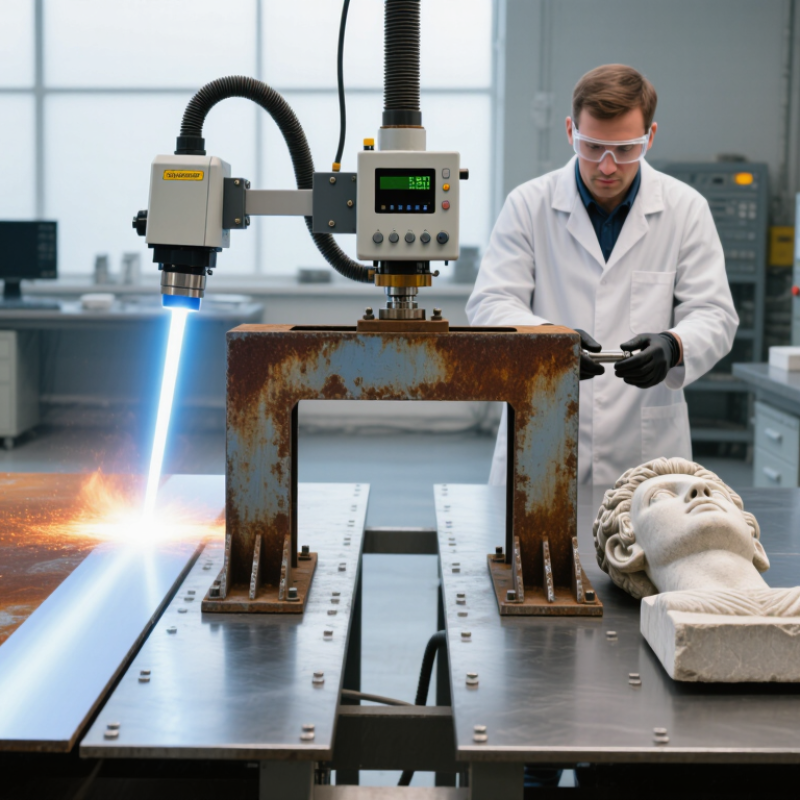
Laser cleaning equipment uses a focused beam of light to loosen or remove unwanted material from a surface. A typical system includes a laser source, a handheld or automated scanning head, controls, and protective equipment. Some setups also use extraction to capture dust or fumes released during cleaning. The beam can remove rust, paint, oil, oxide layers, or residue from tools, metal parts, molds, and selected stone surfaces. It usually works without abrasive contact, so it can reduce wear on the underlying material.
The operator adjusts settings such as power, pulse rate, and scan speed for the material and the layer being removed. For example, a rusty steel bracket may need different treatment from a thin painted panel. A small test area helps reveal whether the surface is changing too. This matters because excessive heat or an unsuitable setting can discolor, roughen, or damage the base material. The process is precise, but not effortless.
Laser cleaning is useful in maintenance, restoration, manufacturing, and preparation before coating or welding. It can reach corners and narrow grooves, though access depends on the scanning head and the part’s shape. Operators need training, suitable eye protection, and controls for nearby people and reflective surfaces. Extraction may be necessary, depending on what the laser removes. Results vary with the coating, substrate, and machine settings; clean-looking does not always mean damage-free.
The Main Components of a Laser Cleaning System
A laser cleaning system is built around a laser source, which generates short pulses of concentrated light. The source determines key settings, such as pulse energy and repetition rate. These settings affect how quickly a coating or oxide layer can be loosened without excessive heating. The beam travels through an optical path to a cleaning head, often carried by hand or mounted on a machine.
Inside the head, focusing optics shape the beam, while a scanning unit moves it across the surface in a controlled pattern. You may see a narrow line of light sweep over a steel plate, lifting discoloration layer by layer. That matters. A control unit coordinates the laser and scan speed, and lets an operator adjust parameters for different materials. Poor settings can leave residue or mark the base surface, so test patches are useful.
Cooling equipment helps keep the laser source within its operating temperature range. A fume extraction unit captures particles and vapors released during cleaning; it should be positioned close to the work area. Safety components can include an enclosure, warning indicators, and interlocks that stop operation when access is opened. Not every surface agrees. Reflective metals, delicate finishes, and uneven contamination may need slower trials and careful inspection. Even with automated controls, real surfaces often behave less neatly than the setup suggests.
How Laser Cleaning Removes Contaminants Step by Step
Laser cleaning starts with identifying the surface material and the contaminant. Rust, paint, and oily films absorb laser energy differently. Operators choose a suitable wavelength, pulse duration, and power, then test a small area. No guesswork.
A focused beam moves across the surface in controlled passes. Contaminants absorb much of the energy and heat rapidly, loosening or vaporizing from the base material. Depending on the material, tiny pressure changes can also help lift the residue. The cleaning head scans in overlapping lines, like careful strokes across a metal plate. A small test patch helps reveal whether the settings are too aggressive.
The operator adjusts the settings while checking the surface between passes. A local extraction system captures dust and fumes; these should not be left to drift around the work area. After each pass, the surface is inspected under good lighting for remaining residue, discoloration, or damage. Not every coating releases evenly. Edges and pits may need slower, closer attention, and that can be tedious. Enclosures, interlocks, and suitable eye protection help control exposure to the laser and airborne particles.
Common Laser Cleaning Methods and Operating Modes
Laser cleaning equipment uses a focused beam to loosen or vaporize unwanted layers, such as rust, paint, or oil. The laser interacts with the surface, while the base material should remain largely intact when settings are chosen carefully. It sounds simple, but it isn’t always. Coatings vary in thickness, and even similar-looking metals can respond differently.
Common methods include pulsed-laser cleaning and continuous-wave cleaning. Pulsed systems deliver brief bursts of energy, which can help control heat on delicate parts or remove thin contamination. Continuous-wave systems provide a steady beam and may suit faster cleaning over broader areas. Some processes rely on rapid heating and thermal expansion; others use ablation to break the contaminant’s bond with the surface. Small changes matter. A test patch can reveal discoloration or uneven removal before a larger job begins.
Operating modes range from hand-guided cleaning to automated scanning with a robot or fixed system. Operators may adjust scan speed, beam power, and spot overlap to suit the surface. A slow pass can overheat a part; a rushed one may leave residue. There is no perfect preset for every job. Dust and fumes still need suitable extraction, and operators need laser-rated eye protection. Reflective surfaces deserve extra care.
What Is Laser Cleaning Equipment and How Does It Work?
Laser cleaning equipment directs a controlled beam at a surface to remove contaminants such as rust, paint, or oxide. The contaminant absorbs the laser energy and is removed through processes such as ablation and rapid heating; settings must be matched to the material to avoid damage.
Representative Laser Wavelengths
Common methods and operating modes: Pulsed lasers deliver energy in short bursts and are often used for precise, controlled cleaning. Continuous-wave (CW) lasers emit a steady beam and can suit faster treatment of robust surfaces. The chart shows representative UV, green, and infrared wavelengths—not a ranking of cleaning performance. Suitable wavelength and settings depend on the contaminant and substrate.
Suitable Materials, Applications, and Safety Considerations
Laser cleaning removes rust, paint, oil, or oxide through controlled laser pulses. The surface absorbs the beam, and unwanted layers heat, break apart, or vaporize. The substrate may remain intact, but not automatically. Metals are common candidates; stone, ceramics, and some composites may also suit the process after testing. Coatings, surface color, and reflectivity change how energy is absorbed. Test a small patch.
Applications include removing corrosion from steel parts, cleaning weld areas, and lifting soot from stone details. The MarketsandMarkets 2023 Laser Cleaning Market report estimated a global market of USD 0.7 billion that year, projecting USD 1.4 billion by 2028. That growth reflects wider industrial interest, not proof that laser cleaning fits every job. A stubborn coating can require slower passes, while excess heat may discolor or pit a delicate surface.
Safety needs equal attention. High-power cleaning systems can create hazardous direct and reflected beams, so use wavelength-matched protective eyewear, beam enclosures, and functioning interlocks. The Laser Institute of America’s ANSI Z136.1 guidance calls for controls based on the laser’s wavelength, power, and exposure conditions. Extract fumes and particles at the source; removed paint or metal residues may still be harmful. Keep reflective tools away from the beam path. Even experienced operators should reassess the setup when the material or coating changes.
(780) 669-9420