How to Choose a Yogurt Packing Machine in 2026?

Choosing a Yogurt Packing Machine in 2026 is not simply a matter of comparing prices. It is a decision about hygiene, product consistency, labor, and long-term reliability. A machine standing beside a filling line must handle chilled yogurt, different cup sizes, foil lids, and changing production volumes. Small details matter. A loose seal can create waste. An inaccurate fill can damage customer trust. A difficult cleaning process can slow the entire shift.

Dr. David Acheson, a food-safety physician and former FDA associate commissioner, has stated, “Food safety is not a competitive advantage; it is a cost of doing business.” That principle should guide every machine evaluation. Look for hygienic stainless-steel construction, accessible contact parts, dependable dosing control, and documented cleaning procedures. Servo-driven systems may improve accuracy, but they can also increase maintenance demands and purchase costs. Automation sounds impressive. It is not always the best answer.

A practical buyer should test the machine with the actual yogurt recipe, cup material, sealing film, and production speed. Ask for sample runs. Inspect the sealed cups afterward. Check for drips, wrinkles, weak seals, and inconsistent filling. Confirm spare-parts availability and technician support before signing a contract. Energy use also deserves attention, especially during long production runs. No checklist is perfect. A cheaper machine may become expensive through downtime, waste, or difficult sanitation. This guide will help manufacturers compare essential features, avoid vague promises, and choose a Yogurt Packing Machine that fits real operating conditions in 2026.

How to Choose a Yogurt Packing Machine in 2026?

What Is a Yogurt Packing Machine and Why Does It Matter?

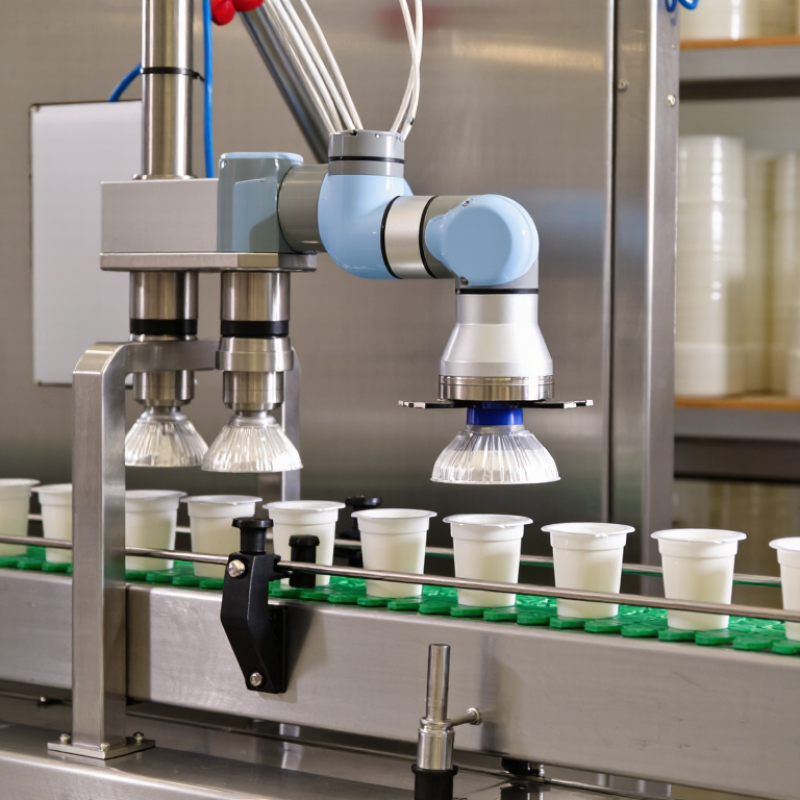
A yogurt packing machine is equipment that doses yogurt into cups, places lids, and seals each container. Some lines also print dates and detect missing or damaged lids. It works between mixing and cold storage, where product temperature and careful handling matter. The machine does not improve poor yogurt. It protects good yogurt from avoidable variation.

Accurate filling controls portion cost and keeps every cup visually consistent. A weak seal can cause leaks, contamination risks, and shortened shelf life. A strong system uses food-grade contact surfaces, smooth welds, and cleaning access without hidden corners. Check whether operators can inspect the dosing nozzles, sealing plate, and conveyor easily. In a trial, weigh filled cups from several lanes. Small differences often reveal setup problems before customers do.

When choosing a machine in 2026, match output to realistic demand, not an impressive maximum speed. Review cup sizes, yogurt thickness, fruit pieces, and packaging material before requesting a quotation. Sensor alerts and digital records can support traceability, but they should remain simple to use. Request documented fill accuracy, seal tests, sanitation procedures, and service response times. Do not ignore noise, floor space, or your maintenance team’s skill level. No machine is perfect. A slightly slower filler may deliver better uptime and less product waste.

How to Define Your Yogurt Packaging Requirements

How to Choose a Yogurt Packing Machine in 2026?

Before comparing machines, define the yogurt packaging requirements precisely. A small dairy selling 500 cups daily needs different equipment from a plant producing 20,000 cups per hour. Grand View Research estimated the global yogurt market at about USD 147 billion in 2023, with continued growth expected through 2030. That growth increases pressure on filling accuracy, hygienic design, and production flexibility.

Start with the product. Is it stirred yogurt, set yogurt, drinkable yogurt, or yogurt with fruit pieces? Measure viscosity, particle size, cup volume, and filling temperature. A machine designed for smooth yogurt may struggle with fruit chunks. Record your target output, too. Include current demand and a realistic three-year forecast. Buying only for today can create an expensive bottleneck.

Packaging details matter. Specify cup material, lid type, seal diameter, date coding, and required shelf-life controls. PMMI industry reports consistently identify labor availability and automation as major packaging investment drivers. However, full automation is not always practical. A semi-automatic system may suit a seasonal producer better. I learned this the hard way: maximum speed can reduce useful flexibility. Check changeover time, cleaning access, filling tolerance, compressed-air needs, and operator training. Ask for test runs using your actual yogurt, cups, and sealing film. Supplier claims are useful, but production evidence is better.

How to Choose a Yogurt Packing Machine in 2026? - How to Define Your Yogurt Packaging Requirements

Packaging Requirement Entry-Level Requirement Standard Production Requirement High-Throughput Requirement How to Define the Requirement
Daily Output 1,000–5,000 cups/day
Suitable for small dairies, farm shops, test production, and local distribution.
5,000–30,000 cups/day
Suitable for regional production with several product changes per day.
30,000–150,000+ cups/day
Suitable for continuous production and large retail supply contracts.
Calculate expected sales volume, working days, shift hours, planned downtime, and a capacity reserve of approximately 15–25%.
Filling Speed 600–1,500 cups/hour
Usually selected when flexibility is more important than maximum output.
1,500–6,000 cups/hour
A practical range for many single-line yogurt operations.
6,000–24,000+ cups/hour
Generally requires multiple lanes, automatic cup feeding, and automated discharge.
Compare rated speed with the actual speed for the selected cup size, product viscosity, sealing material, and number of filling lanes.
Cup Volume 80–500 ml
Often sufficient for sample packs, dessert cups, and family-size containers.
100–1,000 ml
Supports common single-serve and multi-serve yogurt formats.
80–1,500 ml
May require separate tooling or a machine designed for multiple container heights.
List the minimum, maximum, and most frequently produced fill volumes. The largest cup usually determines dosing and indexing requirements.
Cup Material Preformed cups made from PP, PS, or PET, depending on product and packaging specification. Preformed cups with automatic denesting and controlled cup-position detection. Preformed cups or roll-fed forming systems, with automatic material feeding and quality inspection. Confirm compatibility with the cup material, wall thickness, rim shape, dimensions, recycling requirements, and food-contact regulations.
Product Viscosity Standard stirred or set yogurt with relatively stable flow behavior. Yogurt containing fruit preparation, cereal, or moderate particulates. High-viscosity yogurt, layered products, inclusions, or products requiring multiple dosing systems. Provide viscosity data at filling temperature and identify particulates, fruit pieces, or air-sensitive ingredients before selecting the pump and nozzle.
Filling Accuracy Typical target: ±1.5–2.0% of nominal fill weight. Typical target: ±0.5–1.0% of nominal fill weight. Typical target: ±0.3–0.8% of nominal fill weight with automated control and regular calibration. Define the legal net quantity, internal overfill allowance, target weight, and acceptable standard deviation for each cup size.
Sealing Method Heat sealing for aluminum foil or plastic lidding material. Heat sealing with automatic lid placement, seal-temperature control, and seal-presence detection. High-speed heat sealing with automatic lid feeding, seal inspection, reject handling, and optional gas flushing. Specify lidding material, seal layer, seal temperature, dwell time, peel strength, leak resistance, and desired opening behavior.
Modified Atmosphere or Gas Flushing Usually not required for conventional yogurt cups. Optional when the product, packaging format, or shelf-life program justifies it. May be integrated for oxygen-sensitive products or specific shelf-life objectives. Use gas flushing only after shelf-life testing. Define gas type, target residual oxygen, gas consumption, and product sensitivity.
Changeover Time 30–90 minutes
Manual format changes and cleaning steps are common.
15–45 minutes
Tool-less parts and guided adjustments can reduce downtime.
10–30 minutes
Quick-change tooling, recipe control, and automated setup are commonly required.
Measure the full changeover from the last acceptable cup of one format to the first acceptable cup of the next format.
Cleaning and Hygiene Manual cleaning with removable product-contact components. Hygienic design, sloped surfaces, tool-less removal, and controlled cleaning procedures. CIP-compatible product circuits, automated cleaning validation, hygienic conveyors, and minimized product-retention areas. Define whether cleaning is manual, COP, or CIP. Check drainability, stainless-steel grade, gasket materials, access, and sanitation validation needs.
Product-Contact Materials Food-grade stainless steel and approved elastomers in the filling area. Stainless steel 304 is common; stainless steel 316L may be specified for more demanding product-contact conditions. Hygienic stainless-steel construction with documented material certificates and traceable seals and hoses. Request material certificates, surface-finish information, gasket specifications, and compliance documentation for food-contact use.
Utilities Approximately 3–8 kW electrical power; compressed air may be required. Approximately 8–20 kW electrical power and about 500–1,500 NL/min compressed air, depending on configuration. Approximately 20–60+ kW electrical power and about 1,500–5,000+ NL/min compressed air, depending on line integration. Confirm voltage, phase, frequency, air pressure, air quality, water, drainage, ventilation, and utility peak demand before installation.
Floor Space Approximately 2–6 m² for the main machine, excluding operator access and product handling. Approximately 6–20 m² for the machine and normal operating clearance. Approximately 20–80+ m² for the complete filling, sealing, conveying, inspection, and packing area. Include machine footprint, operator walkways, cleaning access, maintenance clearance, raw-material storage, and downstream equipment.
Automation Level Manual cup loading, semi-automatic filling, sealing, and product discharge. Automatic cup denesting, filling, sealing, date coding, and discharge with operator supervision. Integrated line control, automatic reject handling, checkweighing, vision inspection, case packing, and production data collection. Choose automation according to labor availability, required consistency, changeover frequency, traceability needs, and future expansion plans.
Quality Control Manual checks for fill weight, seal appearance, cup position, and coding. In-line fill-weight checks, seal-presence detection, date-code verification, and sample leak testing. Automated checkweighing, vision inspection, seal-integrity monitoring, reject confirmation, and electronic production records. Define critical quality attributes, sampling frequency, reject limits, data retention period, and the response procedure for nonconforming cups.
Staffing Usually 1–2 operators per shift, depending on manual loading and packing tasks. Usually 1–3 operators per shift, including material replenishment and quality checks. Usually 2–5 operators per shift, depending on line integration, palletizing, and sanitation procedures. Estimate labor for operation, material handling, quality assurance, cleaning, format changeovers, and planned maintenance.
Target Operating Environment Small-scale food production area with controlled hygiene practices. Dedicated hygienic production room with controlled personnel and material flow. Food-production facility with zoning, documented sanitation, environmental monitoring, and controlled access. Match the machine design to local food-safety requirements, room temperature, humidity, drainage, pest control, and hygienic zoning.
Budget Planning Lower capital cost, but higher manual labor and lower output should be expected. Moderate capital cost with improved consistency, throughput, and changeover efficiency. Higher capital cost, with greater automation, integration, data capture, and lower labor cost per cup. Compare total cost of ownership, including tooling, utilities, labor, sanitation, maintenance, spare parts, packaging waste, and downtime.
Future Expansion Allow space and controls for a possible second machine or additional packing equipment. Select modular filling heads, change parts, and conveyors that can support additional formats. Use scalable line controls, spare input/output capacity, flexible recipe management, and expansion-ready material handling. Base the decision on projected three- to five-year demand, expected new cup sizes, new recipes, additional shifts, and automation upgrades.

Planning note: The figures above are typical planning ranges for yogurt packaging projects. Actual performance depends on product formulation, temperature, cup geometry, packaging materials, machine configuration, cleaning method, and local regulatory requirements.

Which Machine Types and Features Fit Your Production Line?

How to Choose a Yogurt Packing Machine in 2026?

Choosing a yogurt packing machine depends on your production line, product texture, and daily output. A small dairy may need a compact cup filler and sealer. Larger facilities often require rotary or inline systems. Cup machines suit standard portions and clean presentation. Pouch machines work well for flexible packaging and takeaway products. For yogurt containing fruit pieces, select a pump with gentle, controlled movement. High shear can damage fruit and create uneven portions.

Good fit starts with accurate capacity planning. Compare hourly output with your real demand, not an optimistic sales forecast. Check filling accuracy, sealing temperature control, and automatic cup detection. Servo-driven dosing can improve consistency during long shifts. Tool-free changeover also reduces lost production time. Useful hygiene features include stainless steel contact parts, clear access panels, and simple cleaning procedures. Confirm that the design supports your cleaning process.

Do not overlook the filling environment. Small leaks become expensive quickly. In factory trials, test cold yogurt, thick yogurt, and products with fruit pieces. Measure waste, seal strength, changeover time, and operator workload. I have seen machines perform well during demonstrations but struggle after several hours. That gap matters. A larger machine is not always better. It may need more space, training, and maintenance. Ask for production records and service response details before choosing. Leave room for future packaging sizes, but avoid paying for features your line will never use.

How to Compare Hygiene, Speed, Accuracy, and Total Cost

How to Choose a Yogurt Packing Machine in 2026?

Hygiene should guide the first comparison. Yogurt leaves protein and moisture around nozzles, seals, and conveyor edges. Choose a machine with stainless-steel contact parts and tool-free access. Smooth surfaces reduce residue and simplify daily cleaning. Ask for cleaning instructions, drainage details, and sealing-area inspection points. A small point. Confirm whether operators can reach hidden corners without dismantling half the machine. In real production, cleaning time often reveals design weaknesses better than a sales demonstration.

Speed matters, but only when accuracy remains stable. Compare rated output with performance during continuous filling, not a short empty-machine test. Request trial data using your actual cup size, yogurt viscosity, and filling weight. Watch the line after several hours. Do not trust claims alone. Check whether the machine controls splashing, dripping, and uneven sealing. A few grams of overfill can become a significant monthly expense, especially with high-volume production.

Total cost includes more than the purchase price. Calculate labor, utilities, cleaning materials, spare parts, training, and expected downtime. Ask how quickly common components can be replaced. Review the warranty conditions carefully, because unclear exclusions create unpleasant surprises. I would also compare energy use per thousand cups, not only hourly speed. My own preference has sometimes been too conservative; a slower machine may increase labor costs unnecessarily. Run a realistic factory trial before deciding, and record every adjustment operators need.

How to Select, Install, and Maintain the Right Machine

How to Choose a Yogurt Packing Machine in 2026?

Selecting a yogurt packing machine starts with the product, not the machine catalog. Check yogurt viscosity, cup size, filling volume, and target output per hour. A thick Greek-style yogurt may require a different dosing system than a drinkable yogurt. Ask for a product trial using your actual recipe. Small differences in fruit pieces or temperature can affect filling accuracy.

Installation needs careful planning. Place the machine on a level, washable floor with enough space for cleaning and inspection. Confirm power, compressed air, drainage, and ventilation before delivery. Connect product pipes with hygienic fittings and avoid sharp bends where yogurt may collect. Run several test batches at low speed. This exposes leaks, foam, uneven sealing, and awkward operator movement. I once underestimated cleaning access, and that mistake made daily maintenance slower than expected.

Maintenance should be practical and documented. Clean product-contact parts after every production shift, following the equipment maker’s approved procedure. Inspect seals, nozzles, sensors, and cutting edges on a fixed schedule. Calibrate the filling system with repeated weight checks, not a single sample. Record results, adjustments, cleaning times, and replaced parts. Keep spare seals and wear components available, but do not replace parts without checking the cause of failure. Sometimes the machine is blamed when poor temperature control is the real problem. Train operators to notice dripping, unstable air pressure, unusual noise, and changing fill weights. Small warnings matter.

How to Choose a Yogurt Packing Machine in 2026?

Typical throughput ranges by automation level for selecting, installing, and maintaining a yogurt packing line.

Use the required cups per hour, product viscosity, cup size, sealing method, available floor space, and cleaning requirements to select the machine. During installation, confirm utility connections, hygienic zoning, operator access, and line clearance. For maintenance, prioritize daily cleaning, regular seal inspection, lubrication according to the manufacturer’s instructions, and scheduled checks of filling accuracy and temperature controls.

The chart shows generalized industry planning ranges in cups per hour. Actual output depends on cup format, fill volume, product characteristics, changeover time, and machine configuration.

×
img

    Contact Info

    Phone number

    661-392-8948

    Address info

    3451 Pegasus Drive, Bakersfield, CA USA