Blog
- Home
- Blog
Apa Itu Gate Valve 7 Tips for Global Buyers?
When global buyers ask, “apa itu gate valve,” they usually need more than a basic definition. A gate valve controls flow by lifting or lowering a flat or wedge-shaped gate inside the body. It works best when fully open or fully closed. It is not designed for frequent throttling. That distinction can prevent damaged seats, vibration, and costly maintenance.
This guide presents seven practical tips for selecting gate valves across international supply chains. The advice reflects common purchasing and inspection experience, from reviewing material certificates to checking pressure ratings and end connections. Buyers should compare stainless steel, carbon steel, and ductile iron carefully. Each material performs differently in water, steam, oil, or corrosive service. A valve may look strong in a catalog, yet its internal trim can fail under real operating conditions.
Small details matter. Confirm the nominal size, pressure class, temperature range, and actuator requirements before requesting quotations. Ask suppliers for dimensional drawings, test records, and traceable identification marks. Check whether the flange standard matches the existing pipeline. One overlooked bolt pattern can delay installation for weeks. That happens.
Reliable sourcing also requires supplier evaluation, not only price comparison. Look for documented quality procedures, clear warranty terms, responsive technical support, and consistent inspection records. However, no checklist removes every risk. Product data may be incomplete, and field conditions are often misunderstood. Buyers should question assumptions, involve qualified engineers, and verify critical details independently. A careful decision today can protect plant uptime, worker safety, and long-term operating costs.
What Is a Gate Valve and How Does It Work?
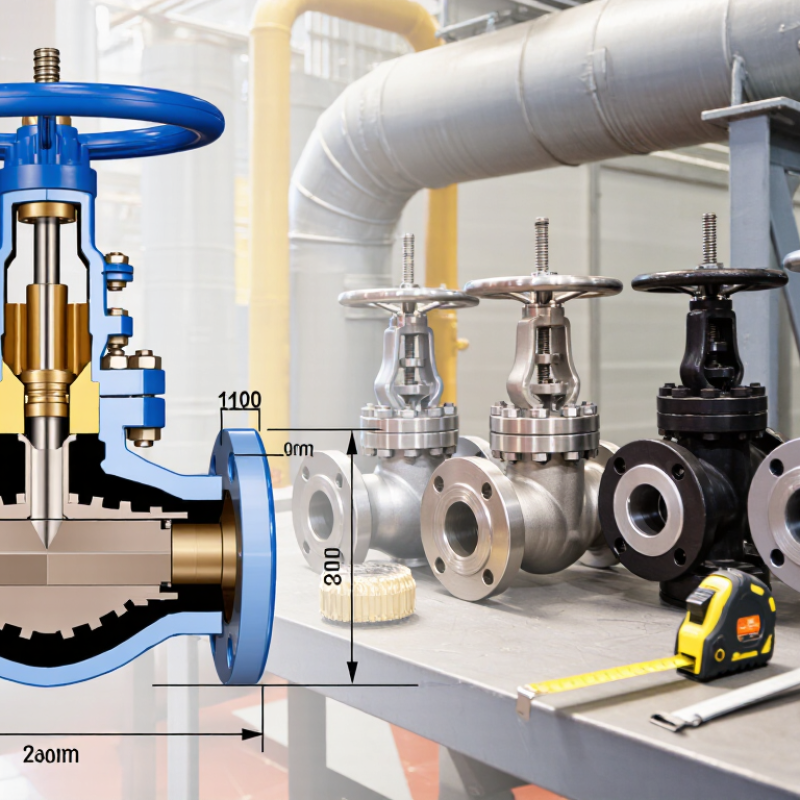
A gate valve controls flow by lifting or lowering a gate across a pipeline. The gate moves perpendicular to the fluid path. Fully open, it leaves a nearly straight passage, limiting turbulence and pressure loss. Fully closed, it blocks the line between two sealing seats. A handwheel turns a threaded stem, while the stem drives the gate vertically. Some designs show stem movement. Others hide it inside the bonnet.
This geometry suits water, oil, gas, steam, and process lines requiring isolation. It is not a good control valve. Partial opening can cause vibration, seat erosion, and unstable flow. The U.S. Department of Energy’s Improving Pumping System Performance sourcebook reports that pumping can consume 25–50% of industrial facility electricity in some cases. Avoiding unnecessary pressure loss matters. Still, that figure concerns entire pumping systems, not one valve.
Field inspection changes the answer. I look for line size, pressure class, temperature, fluid chemistry, actuator needs, and maintenance access. Wedge gates suit many isolation duties, but solids can damage seating surfaces. Slab gates may fit certain process services. Rising stems need overhead clearance. Non-rising stems need position indicators. Verify pressure-temperature ratings under ASME B16.34, and request shell and seat tests aligned with ISO 5208. A catalogue number alone proves little. Installation errors still defeat sound valve design.
Key Components and Operating Principles of Gate Valves
A gate valve controls flow by moving a gate vertically or parallel to the fluid path. Its main parts include the body, bonnet, gate, seats, stem, packing, and handwheel or actuator. The body contains pressure, while the bonnet supports the stem and seals the upper chamber. Seats create the closing surfaces. In wedge designs, the gate presses against angled seats; slab designs move between parallel seats.
When the handwheel turns, the stem lifts or lowers the gate. A rising stem shows position clearly, but requires extra space above the valve. A non-rising stem suits restricted spaces, though its threads may remain exposed to dirty service. Fully open, the gate retracts from the stream, causing relatively low pressure loss. Fully closed, it isolates equipment for maintenance. Not for throttling. Space matters.
Global buyers should check pressure class, temperature range, fluid compatibility, end connection, testing documents, actuator torque, and spare-seat availability. Carbon steel may suit many industrial lines, while stainless steel handles more corrosive fluids; selection still needs process data. Packing material matters around steam, chemicals, and outdoor temperature changes. I have seen installations fail because the valve matched the pipe size but not the flange standard. That detail deserves a second review. Operational checks should include smooth travel, visible position, and reliable sealing after installation.
Common Gate Valve Types and Their Industrial Applications
Apa Itu Gate Valve? Common Gate Valve Types and Their Industrial Applications
Gate valves control flow by lifting a gate from the fluid path. They work best when fully open or fully closed. Throttling can damage the gate and create unstable flow. Common designs include wedge, parallel-slide, resilient-seated, rising-stem, and non-rising-stem valves.
Wedge gate valves suit steam, oil, gas, and process pipelines. Their angled gate can seal against pressure changes, but poor alignment may cause sticking. Parallel-slide valves perform well in high-temperature power systems. Resilient-seated gate valves are widely used in municipal water networks. Their coated wedge improves sealing around sand and light debris. Rising-stem designs show valve position clearly, while non-rising stems save space in underground chambers. The 2024 MarketsandMarkets Industrial Valves report estimates the industrial valve market will grow from about USD 78 billion in 2024 to nearly USD 99 billion by 2029. That growth reflects wider infrastructure and energy investment, not automatic suitability for every service.
Tip: Match the valve to pressure, temperature, fluid chemistry, and operating frequency. A water valve may fail quickly in abrasive slurry.
Tip: Ask for pressure-test records, material certificates, and applicable standards. API 600, API 603, and EN 1171 may apply, depending on the design. Check the actual project specification.
In field inspections, handwheel clearance is often overlooked. A valve can meet the datasheet yet remain impossible to operate beside a pipe rack. I have also seen corrosion allowances treated as a minor detail. That assumption deserves review. Local water quality, storage humidity, and spare-part access can change the practical service life.
Seven Essential Buying Tips for Global Gate Valve Buyers
Global buyers should begin with the service, not the catalog photo. Grand View Research estimated the global industrial valves market at about USD 78 billion in 2023, showing intense competition and wide quality differences. Tip one: define pressure, temperature, fluid, pipe size, and operating frequency. Tip two: select materials against corrosion, erosion, and thermal cycling. Tip three: request compliance with applicable standards, such as API 600, API 598, ISO 5208, or equivalent specifications. Standards matter. A cheaper valve can become expensive after one failed isolation test.
Tip four: verify pressure-test records, material certificates, and traceability for body, stem, and sealing components. Tip five: compare total ownership cost, including actuators, installation, spare parts, and inspection access. UN-Water reports that agriculture uses roughly 70% of global freshwater withdrawals; water projects therefore need careful attention to corrosion, sediment, and frequent operation. Tip six: match the gate design to real operating conditions. A valve intended for rare isolation may perform poorly under daily throttling. That mistake is common. Tip seven: audit the supplier’s quality system, independent inspection process, delivery history, and after-sales response in your region.
Ask for sample documents before placing a large order. Check whether test values match the exact valve size and pressure class. Some quotations look precise but hide assumptions. I have seen buyers focus on purchase price while overlooking lifting space, gasket availability, and local service skills. That approach deserves reconsideration. Reliable procurement combines engineering review, documented testing, realistic logistics, and a clear acceptance plan.
| No. | Buying Dimension | What to Confirm | Technical Guidance | Relevant Standards or Documents | Practical Acceptance Check |
|---|---|---|---|---|---|
| 1 | Choose the correct valve type | Determine whether the application requires a wedge gate valve, parallel-slide gate valve, resilient-seated gate valve, or knife gate valve. | Gate valves are generally intended for fully open or fully closed service rather than continuous throttling. Wedge designs are common in general process and pipeline applications; knife gate valves are often selected for slurries or fibrous media when their construction is suitable. | Review the project piping specification, process datasheet, valve design standard, and flow-direction requirements. | Verify the valve type, nominal size, end connection, flow medium, operating mode, and installation orientation against the approved line list. |
| 2 | Match pressure, temperature, and size | Check nominal diameter, pressure class or PN rating, design pressure, design temperature, and allowable pressure-temperature limits. | Common flange pressure designations include ASME Classes 150, 300, and 600, while metric systems commonly use PN ratings. The actual allowable pressure decreases as temperature rises and depends on the body and trim materials. | ASME B16.34 for pressure-temperature ratings and valve requirements; ASME B16.10 for face-to-face dimensions; EN 558 where applicable. | Compare the nameplate and datasheet with the piping design conditions. Do not select a valve using pressure class alone without checking temperature and material limitations. |
| 3 | Select materials for the medium | Evaluate body, bonnet, stem, seat, wedge, packing, and gasket materials against corrosion, erosion, temperature, and chemical compatibility. | Carbon steel is widely used for many non-corrosive services, stainless steel provides improved corrosion resistance in suitable environments, and special alloys may be required for aggressive chemicals or high-temperature duty. Elastomer seats must also be compatible with the medium and temperature. | Material certificates, chemical compatibility data, NACE requirements where sour service applies, and the project material specification. | Request material grade details and inspection certificates for pressure-retaining parts. Confirm that trim and soft goods are identified separately rather than listed only as “stainless” or “resistant.” |
| 4 | Verify end connections and installation fit | Check flanged, threaded, socket-weld, or butt-weld ends, flange dimensions, bore configuration, face-to-face length, stem clearance, and actuator space. | Flanged ends must match the applicable flange standard, nominal size, pressure class, facing, bolt pattern, and gasket arrangement. Weld-end valves require compatible pipe dimensions and an approved welding procedure. | ASME B16.5 for many flanges up to the covered size range, ASME B16.47 for larger flanges where applicable, ASME B16.10 for face-to-face dimensions, and ISO or EN equivalents when specified. | Use certified dimensional drawings before purchase. Confirm that the valve can be removed, operated, and maintained without interference from nearby pipework or structures. |
| 5 | Define actuation and operating requirements | Decide between manual operation, gearbox operation, electric actuation, pneumatic actuation, or hydraulic actuation. | Manual handwheels are suitable when operating frequency and required torque are manageable. Larger sizes, high differential pressure, remote operation, or safety-system integration may require a gearbox or powered actuator. The actuator must be sized for breakaway, running, and seating or unseating torque. | IEC 60534-4 may apply to actuator performance classifications in relevant applications; actuator specifications should also address enclosure, duty cycle, fail position, control signals, and hazardous-area requirements where applicable. | Request torque calculations, actuator sizing data, wiring or air-supply requirements, limit-switch details, and a complete functional test record. |
| 6 | Require inspection, testing, and traceability | Establish shell testing, seat testing, backseat testing where applicable, visual inspection, dimensional inspection, and documentation requirements. | Pressure tests should be performed using a recognized procedure and the specified test medium, duration, and acceptance criteria. Test pressure and leakage limits depend on the governing standard, valve type, pressure rating, and project specification. | API 598 and ISO 5208 are commonly used for valve inspection and pressure testing; the purchase order should identify which standard governs if more than one is referenced. | Review test reports, material certificates, calibration records, inspection release notes, serial-number traceability, and any required non-destructive examination records before shipment. |
| 7 | Compare lifecycle value and global logistics | Assess total cost, delivery schedule, spare-parts availability, warranty terms, preservation method, export documents, and local service capability. | The lowest purchase price may not provide the lowest lifecycle cost. Consider pressure-boundary reliability, packing and gasket replacement, actuator maintenance, corrosion protection, storage conditions, and the availability of compatible replacement parts. | Use the contract quality plan, packing specification, applicable customs classification, country-of-destination regulations, and project documentation requirements. | Require a complete quotation covering valve, actuator, accessories, certificates, packaging, delivery terms, spare parts, warranty, and after-sales support. Confirm that manuals and certificates are supplied in the required language and format. |
International Standards, Materials, and Supplier Evaluation Criteria
Apa Itu Gate Valve? 7 Tips for Global Buyers
A gate valve isolates flow with a rising or non-rising gate. It is not designed for routine throttling. International buyers should match the valve to pressure, temperature, fluid, and installation direction. Standards provide a starting point, not a complete purchasing decision. API 600 may suit steel gate valves, while API 6D is common for pipeline service. ASME B16.34 addresses pressure-temperature ratings and design requirements. ISO 5208 helps define leakage testing. Always confirm the latest edition and project-specific requirements.
Material selection needs practical attention. Carbon steel can serve many ordinary services, but stainless steel resists several corrosive environments. Duplex materials may improve strength and chloride resistance, although welding control becomes more demanding. Low-temperature service requires impact-tested materials. Check body, bonnet, stem, seat, and trim materials separately. A shiny surface proves little. Request material test reports, heat numbers, coating details, and test records. Small documentation gaps can create large delays at customs or inspection.
Supplier evaluation should include manufacturing capability, quality procedures, dimensional control, and independent inspection access. Ask whether shell and seat tests follow the agreed standard. Review sample drawings before production. Confirm pressure ratings, end connections, actuator interfaces, packing, spare parts, and export packaging. Delivery promises deserve evidence, not optimism. A supplier may offer a low price but weak traceability. That is risky. I would also assess communication during a technical disagreement; silence is an early warning. No evaluation is perfect. Even experienced buyers can overlook corrosion under insulation or an unsuitable gasket. Record assumptions clearly, then challenge them before approval.
Apa Itu Gate Valve? 7 Tips for Global Buyers
International standards, materials, and supplier evaluation criteria
The chart shows common nominal pressure designations used in gate valve specifications. ASME B16.34 uses Class designations, while EN 12516 commonly uses PN designations. These scales should not be treated as direct equivalents because allowable pressure depends on temperature, materials, valve design, and applicable standards.
For procurement, verify body and trim materials against the process medium, check documentation such as EN 10204 inspection certificates, confirm compliance with the required standard, and evaluate the supplier’s testing capability, traceability, delivery performance, and after-sales support.
Related Posts
-
What Is a Gate Valve China Top Supplier Guide?
-
Why Choose a Gate Valve: Benefits and Applications in Modern Plumbing Systems
-
2026 Top Gate Valve Types for Your Industrial Applications?
-
Top Gate Valve Types Explained for Your Industrial Needs?
-
Top 10 Benefits of Using DHV Gate Valves for Efficient Pipeline Management
-
2026 How to Choose the Right 4 Gate Valve for Your Needs?

(780) 669-9420