
Blog
- Home
- Blog
How to Choose the Right Through Valve for Your Needs?
Choosing the right through valve is crucial for efficiency in various industrial applications. The global market for valves is projected to reach $82 billion by 2026, according to a report by Markets and Markets. This growth indicates the increasing demand for reliable and effective flow control solutions. A properly selected through valve can enhance system performance and minimize downtime.
Valves are essential components in fluid management. They regulate flow, control pressure, and ensure safety in various processes. However, not all through valves are created equal. Factors such as material, size, and design significantly affect their performance. Industry professionals often struggle with these choices. A 2022 report from the Valve Manufacturers Association states that 30% of valve failures can be traced back to improper selection.
Understanding specific application needs is vital. Operators must consider factors like pressure and temperature ratings, as well as fluid characteristics. Decision-makers need to address these challenges with careful research. The right through valve can lead to long-term reliability. Yet, many still overlook the importance of thorough analysis. They might opt for standard models without considering unique requirements.

Understanding the Basics of Through Valves and Their Applications
Through valves play a crucial role in various industrial applications. Understanding their basics helps in making informed choices. These valves control fluid movement within pipes, impacting efficiency and performance. Different types suit specific needs; knowing their functions is key. For instance, gate valves are ideal for fully open or closed applications. They provide minimal resistance but can be slow to operate.
Another common type is the globe valve, designed for flow regulation. Unlike gate valves, they are effective in throttling. However, they may create more pressure drop, which could be a concern. Check the application requirements before selecting a valve. Pressure ratings and material compatibility are vital factors that impact longevity.
Choosing the right valve is not always straightforward. Some may overlook the impact of temperature or medium type. It’s essential to assess all variables carefully. A valve that works well in one situation might fail in another. Thus, evaluating options based on reliable data can lead to better decisions. Real-world case studies can provide additional insights into valve performance under specific conditions.
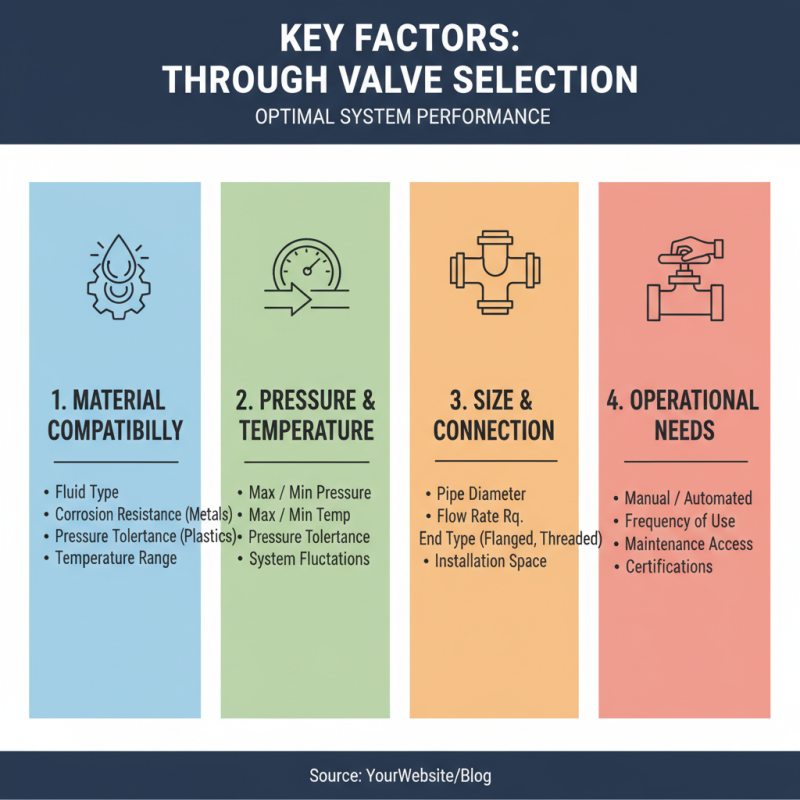
Key Factors to Consider When Selecting a Through Valve for Your System
Choosing the right through valve is crucial for optimal system performance. One key factor to consider is the valve's material. Different materials react differently to fluid types. For instance, metals may corrode in certain liquids, while plastics may not withstand high pressures. Understanding these interactions is vital for long-term reliability.
Another important aspect is the valve's size and flow rate. A valve that is too small might restrict flow, leading to system inefficiencies. On the other hand, an oversized valve can cause pressure drops. Assessing your specific system's needs can help prevent these issues. Additionally, consider the environment in which the valve will operate. Factors like temperature, pressure, and potential exposure to chemicals must all influence your choice.
Installation and maintenance are often overlooked. Not all valves are easy to install or maintain. Some require special tools or techniques. Take the time to evaluate your team's capabilities before making a decision. It's also wise to have a plan for regular maintenance to avoid any unexpected failures. Balancing these considerations will ensure your chosen valve meets your system's unique requirements effectively.
Industry Standards and Specifications Impacting Through Valve Selection
When selecting a through valve, understanding industry standards and specifications is crucial. Different sectors, like oil and gas, utilize specific guidelines to ensure safety and performance. For example, the American Petroleum Institute (API) has established standards that define operational limits, material specifications, and testing procedures. Adhering to these standards guarantees that the chosen valve will meet the operational needs.
It’s important to consider certifications like ISO 9001, which ensures quality management systems are in place. Valves that meet these standards have undergone rigorous testing. Their reliability in various conditions, such as high pressures or corrosive environments, is documented in industry reports. According to a 2022 market analysis by Research and Markets, 35% of valve failures are due to non-compliance with these specifications.
Tips: Always verify that the chosen valve has been tested in conditions similar to your application. Regular audits of valve performance can help identify unnecessary failures. Additionally, be wary of suppliers who cannot provide comprehensive certification documentation. Investing in compliant valves minimizes risks and ensures safe operations. Balancing cost with compliance may require difficult choices, but safety should always take precedence.
Comparative Analysis of Through Valve Materials and Their Performance
When selecting a through valve, understanding material performance is crucial. Different materials exhibit distinct characteristics affecting durability and efficiency. For example, stainless steel, often favored for its corrosion resistance, can last up to 15 years in harsh environments. In contrast, PVC valves may only serve for five years due to susceptibility to temperature extremes and chemical degradation.
The American Society of Mechanical Engineers (ASME) indicates that valve failure can lead to significant operational costs. Evaluating the environmental conditions and material compatibility is essential. High temperatures and aggressive fluids demand resilient materials like titanium or specialized alloys, which offer superior performance despite higher investments.
Tips: Always consider conducting a lifecycle assessment. Comparing initial costs to long-term performance can reveal hidden expenses. Understand your application's specific requirements. Testing a few valve materials in controlled environments can provide insights into their true performance. A decision based on data and analysis is more reliable than on recommendations alone, ensuring your investment is sound.
Real-World Case Studies on Effective Through Valve Utilization
Selecting the right through valve requires careful consideration. Real-world applications can illuminate effective use.
For instance, in a residential plumbing system, a homeowner faced fluctuating water pressure. After consulting with experts, they installed a specific through valve designed for variable flow conditions.
This adjustment stabilized the pressure. It showcased how tailored solutions can improve everyday issues.
In industrial settings, a factory aimed to enhance production efficiency. They implemented a through valve in their cooling system. Initially, the valve struggled with temperature fluctuations, causing inefficiencies. After analyzing the issue, they adjusted the valve parameters, leading to stable performance.
This experience highlights the necessity of trial and adaptation. Effective utilization often comes from learning through hands-on experiences.
While case studies demonstrate potential improvements, they also reveal challenges. A power plant's effort to manage steam flow encountered unforeseen leaks. This situation emphasized the importance of regular maintenance and monitoring. Even with the right component, proactive measures are essential to ensure long-term reliability. Understanding these real-world applications can significantly aid others in making informed valve decisions.
Related Posts
-
Why Are Valve Applications Essential for Global Industries?
-
How to Effectively Control Flow Through Valve Systems for Optimal Performance
-
Top Valves and Their Applications in Various Industries?
-
How to Choose the Right Working Valve for Your Project?
-
How to Fix a Working Valve Issues Troubleshooting Guide
-
Top Tips for Choosing the Best Valves Components for Your Supply Needs

(780) 669-9420