 (780) 669-9420
How to Choose a Steerable Transfer Cart in 2026?
Choosing a Steerable Transfer Cart in 2026 requires more than comparing prices and advertised load capacities. The right cart must match your site, workflow, and material-handling risks. A 20-ton cart may appear suitable, yet narrow aisles or uneven floors can make it impractical. Measure turning areas carefully. Record floor conditions, travel distances, ramp gradients, and daily operating hours before contacting suppliers.
A reliable evaluation should examine steering accuracy, wheel design, braking performance, power supply, control options, and emergency stopping systems. Battery-powered models may reduce emissions indoors, but charging time and battery replacement costs deserve attention. Rail-guided carts can offer stable movement, while steerable designs provide greater flexibility around machines and storage zones. Check the manufacturer’s load charts, technical drawings, test records, and maintenance instructions. Do not rely only on a product photograph.
Small details matter.
Operators should have a clear view of the route and simple controls. Wireless systems need dependable communication and practical backup controls. Service access should be tested, not merely promised. Ask how quickly critical parts can be supplied and whether technicians understand your application. No selection method is flawless. Real facilities change, and initial assumptions can prove incomplete. A short on-site trial may reveal steering delays, floor damage, or awkward loading points that brochures cannot show. This guide explains the main decision factors, helping engineering and purchasing teams choose a safer, more durable, and better-matched Steerable Transfer Cart for modern industrial operations.
Understanding Steerable Transfer Carts and Their Industrial Applications
How to Choose a Steerable Transfer Cart in 2026?
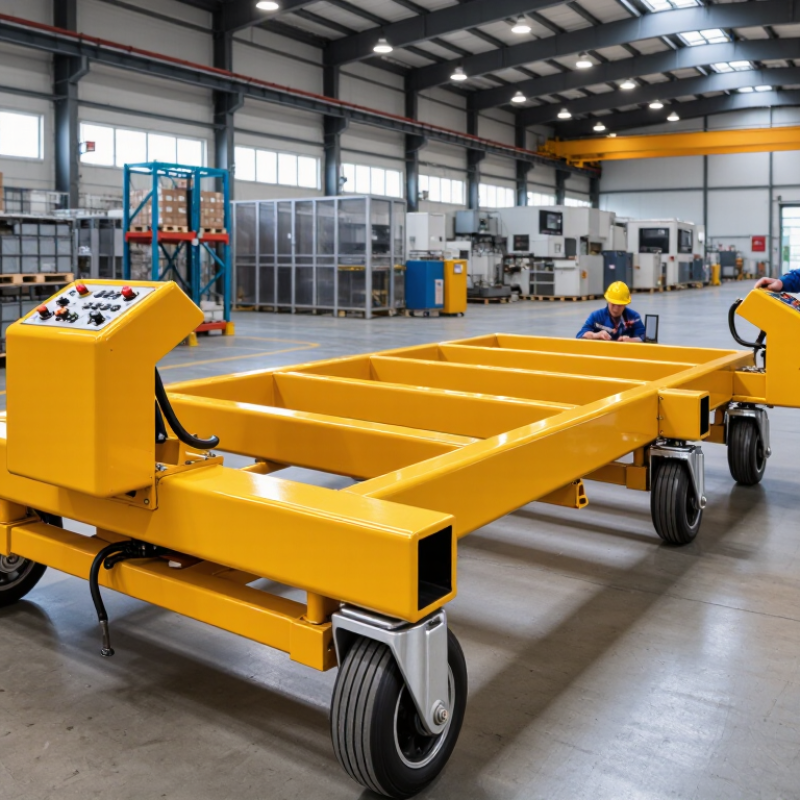
A steerable transfer cart is a powered platform for moving heavy loads across industrial floors. Unlike fixed-track carts, it can change direction around workstations, columns, and storage areas. Its value depends on real operating conditions, not catalog capacity alone. During plant assessments, I check load weight, center of gravity, aisle width, floor joints, and travel frequency. Keep it practical. A cart rated for 30 tons may still perform poorly on uneven concrete.
These carts support steel fabrication, machinery assembly, warehouse handling, shipyard work, and maintenance operations. A steering system should provide controlled turns without sudden movement. Electric drive systems can reduce indoor emissions and simplify routine operation. Radio controls improve visibility, but they require clear procedures and reliable emergency stops. Protective edges, warning lights, alarms, and speed limits matter near pedestrians. Small details matter.
Selection also involves battery access, charging time, wheel wear, and service support. Measure the narrowest turning area before choosing the chassis. Test the cart with the actual load whenever possible. Empty-load trials can be misleading. I have seen projects focus on maximum capacity while overlooking ramp gradients and door clearances. That mistake becomes expensive. A better evaluation records daily travel distance, stopping points, surface conditions, and operator feedback. The most suitable cart is not always the largest or fastest. It is the one that fits the facility’s hazards, workflow, and maintenance discipline.
How to Choose a Steerable Transfer Cart in 2026? - Understanding Steerable Transfer Carts and Their Industrial Applications
| Selection Dimension | Typical Options or Planning Range | Why It Matters | Suitable Industrial Applications | Practical Selection Guidance |
|---|---|---|---|---|
| Rated Load Capacity | Approximately 5–500 tonnes for commonly engineered industrial systems | The cart must safely support the payload, fixtures, and any uneven load distribution. | Steel fabrication, machinery assembly, shipbuilding, precast concrete, and plant maintenance | Select the rated capacity above the maximum operating load, including pallets, jigs, tooling, and dynamic effects. |
| Steering Configuration | Two-wheel steering, four-wheel steering, or multi-wheel coordinated steering | Steering geometry affects turning radius, maneuverability, tire wear, and load stability. | Two-wheel steering for simple routes; four-wheel or coordinated steering for restricted work areas | Use coordinated steering when the cart must make tight turns, lateral movements, or precise docking approaches. |
| Drive System | Electric battery drive with traction motors; diesel or other systems may be used for specialized outdoor duties | The drive system determines emissions, noise, operating time, gradeability, and maintenance needs. | Battery-electric systems for indoor production; combustion-powered systems for suitable outdoor environments | Battery-electric drive is generally preferable indoors because it produces no direct exhaust emissions at the point of use. |
| Steering Method | Manual control, wired pendant, wireless remote, or automated control interface | The control method influences operator visibility, positioning accuracy, and integration with factory workflows. | Manual handling for flexible jobs; remote or automated control for repeatable production routes | Choose controls that allow the operator to maintain a clear view of the load, route, and surrounding personnel. |
| Operating Surface | Smooth, level concrete or asphalt with adequate load-bearing strength | Surface condition affects traction, wheel loading, steering accuracy, and structural stress. | Factory floors, warehouses, assembly halls, fabrication yards, and outdoor hardstand areas | Check floor flatness, joints, ramps, drainage grates, debris, and the allowable floor pressure before selection. |
| Turning Radius | From near-zero turning capability on specialized platforms to several metres on conventional layouts | A smaller turning radius improves maneuverability in aisles and around production equipment. | Tooling areas, confined assembly cells, maintenance bays, and congested warehouse zones | Measure the actual aisle width and turning envelope, including the load overhang and operator clearance. |
| Platform Dimensions | Custom deck length and width based on the payload footprint and center of gravity | A properly sized deck supports the load without excessive overhang or unstable weight distribution. | Long steel sections, molds, fabricated frames, heavy machinery, and modular structures | Confirm payload dimensions, support points, lifting access, tie-down locations, and allowable overhang. |
| Travel Speed | Often approximately 0.5–1.5 m/s, depending on load, route, visibility, and safety requirements | Speed affects throughput, stopping distance, stability, and interaction with pedestrians. | Low-speed indoor material movement and controlled outdoor transfer operations | Prioritize controlled acceleration and braking over maximum speed, especially in shared work areas. |
| Battery and Charging | Lead-acid or lithium-based battery systems with opportunity, scheduled, or exchange charging | Battery selection influences duty cycle, charging downtime, weight, service life, and facility requirements. | Multi-shift manufacturing, warehouse transfer, and intermittent maintenance operations | Estimate travel distance, load frequency, idle time, and available charging windows before sizing the battery. |
| Safety Equipment | Emergency stops, warning lights, audible alarms, brakes, bumpers, interlocks, and obstacle-detection options | Large moving loads create crush, collision, visibility, and stored-energy hazards. | All industrial environments, particularly pedestrian-accessible production areas | Complete a site risk assessment and align the design with applicable workplace transport and machinery safety rules. |
| Automation Readiness | Manual operation, assisted positioning, or integration with sensors, navigation, and production-control systems | Automation can improve repeatability and reduce manual travel, but it requires defined routes and reliable site conditions. | High-volume assembly, repetitive material flow, and digitally managed production lines | Confirm route stability, localization needs, communication interfaces, traffic rules, and recovery procedures. |
| Environmental Conditions | Indoor, outdoor, dusty, humid, low-temperature, or washdown-prone environments | Water, dust, temperature, chemicals, and impact exposure affect electrical and mechanical reliability. | Foundries, steel yards, outdoor construction areas, food-related facilities, and general factories | Specify ingress protection, corrosion resistance, tire material, sealing, and temperature limits for the site. |
| Maintenance Access | Accessible wheels, brakes, steering actuators, batteries, electrical cabinets, and diagnostic points | Easy access reduces downtime and helps maintenance teams inspect critical components. | Continuous-production plants and facilities with limited spare equipment | Evaluate inspection intervals, spare-part availability, technician access, and expected service support. |
Note: The ranges shown are indicative engineering planning values rather than universal specifications. Final cart selection should be verified against the payload, floor conditions, route geometry, operating cycle, risk assessment, and applicable local regulations.