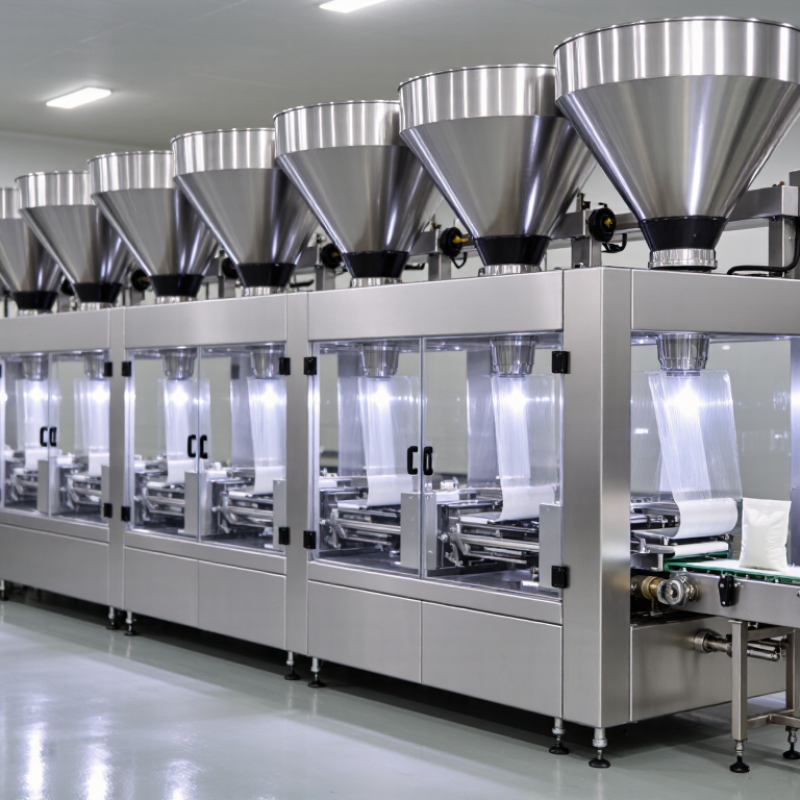
How to Choose China Top Multi Lane Powder Packing Machine?

Choosing a China top Multi-Lane Powder Packing Machine requires more than comparing prices or counting packaging lanes. Powder behaves differently across products. Fine flour may bridge inside the hopper, while protein powder can create dust and inconsistent filling. A reliable selection begins with your actual powder, target pouch size, production speed, and accuracy requirements.

The machine’s auger filler, weighing system, sealing structure, and control software deserve careful review. Ask suppliers for recorded tests using your powder, not a similar sample. Watch the filled pouches closely. Do they show stable weights? Are seals clean after continuous operation? Can operators change film rolls and clean contact parts without wasting hours? These details reveal practical engineering better than attractive brochures.

Experience also matters. A capable Chinese manufacturer should provide material specifications, factory inspection records, performance data, and responsive technical support. Check whether stainless steel surfaces are suitable for your product and whether critical components are available for replacement. Confirm electrical compatibility, documentation quality, training, and commissioning plans before signing an order. Independent audits and sample testing can reduce avoidable risk.

There is no perfect machine.

A six-lane design may offer impressive output, but it can increase adjustment complexity and maintenance demands. A smaller model might deliver better control for a growing business. I have seen purchasing decisions fail when buyers focus only on speed and overlook powder flow, cleaning time, or operator skill. This guide explains how to compare China’s leading suppliers and choose a Multi-Lane Powder Packing Machine that balances productivity, accuracy, hygiene, service, and long-term reliability. Your best choice should fit the product, not merely the sales presentation.

How to Choose China Top Multi Lane Powder Packing Machine?

Understanding Multi-Lane Powder Packing Machine Types

How to Choose China Top Multi Lane Powder Packing Machine?

Understanding Multi-Lane Powder Packing Machine Types

Multi-lane powder packers usually fall into three practical types: stick-pack, sachet, and narrow pouch systems. Stick-pack machines create slim, portable packs with vertical seals. Sachet machines offer wider packs and better space for instructions. Narrow pouch machines handle larger fills and varied powder products. The right choice depends on flowability, density, moisture, and dose accuracy. A free-flowing powder may suit volumetric dosing. Cohesive powder usually needs an auger filler. Augers matter here.

Grand View Research valued the global powder packaging market at about USD 10 billion in 2023. Its report also forecasts steady growth through 2030. This growth supports higher automation, but lane count alone does not guarantee productivity. More lanes can increase output, yet they also multiply sealing adjustments and cleaning points.

PMMI reports that labor shortages remain a major packaging concern among processors. Therefore, servo control, automatic film tracking, and accessible dosing assemblies deserve careful attention. I once assumed twelve lanes were always superior. That assumption ignored maintenance time.

Tips: Request test runs using your actual powder. Check weight variation, dust control, seal strength, and changeover time. Ask for recorded results, not only catalog speed. A machine rated at 600 packs per minute may deliver less with humid powder. Confirm stainless-steel contact parts, guarding, electrical standards, and documentation. Leave room for inspection. Small design details often decide long-term reliability.

Assessing Powder Characteristics and Packaging Requirements

How to Choose China Top Multi Lane Powder Packing Machine?

Assessing Powder Characteristics and Packaging Requirements

Powder behavior should guide the machine choice, not the advertised lane count. During equipment trials, measure bulk density, moisture, particle size, flowability, and dust generation. Fine flour may bridge inside a hopper, while heavier granules can feed too quickly. These differences affect filling accuracy and sealing stability.

Ask the supplier to test your actual powder. A laboratory sample is useful. A production sample is better. Check whether the auger delivers consistent weights across every lane. Record results at the beginning, middle, and end of a run. Small variations often appear after heat builds inside the dosing system. I once saw acceptable trial results change after longer operation.

Packaging requirements need equal attention. Define the target weight, pouch width, film type, seal temperature, and production speed. A narrow sachet may require a different auger design than a wider pouch. Dusty products may need stronger dust extraction around the filling area. Moisture-sensitive powders should use suitable film and controlled storage before packing.

Do not select maximum speed automatically. It can reduce accuracy. Compare the expected output with the powder’s real feeding behavior. Inspect contact materials, cleaning access, changeover time, and spare-part availability. Operators should adjust each lane without complicated tools. This detail is easy to overlook. Request documented test data, clear acceptance standards, and training from technically qualified personnel. Supplier claims still need verification.

How to Choose China Top Multi Lane Powder Packing Machine?

Assessing Powder Characteristics and Packaging Requirements

Powder characteristics directly influence the choice of auger design, filling accuracy, dust control, sealing method, and the number of packing lanes. The chart presents representative bulk-density ranges for common powder categories. Lower-density powders generally require stronger dust management and gentler feeding, while higher-density powders may support faster and more stable filling. Actual values can vary with particle size, moisture content, formulation, and compaction.

Comparing Machine Specifications, Accuracy, and Production Capacity

Choosing a China top multi lane powder packing machine requires more than counting lanes. Compare specifications against your real powder behavior, not showroom figures.

PMMI’s 2024 State of the Industry report valued U.S. packaging machinery shipments at approximately 10 billion dollars in 2023. This growth reflects stronger automation demand, but speed alone can mislead.

Check the dosing method, auger diameter, servo control, sealing structure, and available recipe settings. A six-lane machine may reach 180 bags per minute, yet unstable powder flow can reduce usable output.

Request test results at your target weight, such as 25 grams or 500 grams. Review average deviation, reject rate, and changeover time.

For many applications, a practical filling tolerance near ±1% is more valuable than maximum speed. However, this depends on density and moisture. No machine performs perfectly with every powder.

Tips: Ask for a recorded factory test using your material. Measure ten consecutive bags, then inspect weight variation and seal quality. Compare rated capacity with sustained capacity over one hour. The difference can be surprisingly large.

Also verify whether the machine supports dust control, automatic film correction, and easy cleaning. MarketsandMarkets’ 2024 powder processing equipment analysis projects continued market growth at roughly 5% annually through 2029, increasing pressure for reliable, scalable equipment.

Still, a smaller machine with stable accuracy may outperform a faster model that needs frequent adjustment. Calculate output after rejects, downtime, and labor—not only bags per minute.

Checking Automation, Sanitation, Maintenance, and Safety Features

How to Choose China’s Top Multi Lane Powder Packing Machine?

A strong machine should match the powder, line speed, and cleaning routine. PMMI’s 2023 State of the Industry report valued U.S. packaging machinery shipments at about $10.2 billion in 2022. That growth reflects stronger automation demand, but speed alone proves little. Check servo-driven dosing, automatic film tracking, recipe storage, and reject alarms. Ask for recorded accuracy tests using your actual powder. Fine powders behave differently from granules.

Sanitation needs practical inspection, not attractive brochures. Choose stainless-steel contact parts, sloped surfaces, tool-free removal, and minimal powder traps. A 2022 food safety report from the World Health Organization still links poor hygiene with major contamination risks worldwide. Request cleaning time records and allergen changeover procedures. Shorter cleaning is valuable. Yet, faster is not always safer. I would inspect corners personally.

Maintenance features protect production continuity. PMMI’s 2024 workforce research reports continuing difficulty finding skilled technical workers, so simple diagnostics matter. Look for remote fault codes, accessible sensors, spare-parts lists, and preventive maintenance intervals. Safety must include guarded sealing areas, emergency stops, interlocks, and clear lockout procedures. OSHA’s 2023 enforcement data placed machine guarding among its most frequently cited standards. Ask for risk-assessment documents, electrical test records, and operator training evidence. A supplier may provide impressive figures, but real factory trials reveal weaknesses. That uncomfortable step is worth the time.

How to Choose China Top Multi Lane Powder Packing Machine? - Checking Automation, Sanitation, Maintenance, and Safety Features

Practical comparison criteria for evaluating multi-lane powder packing machines used for sachets, stick packs, and other small-format powder packages.

Evaluation Category Key Feature Recommended Technical Benchmark Why It Matters How to Verify Priority
Automation Multi-lane forming and filling At least 4 lanes for standard high-volume applications; 6–12 lanes may be suitable for compact sachets when product flow is stable. More lanes can increase output without requiring a proportionally larger machine footprint, provided dosing accuracy and sealing stability are maintained. Review the lane configuration, rated output, and actual output during a product trial using the target powder. High
Automation Servo-driven dosing and film control Independent servo control for auger dosing, film pulling, and sealing where accurate synchronization is required. Servo control improves repeatability, supports recipe storage, and allows faster adjustment for different fill weights and film formats. Check the electrical drawings, motion-control list, recipe functions, and changeover demonstration. High
Automation PLC and touchscreen interface Industrial PLC with a color touchscreen, password-protected settings, alarm history, and multilingual operating support. A clear human-machine interface reduces operator errors and makes production data, faults, and adjustments easier to manage. Test user permissions, alarm records, manual jogging, recipe recall, and recovery after a power interruption. High
Automation Automatic film tracking and registration Photoelectric registration control with automatic correction for printed film and stable film tension control. Accurate registration helps keep graphics, tear notches, and cut positions aligned across all lanes. Run printed film at normal speed and inspect registration accuracy at startup and after roll replacement. High
Automation Production monitoring Display of speed, total count, good packs, rejects, downtime alarms, and basic batch information. Production visibility supports root-cause analysis, waste reduction, and more reliable capacity planning. Confirm which values are displayed, stored, exported, or connected to the plant monitoring system. Medium
Sanitation Product-contact construction Food-contact parts made from suitable stainless steel, commonly stainless steel grade 304; grade 316 may be selected for more corrosive environments. Appropriate materials improve corrosion resistance, cleanability, and long-term hygiene performance. Request material certificates or a documented material list for the hopper, auger, chute, dosing parts, and sealing-area components. High
Sanitation Open and cleanable machine design Smooth surfaces, rounded corners, minimal horizontal ledges, accessible product-contact parts, and limited exposed threads. Good hygienic design reduces powder accumulation and makes routine cleaning faster and more consistent. Inspect the machine physically or through detailed photographs with guards and removable parts opened. High
Sanitation Dust containment Enclosed powder transfer areas with provision for local dust extraction, especially for fine or airborne powders. Dust control helps protect operators, reduce cross-contamination, limit product loss, and keep sensors and electrical areas cleaner. Check extraction connection size, airflow requirements, sealing points, and the result of a powder-handling trial. High
Sanitation Tool-less product changeover Dosing screws, funnels, forming parts, and contact components removable with minimal tools and clear identification. Fast changeover reduces downtime and lowers the risk of incomplete cleaning between products. Measure removal time and verify whether all product-contact parts can be inspected and cleaned without special equipment. High
Sanitation Cleaning procedure compatibility Documented dry-cleaning procedure for powders, with clear restrictions on water, compressed air, and chemical exposure. Many powders require controlled dry cleaning; unsuitable washdown practices can cause caking, corrosion, or electrical damage. Review the sanitation manual and confirm the approved cleaning agents, cleaning frequency, and reassembly checks. High
Maintenance Auger and dosing adjustment Quick-access auger assembly with repeatable settings for different fill weights and powder densities. Accessible dosing components simplify calibration and reduce maintenance time when changing products. Perform a fill-weight changeover and verify adjustment time, repeatability, and access to wear parts. High
Maintenance Preventive maintenance access Accessible lubrication points, clearly identified wear parts, service panels, and a scheduled maintenance checklist. Planned maintenance helps prevent unplanned stoppages and supports consistent machine performance. Request the maintenance schedule, spare-parts list, lubrication chart, and recommended replacement intervals. High
Maintenance Diagnostic and alarm functions Fault messages that identify the affected sensor, drive, lane, or safety circuit instead of showing only a general alarm. Detailed diagnostics reduce troubleshooting time and help maintenance staff restore production more quickly. Trigger common faults such as film shortage, open guard, overload, and sensor misalignment during a demonstration. High
Maintenance Spare-parts availability Documented critical-spares list covering sensors, heaters, cutting blades, belts, seals, drive components, and electrical protection devices. Locally available or clearly specified spare parts can reduce downtime and simplify long-term ownership. Check part numbers, lead times, interchangeability, recommended stock levels, and service support arrangements. Medium
Maintenance Format changeover flexibility Adjustable bag length, fill volume, sealing temperature, and cutting position with stored recipes for repeat jobs. Flexible changeover reduces setup errors and makes the machine more suitable for multiple powder products and pack sizes. Run at least two different pack formats and record setup time, rejected packs, and required adjustments. High
Safety Guarding and interlocked doors Fixed guards around moving parts and interlocked access doors that stop hazardous motion when opened. Guarding reduces access to sealing jaws, cutting devices, rotating augers, and other moving components. Inspect each access point and test that opening a guard causes the correct controlled stop. High
Safety Emergency-stop system Clearly visible emergency-stop devices positioned near operator and service areas, with a documented reset procedure. Emergency stops provide rapid access to a safe shutdown in abnormal or hazardous situations. Test every emergency-stop device and verify that restart requires deliberate reset and safe re-enable actions. High
Safety Electrical and pneumatic protection Protected electrical enclosure, overload protection, safe isolation provisions, pressure regulation, and pneumatic dump capability where applicable. Proper energy control helps protect personnel during operation, cleaning, adjustment, and maintenance. Review the risk assessment, electrical schematics, isolation points, pressure settings, and lockout procedures. High
Safety Seal and cutting-area protection Temperature monitoring, over-temperature protection, guarded sealing jaws, and controlled access to cutting mechanisms. These features reduce burn, pinch, and cut hazards while helping maintain consistent package seals. Check independent temperature limits, alarm behavior, guard design, and stop response during a trial run. High
Safety Risk assessment and documentation Complete operating manual, electrical drawings, pneumatic diagrams, maintenance instructions, safety labels, and documented risk assessment. Complete documentation supports legal compliance, operator training, troubleshooting, and safe ownership. Review documents before purchase and confirm that manuals match the supplied machine configuration. High
Performance Filling accuracy Validate the actual deviation against the product specification; do not rely only on a general machine rating because powder density and flowability strongly affect results. Accurate dosing reduces giveaway, customer complaints, and out-of-specification packages. Conduct a statistically meaningful test using the actual powder, target weight, lane count, and operating speed. High
Performance Seal integrity Consistent hermetic or specified seal performance across all lanes at the intended film, temperature, pressure, and speed settings. Reliable seals protect the powder from moisture, leakage, contamination, and reduced shelf life. Perform visual inspection plus appropriate seal-strength, leak, or package-integrity testing for the product. High
Performance Realistic production capacity Compare guaranteed output with actual good-pack output after allowing for startup, powder refill, film changes, cleaning, rejects, and minor stops. Usable production capacity is more meaningful than the maximum no-load speed stated in a brochure. Request a factory acceptance test using the target powder and record good packs per minute and overall downtime. High

Selection principle: The best multi-lane powder packing machine is the one that demonstrates stable filling accuracy, reliable sealing, hygienic cleanability, safe operation, and maintainable performance with the actual powder and packaging film—not simply the one with the highest advertised speed.

Evaluating Suppliers, Customization Options, and Total Operating Costs

How to Choose China Top Multi Lane Powder Packing Machine?

Supplier evaluation should begin with evidence, not catalog photos. PMMI’s Packaging Machinery Economic Report recorded more than 10 billion dollars in U.S. packaging machinery shipments in 2022. That scale reflects serious demand for measurable uptime and service support. Ask Chinese suppliers for factory audit records, customer references, FAT videos, and spare-parts lead times. Request test results using your actual powder. Flour, protein powder, and fine chemical powders behave differently. A polished demonstration can hide difficult dust conditions.

Customization affects both output and risk. Confirm lane count, auger design, weighing accuracy, pouch dimensions, sealing temperature, and changeover time. The supplier should explain how servo controls, dust extraction, and stainless-steel contact parts suit your product. Insist on documented acceptance limits. For example, check weight deviation, seal integrity, reject rates, and continuous running hours. Integration also matters. Verify compatibility with the filler, conveyor, metal detector, and case packer. Small interface errors become expensive delays. They always do.

Total operating cost deserves a five-year model. Grand View Research valued the global packaging machinery market at 52.83 billion dollars in 2023, with a projected 5.2% CAGR from 2024 to 2030. Growth does not make every purchase wise. Include labor, electricity, compressed air, film waste, cleaning, calibration, software support, and planned downtime. Calculate cost per acceptable pouch, not cost per machine. A cheaper machine may require more operators and longer changeovers. My spreadsheet would still include an uncomfortable allowance for unknown repairs. Reality is rarely tidy.

×
img

    Contact Info

    Phone number

    661-392-8948

    Address info

    3451 Pegasus Drive, Bakersfield, CA USA