
Blog
- Home
- Blog
How to Choose the Best Quartz Sink for Your Kitchen?
Choosing the best quartz sink is less about chasing a perfect showroom appearance. It is about matching daily habits, cabinet space, and cleaning expectations. A busy family may need a deep single bowl for roasting pans, while a smaller kitchen may benefit from a compact 30-inch model. Touch the surface if possible. Notice its texture, edge finish, and weight.
Designer Mick De Giulio has said, “The sink is the most important element in the kitchen.” That view feels practical. A sink handles muddy vegetables, hot cookware, sharp utensils, and constant water exposure. Your quartz sink should therefore offer more than attractive color. Check its composition, basin depth, sound insulation, drain position, and installation method. Confirm that the cabinet can support its weight. Measure twice. Small errors become expensive quickly.
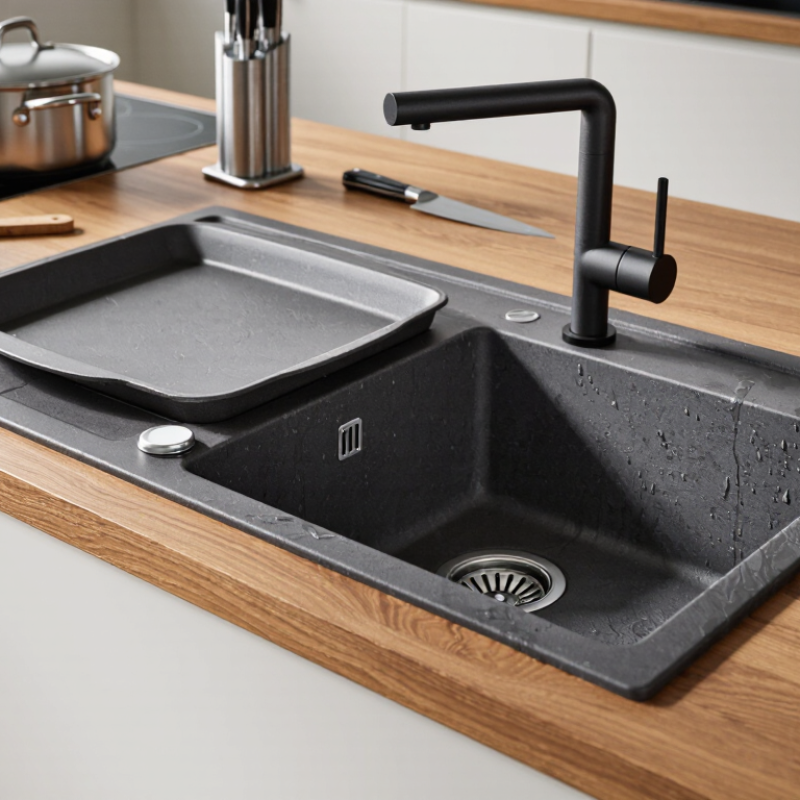
Color deserves careful thought. White and pale gray surfaces reveal coffee marks sooner, but they can brighten a dark room. Deep tones hide minor stains, yet mineral deposits may appear more clearly. Quartz composite usually resists scratches and everyday impact, but it is not indestructible. Extreme heat, abrasive powders, and careless handling can still damage the finish. I once underestimated how quickly hard-water spots collect around a dark basin. That mistake changed my maintenance expectations.
The “best” quartz sink depends on your real routine, not a product photograph. Compare warranty terms, manufacturer instructions, and replacement-drain availability. Read independent customer experiences, but question unusually perfect reviews. A reliable choice should look good on installation day and remain manageable years later.
Understanding Quartz Sink Materials and Construction
Choosing the best quartz sink starts with understanding what “quartz” really means. Most sinks use a composite of crushed quartz, mineral fillers, and binding resin. The exact ratio varies.
That ratio affects hardness, color stability, and weight. A sink with dense mineral content usually feels solid under your hand. However, resin helps shape the basin and reduces brittleness. It is not pure stone.
Look closely at the construction. Check the basin walls, rim, drain area, and underside. Even thickness supports better durability. Reinforced sections around the drain can reduce stress from plumbing connections. A smooth, nonporous surface also helps resist stains from coffee, tomato sauce, and cooking oils. Small matters count.
Ask how the sink was molded and cured. Consistent production can prevent weak corners and uneven surfaces. Still, no quartz composite is indestructible. I once assumed a dark, heavy sink would handle every hot pan, but that expectation was careless. Extreme heat or sudden temperature changes may damage the resin surface. Use a trivet.
Sound insulation is another construction detail. A well-made sink can soften the clatter of plates and running water. But cabinet support matters too. Quartz composite sinks can be heavier than stainless steel, especially in larger sizes. Confirm that the countertop and cabinet frame can carry the load before installation. Inspect the sample in daylight. Subtle texture differences may appear near the edges.

How to Choose the Best Quartz Sink for Your Kitchen?
Quartz composite sinks are typically made from a high proportion of natural quartz combined with a resin binder and small amounts of pigments or additives. The exact formulation varies by manufacturer and product line.
How to read the chart: A representative quartz composite formulation contains approximately 75% quartz, 22.5% polymer resin, and 2.5% pigments or performance additives by mass. Higher quartz content generally contributes to a stone-like feel and surface durability, while the resin helps bind the material and enables molded sink construction.
Assessing Kitchen Space, Layout, and Daily Usage
Choosing a quartz sink starts with your kitchen, not a showroom display. Measure cabinet width, countertop depth, and the clear space around the bowl. Leave enough room for taps, splash control, and food preparation. A deep sink may suit large pots, but it can strain your back in a low cabinet. I learned this after washing cookware in a sink that was simply too deep. Check the cabinet frame, plumbing position, and waste outlet before ordering. A template may look accurate, yet walls are rarely perfectly square.
Study how your kitchen works during a normal day. If breakfast creates a pile of cups, a wide single bowl can reduce juggling. If you wash delicate glasses beside heavy pans, divided space may offer better control. Measure your largest baking tray. It should sit flat without blocking the drain. Consider lighting, walking paths, and whether the sink opens toward a busy doorway. Quartz composite surfaces are durable, but they still need sensible care. Avoid dragging sharp cookware and follow the cleaning guidance provided with the sink. Darker finishes can show pale residue more clearly in hard-water areas. That detail is easy to miss. Ask an installer to verify support and alignment, since a small error can leave standing water. Test the sink height with a sample basin. Comfort matters every day.
Comparing Sink Sizes, Shapes, Mounting Styles, and Features
How to Choose the Best Quartz Sink for Your Kitchen?
Comparing Sink Sizes, Shapes, Mounting Styles, and Features
Start with the cabinet, not the sink. Measure its internal width, depth, and support structure before choosing a basin. A 30- to 33-inch sink often suits standard kitchens, but larger models may reduce valuable counter space. Depth matters too. A deep bowl holds tall pots, yet it can strain your back during long cleaning sessions.
Rectangular sinks offer efficient space and clean lines. Rounded corners make wiping easier and reduce trapped food. Choose a single bowl for washing large baking trays. A double bowl separates rinsing from soaking, although each section becomes narrower. Low-divider designs offer flexibility, but water may cross between sides. I once chose a deep single bowl without checking faucet reach. The faucet felt awkward. That mistake changed how I measure layouts.
Undermount installation creates a smooth counter edge and makes crumbs easy to sweep inside. Top-mount models usually simplify replacement and installation. Flush-mounted styles can look refined, but they require careful, level fitting. Consider sound reduction, heat resistance, stain resistance, and protective surface treatment. Drain grooves can guide water toward the outlet. A rear drain may create more usable cabinet space. Check the manufacturer’s care instructions carefully, because quartz composites vary. Heavy cookware can still chip an exposed edge. Small details matter.
How to Choose the Best Quartz Sink for Your Kitchen? - Comparing Sink Sizes, Shapes, Mounting Styles, and Features
| Option | Typical Dimensions | Basin Configuration | Recommended Cabinet Size | Mounting Style | Useful Features | Best For | Important Considerations |
|---|---|---|---|---|---|---|---|
| Compact Single Bowl | Approx. 24–27 in W × 18–20 in D | One bowl, usually 8–10 in deep | Minimum 27–30 in | Top-mount or undermount | Rear or offset drain, sound-reducing pads | Apartments, galley kitchens, and limited counter space | Smaller bowls may not accommodate large cookware; verify the minimum cabinet width. |
| Standard Single Bowl | Approx. 30–33 in W × 18–22 in D | One large bowl, commonly 8–10 in deep | Minimum 33–36 in | Undermount, top-mount, or flush installation where supported | Rounded corners, drain basket, bottom grid, overflow opening | Most everyday kitchens and households that wash large pans | A deep bowl provides capacity but may require more bending; check the countertop cutout. |
| Large Single Bowl | Approx. 33–36 in W × 19–24 in D | Extra-wide bowl, commonly 9–10 in deep | Minimum 36–39 in | Usually undermount or top-mount | Offset drain, protective grid, workstation ledge, accessories | Frequent cooking, baking, and cleaning oversized cookware | The sink and water-filled cookware can be heavy; confirm cabinet and countertop support. |
| Equal Double Bowl | Approx. 31–36 in W × 18–22 in D | Two similar bowls, commonly 8–10 in deep | Minimum 36 in | Top-mount or undermount | Two drains, low divider, matching strainers | Separating washing and rinsing tasks | Each bowl is narrower than a single basin, so large baking trays may be harder to handle. |
| Low-Divider Double Bowl | Approx. 31–36 in W × 18–22 in D | Two bowls with a divider below the rim | Minimum 36 in | Usually undermount or top-mount | Lower center divider, two drains, rinse area | Users who want divided washing space with easier access for larger items | The lower divider reduces separation between tasks and may allow water to move between bowls. |
| Corner Sink | Approx. 33–42 in W × 33–42 in D | Single or double angled bowls | Often requires a corner cabinet of about 36 in or more | Top-mount or undermount, depending on countertop design | Integrated drainboards, rear drains, angled accessories | L-shaped kitchens where corner space must be used efficiently | Installation is more complex; measure the corner cabinet, doors, plumbing, and countertop seams. |
| Round or Bar Sink | Approx. 15–25 in diameter or width | One compact, curved bowl | Minimum cabinet size varies by cutout | Top-mount or undermount | Compact drain, curved interior, optional faucet hole | Kitchen islands, beverage stations, utility areas, and secondary sinks | Curved interiors can reduce usable space for rectangular cookware. |
| Top-Mount Installation | Available in most standard sink sizes | Single, double, corner, or bar configurations | Determined by the sink model and cutout | Rim rests on top of the countertop | Suitable for many laminate and solid-surface countertops; easier replacement | Remodels, replacement projects, and simpler installations | The exposed rim can collect debris and occupies a small amount of counter space. |
| Undermount Installation | Available in most single- and double-bowl sizes | Single, double, or low-divider configurations | Determined by the sink model and cabinet layout | Mounted beneath the countertop | Easy countertop cleanup, uninterrupted counter edge, concealed rim | Stone, quartz, and other solid-surface countertops | Requires accurate fabrication and secure support; not suitable for every countertop material. |
| Workstation Sink | Usually 30–36 in W × 19–24 in D | Most often one large bowl | Minimum commonly 33–39 in | Top-mount or undermount | Sliding colander, cutting board, drying rack, ledges, bottom grid | Meal preparation in kitchens with limited counter space | Accessories must match the ledge size; store removable parts when the sink is needed for washing. |
Measurement note: Sink dimensions, bowl depth, minimum cabinet requirements, drain position, and cutout specifications vary by model. Always compare the manufacturer’s installation template with the existing cabinet and countertop before purchasing.
Evaluating Durability, Maintenance, Color, and Design Compatibility
Quartz sink selection should begin with durability, not color. The 2024 Houzz U.S. Kitchen Trends Study found engineered quartz in about 42% of upgraded countertops. This signals strong consumer confidence, but a sink faces tougher conditions. Check the material’s thickness, impact resistance, and seam quality. Hardness does not make quartz heat-proof. A cast-iron pan can still cause thermal shock or surface damage.
Maintenance is usually simple. Rinse coffee grounds and oily residue before they dry. Use mild soap and a soft cloth. Avoid abrasive powders, harsh solvents, and steel wool. Quartz is nonporous, yet the drain opening and joints still deserve careful inspection. Those areas can collect grime. Small details matter.
Color should support your daily routine. White and pale gray surfaces expose tea stains quickly, while very dark finishes reveal water spots and dust. Veining can make a wide sink look more natural, but mismatched patterns may appear awkward beside the counter. The 2024 NKBA Kitchen Trends Report identifies clean, low-maintenance surfaces as a continuing priority in kitchen planning. Still, trends can mislead. View a physical sample beside your cabinets, flooring, and daylight. Ask for UV and heat-resistance test information. One overlooked issue remains common: a beautiful finish may show every splash.
Checking Installation Needs, Warranty Coverage, and Overall Value
Choosing a quartz sink starts below the countertop. Measure cabinet width, drain position, and plumbing clearance. A deep bowl may look generous, yet it can crowd a narrow cabinet. Check whether the counter supports an undermount installation. Some stone surfaces need reinforced brackets, not adhesive alone. Ask the installer to confirm the template before cutting. One wrong cut is expensive. I have seen homeowners overlook faucet reach and splashback clearance. The sink fit perfectly, but the tap struck the wall.
Coverage sounds reassuring. Read the warranty carefully, including exclusions and claim procedures. Confirm whether it covers manufacturing defects, fading, cracking, accessories, removal, or replacement labor. Poor installation, harsh chemicals, and impact damage may be excluded. Keep the receipt, installation invoice, and photographs. I once assumed a long warranty included labor costs. It did not. That mistake changed how I compare products.
Overall value includes delivery, brackets, countertop cutting, disposal, and future maintenance. Cheap is not always economical. Compare bowl depth, thickness, sound reduction, cleaning needs, and heat limitations. Ask for precise care instructions before purchasing. A lower-priced sink may cost more after custom fabrication. Extra features may add little in daily use. Consider warranty support, installer experience, and replacement availability. Not merely attractive.
(780) 669-9420