 (780) 669-9420
China Top Sine Wave Inverter Manufacturers for Global Buyers
Choosing the right China Top Sine Wave Inverter Manufacturers requires more than comparing prices and product photos. Global buyers need dependable engineering, clear specifications, and evidence of stable production. A quality Sine Wave Inverter should deliver clean electrical output for sensitive equipment, including medical devices, communication systems, solar batteries, and office electronics. Its performance matters during voltage changes, overnight backup, and demanding outdoor use.
This guide examines Chinese manufacturers through practical purchasing criteria. These include continuous power ratings, surge capacity, conversion efficiency, cooling design, protection functions, and warranty support. Buyers should also review factory experience, testing procedures, export records, and product certifications relevant to their destination markets. A serious supplier can explain waveform quality, battery compatibility, load behavior, and fault protection without hiding behind vague marketing language. Ask for test reports.
Real-world details often reveal more than brochures. Check whether the housing feels solid, whether the cooling fan becomes excessively loud, and whether terminals remain secure after repeated use. Request sample testing under realistic loads, not only laboratory conditions. Manufacturing quality can vary between models, even within one brand. That point deserves attention. No supplier should be judged solely by location or online reputation. Communication quality, documentation, response time, and after-sales responsibility also influence long-term value. Some evaluations may remain incomplete without independent inspection. That is acceptable. Careful buyers should identify uncertainties before signing contracts, confirming shipment terms, technical support, and compliance requirements in writing.
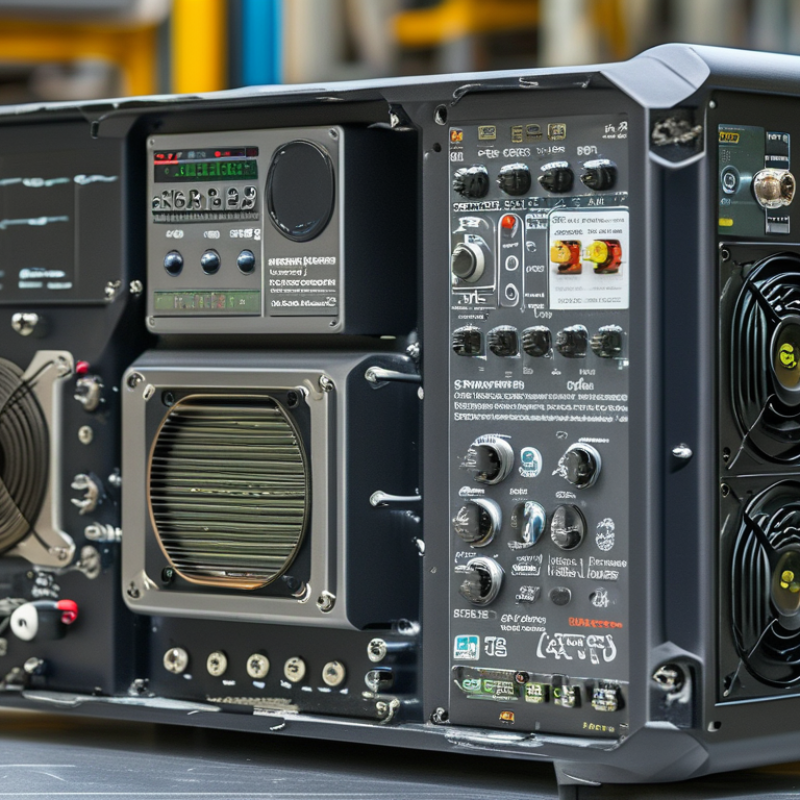
Sine Wave Inverters: 90–95% Efficiency and <3% THD Explained
Sine wave inverters are often marketed around 90–95% efficiency, but field results depend on load, temperature, and battery voltage. The U.S. Department of Energy notes that inverter conversion losses commonly reduce usable power, especially during partial-load operation. A 1,000-watt load may therefore draw more than 1,050 watts from the battery. Small losses become visible as heat near the cooling vents.
Total harmonic distortion, or THD, describes waveform distortion. A rating below 3% usually indicates clean AC output for computers, medical equipment, motors, and audio systems. IEEE 519-2022 provides widely used harmonic-control guidance, although its limits depend on the connection point and electrical system. IEC 61683 also defines methods for measuring power-conversion efficiency. Buyers should request test conditions, not only headline figures.
The IEA PVPS Trends 2024 report shows continued global growth in solar installations, increasing demand for dependable power-conversion equipment. In China’s manufacturing sector, export buyers should compare efficiency curves, idle consumption, surge capacity, and certified test records. Check THD at 25%, 50%, and 100% load. Real installations are rarely perfect. Cable resistance, weak batteries, and hot rooms can lower performance. I have found that a slightly oversized inverter often runs cooler, yet oversizing too far may increase standby losses. That trade-off deserves careful testing.
China Top Sine Wave Inverter Manufacturers for Global Buyers - Sine Wave Inverters: 90–95% Efficiency and <3% THD Explained
| Evaluation Dimension | Typical Specification | What It Means for Buyers | Recommended Verification Method |
|---|---|---|---|
| Output waveform | Pure sine wave; 220–240 V AC or 110–120 V AC; 50 or 60 Hz | Provides utility-like power for motors, pumps, audio equipment, medical devices, and sensitive electronics. | Request an oscilloscope waveform report at no load, half load, and full load. |
| Conversion efficiency | Typically 90–95% at rated or near-rated load; actual efficiency varies with load, input voltage, and temperature. | Higher efficiency reduces battery consumption, operating cost, and heat generation. | Compare an efficiency curve rather than relying only on the maximum efficiency figure. |
| Total harmonic distortion (THD) | Common pure sine wave target: <3% THD; premium designs may specify lower values under defined test conditions. | Lower THD helps reduce motor noise, transformer heating, and interference with sensitive loads. | Confirm whether the THD value applies at full load, with a linear load, or with a nonlinear load. |
| Input voltage options | 12 V DC for smaller systems; 24 V or 48 V DC for higher-power systems; custom DC ranges may be available. | Higher DC voltage lowers current and cable losses for the same output power. | Match the inverter input range to the battery chemistry, battery management system, and charging equipment. |
| Rated output power | Common categories include 300–600 W, 1–2 kW, 3–5 kW, and 5–10 kW. | The continuous rating should cover the combined running load without depending on the short-term surge rating. | Calculate continuous watts and starting watts separately for compressors, pumps, refrigerators, and power tools. |
| Surge capability | Often 2–3 times rated power for a short period, depending on the design and load type. | Adequate surge capacity supports motor and compressor start-up without nuisance shutdowns. | Check surge duration, recovery time, and the stated load profile in the technical datasheet. |
| Cooling system | Natural convection for lower-power units; temperature-controlled fans for medium- and high-power units. | Cooling affects noise, service life, thermal derating, and operation in hot environments. | Review fan-start temperature, airflow direction, maximum ambient temperature, and derating data. |
| Protection functions | Overload, short circuit, over-temperature, low-voltage, high-voltage, and reverse-polarity protection are commonly specified. | Protection reduces the risk of damage caused by wiring faults, excessive loads, and abnormal battery conditions. | Request fault thresholds, shutdown behavior, automatic restart settings, and protection test records. |
| Operating temperature | Many products specify approximately 0–40°C for full performance, with derating outside the nominal range. | Output power and efficiency may decrease in hot installation environments. | Confirm the full-load temperature range, storage temperature, humidity limits, and altitude derating. |
| Standby and no-load consumption | Varies by power class and operating mode; low-power or sleep modes can reduce idle battery drain. | Important for solar, backup, and off-grid systems that remain energized for long periods. | Ask for measured no-load consumption in watts and the activation threshold of the sleep mode. |
| Transfer and charging functions | Off-grid inverters may be inverter-only; inverter-chargers can include AC transfer switching and battery charging. | Integrated functions can simplify backup installations but require compatibility checks with the battery and grid. | Verify transfer time, charger current, bypass rating, AC input range, and neutral-ground configuration. |
| Compliance documentation | Depending on the destination market, documentation may include CE, UKCA, FCC, RoHS, IEC, UL, or regional grid requirements. | Compliance requirements determine whether the equipment can legally and safely be imported or installed. | Check certificate scope, model number, test standard, issuing laboratory, and validity before placing an order. |
| Factory quality control | Typical checks include insulation resistance, dielectric withstand, no-load operation, full-load operation, waveform quality, and protection tests. | Documented testing improves consistency across production batches and reduces field failures. | Request a sample test report, serial-number traceability, warranty terms, and an agreed pre-shipment inspection plan. |