
China Top 10 Electric Tricycle Manufacturers?

China’s electric three-wheeler industry has moved from small workshops to highly organized manufacturing clusters. Today, an Electic Tricycle may serve a courier, a market vendor, a farm worker, or a municipal service team. Its basic design looks simple: a steel frame, two rear wheels, a battery box, and a compact motor. However, product quality depends on much more than appearance.

The International Energy Agency’s Global EV Outlook 2024 identifies electric three-wheelers as one of the most rapidly electrified road-transport segments. The report highlights strong adoption in China, India, and Southeast Asia, where lower operating costs support daily commercial use. China remains especially important because its manufacturers offer broad choices in payload capacity, battery chemistry, chassis design, and export configuration. Industry data from the China Association of Automobile Manufacturers also shows the country’s continuing strength in new-energy vehicle production and supply chains. Yet public statistics often combine different vehicle categories. Direct comparisons require care.

This guide examines ten leading Chinese manufacturers through practical criteria. These include production experience, factory capability, battery safety, motor efficiency, after-sales support, customization, and international compliance. A reliable supplier should provide clear specifications, traceable testing records, and realistic range figures. A claimed 100-kilometer range may fall sharply with heavy cargo, steep roads, cold weather, or poor tire pressure. That detail matters. The ranking is not absolute, and smaller factories may outperform larger brands in specific applications. Buyers should verify certifications, warranty terms, spare-parts access, and local service capacity before placing an order. Production scale is useful, but it is not the whole story.
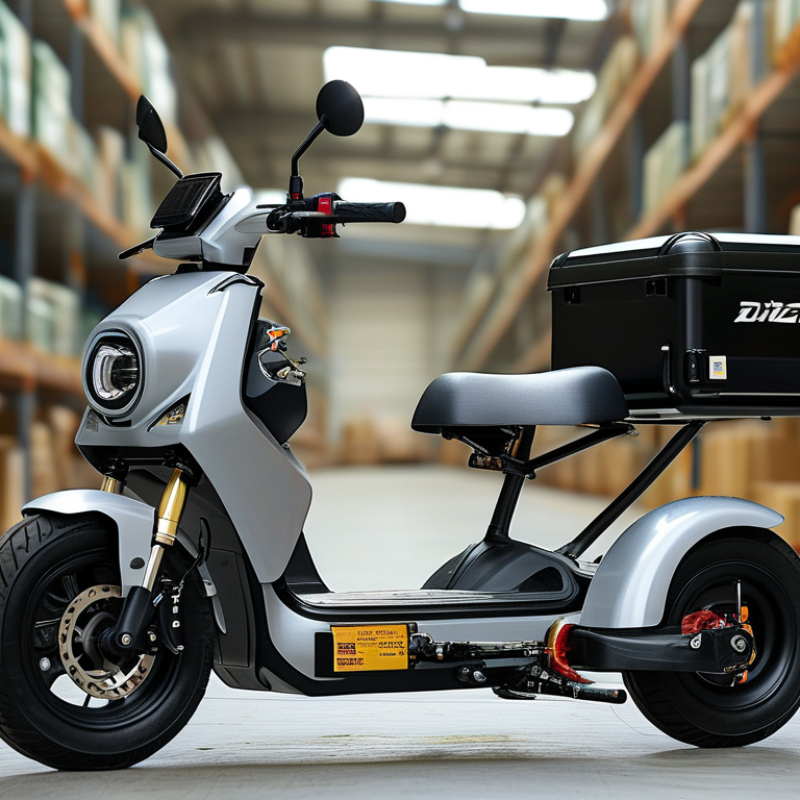
China Top 10 Electric Tricycle Manufacturers?

What Is an Electric Tricycle and Why Does China Lead the Market?

What Is an Electric Tricycle and Why Does China Lead the Market?

An electric tricycle combines a rechargeable battery, electric motor, frame, and three-wheel structure. It may carry passengers, parcels, tools, or market goods. Unlike a motorcycle, it usually offers better low-speed stability and easier loading. Its small turning radius also suits crowded lanes, village roads, and urban delivery routes.

China leads this market through dense manufacturing clusters and mature component supply chains. The IEA’s Global EV Outlook 2024 identifies China as the world’s largest electric two- and three-wheeler market. The report also highlights China’s strong battery production capacity and rapid charging infrastructure growth. China Bicycle Association industry statistics show sustained demand for electric bicycles and tricycles, especially in short-distance transport and commercial delivery.

The advantage is practical. A factory can source motors, controllers, frames, tires, and battery packs from nearby suppliers. This reduces transport time and supports faster product changes. Many workshops also test vehicles on steep streets, wet roads, and uneven rural paths. Real users reveal problems quickly.

But low price can hide compromises. Battery quality, braking performance, payload limits, and after-sales service still vary widely. Some market data also combines electric bicycles with electric tricycles, reducing precision. Buyers should check test methods, certification records, warranty terms, and real operating range before comparing manufacturers.
How China’s Top 10 Electric Tricycle Manufacturers Are Selected

Selecting China’s top 10 electric tricycle manufacturers requires more than counting factory output. The IEA’s Global EV Outlook 2024 identifies electric two- and three-wheelers as the largest electrified road-transport segment by sales. China remains a major production and consumption center. Therefore, the selection begins with verifiable manufacturing capacity, product range, export records, and operating history. Public customs data, audited company filings, and trade-fair records provide stronger evidence than promotional claims.

Technical quality carries greater weight than volume. Each manufacturer should be assessed through battery-management systems, braking performance, frame durability, charging protection, and documented quality-control procedures. Independent laboratory tests and recognized market certifications can support these checks. Aftersales coverage also matters. A reliable supplier should show spare-parts availability, dealer training, warranty terms, and response times in overseas markets. A broken controller should not become a six-week mystery.

The methodology should also compare payload ratings, motor efficiency, range under realistic loads, and performance on uneven roads. Data from the IEA and market studies by research firms can establish industry context, but company-level figures still require verification. Rankings remain imperfect when export data combine different vehicle categories. Regional demand can distort results too. A manufacturer serving rural fleets may appear weaker than one selling higher-priced urban models. The final list should therefore combine measurable evidence, expert inspection, user feedback, and transparent scoring rather than rely on publicity alone.

How China’s Top 10 Electric Tricycle Manufacturers Are Selected

The ranking framework evaluates manufacturers using practical industry dimensions, including safety compliance, production capability, powertrain technology, service coverage, export experience, and product innovation. The percentages show the editorial weighting of each criterion rather than company-specific results.

Profiles of China’s Top 10 Electric Tricycle Manufacturers

China’s top ten electric tricycle manufacturers reflect a broad industrial landscape. Some focus on passenger models, while others build cargo vehicles for farms, markets, and short-distance delivery. Their factories commonly combine frame welding, battery assembly, painting, and road testing under one roof. This structure can shorten lead times and improve production control.

One leading manufacturer specializes in enclosed passenger tricycles for colder regions. Another develops flatbed models with reinforced rear axles and practical loading ramps. A third supplies compact vehicles for narrow village roads. Several manufacturers offer lead-acid and lithium battery options, allowing buyers to balance price, weight, and service life. Their engineering teams usually test braking, lighting, steering stability, and battery performance before shipment. Details matter.

Other manufacturers stand out through export experience and flexible customization. They may adjust seat layouts, cargo boxes, suspension settings, or controller limits for different markets. Some maintain spare-parts warehouses and provide remote technical support, which can reduce downtime for overseas dealers. However, factory claims still require careful checking. A polished showroom does not prove long-term reliability. Buyers should review motor ratings, battery warranties, load capacity, charging protection, and after-sales response times. I have seen specifications change between brochures and actual units. Independent inspection remains worthwhile. Weather resistance also deserves attention, especially around wiring connectors and steel joints. A low purchase price can become expensive when parts are difficult to source.

Comparing Products, Technologies, and Manufacturing Capabilities

China’s top 10 electric tricycle manufacturers should be compared through evidence, not rankings alone. Product design reveals how well a factory understands daily transport needs. Examine frame thickness, welding consistency, battery placement, braking response, and cargo balance. A stable three-wheel layout matters on wet roads and uneven village lanes. Test the vehicle with a realistic load, not an empty showroom model. Short trials can hide uncomfortable seating, weak suspension, or poor turning control.

Manufacturing capability also deserves close inspection. Reliable factories document battery testing, motor inspection, final assembly, and traceability procedures. Ask for production capacity, quality-control records, spare-parts support, and testing standards. Advanced facilities may use automated welding or digital assembly checks, but technology alone proves little. I have seen polished equipment produce inconsistent finishes when process discipline was weak. That is worth questioning.

Tips: Compare identical specifications. Request sample units. Check service response times. Review warranty exclusions carefully. Confirm whether battery data, charging protection, and controller settings are clearly documented.

A strong supplier should explain its motor efficiency, charging system, battery chemistry, and thermal protection in practical language. Manufacturing depth appears in repeatability: panels align, connectors fit securely, and software settings remain consistent across units. Export experience can improve documentation, yet it does not guarantee local service quality. Buyers should inspect factory samples, interview technical staff, and record defects during a small pilot order. Some decisions remain uncertain. That is normal, but undocumented assumptions create avoidable costs.

China Top 10 Electric Tricycle Manufacturers? - Comparing Products, Technologies, and Manufacturing Capabilities

Comparison basis: The table uses anonymized manufacturer profiles and representative specification ranges commonly found in China’s electric-tricycle market. Figures are intended for technical comparison and are not a ranking or a company-specific certification.
Profile Primary Product Focus Typical Motor Output Battery Options Typical Rated Range Payload Capability Core Technology Frame & Safety Features Manufacturing Capability Best-Fit Application
Profile 01 Passenger and family transport 500–1,000 W hub motor 48 V, 20–32 Ah lead-acid or lithium-ion 50–90 km per charge 200–350 kg, including passengers Digital display, LED lighting, reverse function Steel ladder frame, hydraulic or mechanical drum brakes High-volume assembly with standardized body panels Urban commuting and short-distance passenger service
Profile 02 Cargo box tricycles 800–1,500 W hub or differential motor 60 V, 32–58 Ah lead-acid or lithium-ion 45–85 km per charge 500–1,000 kg, depending on road conditions Differential drive, load-oriented controller, reverse gear Reinforced chassis, leaf springs, hydraulic braking options Dedicated welding jigs and modular cargo-body production Wholesale distribution, agriculture, and local delivery
Profile 03 Heavy-duty logistics vehicles 1,500–3,000 W differential motor 60–72 V, 45–100 Ah lithium-ion 50–100 km per charge 800–1,500 kg on suitable routes High-torque controller, thermal protection, regenerative braking options Box-section frame, hydraulic brakes, larger tires Higher-load welding, chassis testing, and battery integration Industrial parks, warehouses, and bulk-material transport
Profile 04 Enclosed passenger and school models 800–1,500 W motor 48–60 V, 30–60 Ah 45–80 km per charge 300–600 kg, depending on seating layout Windscreen wiper, cabin lighting, seat-belt-ready layouts Roof structure, doors, windshield, dual-circuit options Body-in-white assembly and weather-resistant finishing Campuses, resorts, communities, and covered passenger routes
Profile 05 Agricultural and rural utility models 1,000–2,000 W motor 60 V, 40–80 Ah 40–75 km per charge 600–1,200 kg on level or moderate-grade roads Low-speed torque control, differential lock options Raised ground clearance, reinforced suspension, corrosion protection Low-speed durability testing and customized cargo platforms Farms, villages, nurseries, and internal hauling
Profile 06 Lithium-focused export models 500–1,500 W motor 48–72 V lithium-ion, typically 30–100 Ah 60–120 km per charge 250–800 kg Battery-management system, CAN-enabled displays, charger matching Modular battery enclosure, fuse protection, sealed connectors Battery pack assembly, electrical end-of-line testing, export packaging International distributors and fleet operators
Profile 07 Custom OEM and private-label platforms 500–3,000 W, depending on configuration 48–72 V, configurable capacity 40–120 km per charge 250–1,500 kg Configurable controller, body, dashboard, and charging system Choice of steel profiles, suspension, cargo bodies, and braking systems CAD customization, sample approval, and mixed-model assembly Importers requiring product differentiation
Profile 08 Low-cost utility and entry-level models 350–800 W motor 48 V, 20–45 Ah lead-acid 35–70 km per charge 200–600 kg Simple controller, analog or basic digital instrumentation Basic steel frame, drum brakes, replaceable body components Cost-focused parts sourcing and high repeatability Price-sensitive local and rural markets
Profile 09 Municipal and sanitation vehicles 1,000–2,500 W motor 60–72 V, 50–120 Ah lithium-ion 50–100 km per charge 500–1,200 kg Hydraulic tipping, sealed controls, optional telematics Anti-corrosion coating, reinforced bins, parking brake systems Application-specific fabrication and fleet-service support Waste collection, street cleaning, and public facilities
Profile 10 Premium multifunction platforms 1,000–3,000 W motor 60–72 V lithium-ion, 40–120 Ah 60–130 km per charge 400–1,500 kg Regenerative braking, smart dashboard, optional GPS and fleet monitoring Automotive-style coating, improved ergonomics, hydraulic disc options Integrated design, testing, battery validation, and after-sales systems Commercial fleets, resorts, campuses, and specialized logistics
Technical note: Actual range depends on battery chemistry, rated load, speed, terrain, temperature, tire pressure, and driving style. Payload values must always be checked against the vehicle’s certified gross vehicle weight, braking system, axle rating, and local road regulations.

How to Choose the Right Chinese Electric Tricycle Manufacturer

Choosing a Chinese electric tricycle manufacturer requires more than comparing online prices. In practice, the lowest quote can hide weaker frames, unclear battery cells, or expensive replacement parts. Define your working conditions: payload, road slope, daily distance, cargo size, and climate. A delivery vehicle for flat city streets needs different gearing from one carrying produce uphill. Ask for drawings, motor specifications, battery chemistry, charging time, and rated load. Request laboratory test reports, not only factory screenshots. Details matter.

A reliable supplier should explain its production process clearly. Check whether welding, paint thickness, wiring, and final assembly receive documented inspections. Ask for photos or a live video tour of the workshop. Better still, arrange an independent factory audit before paying a large deposit. Speak with recent customers and ask how the vehicle performed after six months, not six days. Confirm warranty coverage, spare-parts availability, packaging standards, and response times in writing. Vague promises become costly later.

Test a sample under realistic conditions. Carry the intended load, climb a familiar slope, brake repeatedly, and record battery range. Do not trust a claimed range without checking rider weight, speed, and road surface. I have seen buyers focus on appearance and overlook uncomfortable seats or difficult maintenance access. That mistake is easy to make. A strong manufacturer welcomes technical questions, admits limitations, and adjusts specifications when evidence demands it. Price still matters, but total operating cost matters more.

×
img

    Contact Info

    Phone number

    661-392-8948

    Address info

    3451 Pegasus Drive, Bakersfield, CA USA