
7 Carbide Stator Buying Tips for Global Buyers?

Buying a carbide stator for global industrial equipment requires more than comparing prices. Material quality, machining accuracy, supplier reliability, and long-term operating costs all matter. A small dimensional error can create vibration, leakage, or premature wear. That is why purchasing teams need a practical evaluation method before approving any order.

This guide presents seven buying tips for international buyers. It examines carbide grade, stator dimensions, rotor compatibility, surface finish, testing records, supplier experience, and shipping protection. Ask for drawings, inspection reports, and sample data. Real evidence matters. A polished website does not prove manufacturing capability. Experienced suppliers should explain tolerance control, coating options, and failure prevention in clear language. They should also provide traceability for materials and production batches. This protects quality across borders.

The lowest quotation can be misleading. It may exclude testing, custom tooling, packaging, or replacement support. Sometimes, even careful buyers overlook temperature changes during transport or different installation practices. That deserves reflection. A useful supplier should discuss these risks instead of promising perfection. Check communication speed, technical responses, and after-sales responsibility. Request a sample when possible, then compare its fit under realistic working conditions. Review certificates carefully, but do not treat paperwork as the only proof. Factory audits, reference projects, and measured performance offer stronger confidence. With disciplined checks, a carbide stator can deliver stable service and fewer unexpected maintenance costs. However, every application remains different. The final decision should match actual operating conditions, not assumptions.
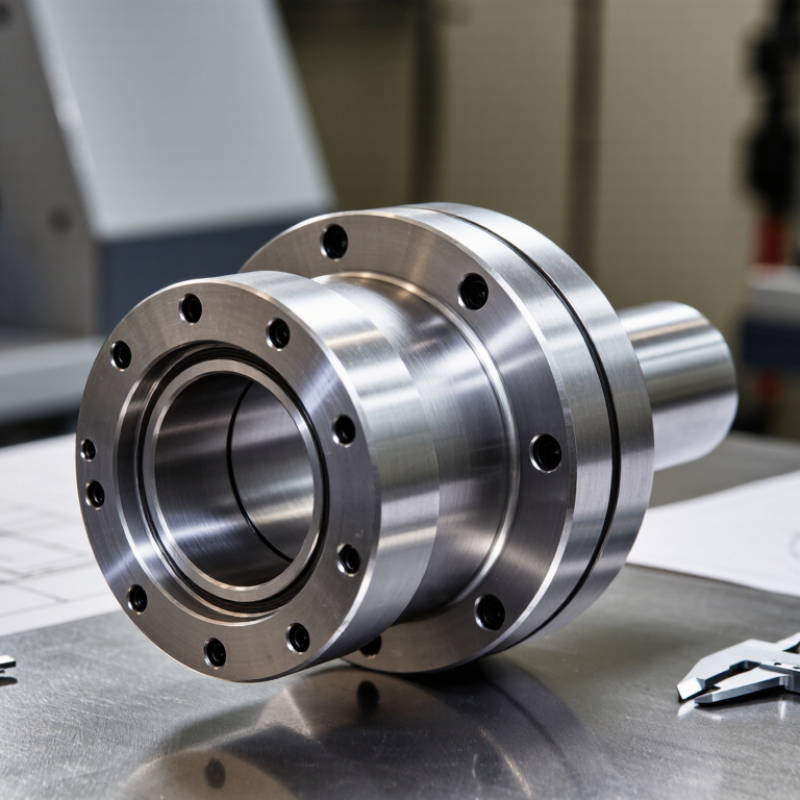
7 Carbide Stator Buying Tips for Global Buyers?

Define Carbide Stator Types, Materials, and Key Performance Terms

Carbide stators are not one universal product. They may use cemented tungsten carbide rings, carbide wear inserts, or carbide-coated steel bodies. Their design depends on the application, pressure, speed, and fluid chemistry. Tungsten carbide with cobalt binder offers high wear resistance and toughness. Nickel binders may perform better in corrosive environments. Some grades add titanium carbide for improved thermal stability.

Define the key terms before comparing suppliers. Hardness is usually reported as HRA or HV30, while transverse rupture strength indicates resistance to cracking. Density helps verify composition.

Porosity, grain size, surface roughness, concentricity, and running clearance also affect service life. For rotating equipment, ask for radial runout and dimensional tolerances, not only hardness values.

ISO 4499 provides recognized methods for examining cemented-carbide structure. Testing should also reflect the real fluid and temperature.

Material security matters for global buyers. The USGS Mineral Commodity Summaries 2024 reported approximately 84,000 metric tons of tungsten mine production in 2023, with China contributing about 80 percent. This concentration can influence lead times and price stability.

Request batch traceability, inspection records, and independent test results. A perfect datasheet is not enough.

I would still question unusually high hardness claims without toughness data. A harder stator can fail sooner when impact loading, poor alignment, or thermal cycling is ignored.

Match Stator Specifications to Equipment, Loads, and Operating Conditions

7 Carbide Stator Buying Tips for Global Buyers

Match the stator to the equipment before comparing prices.

Tip 1: Confirm the machine model, bore size, mounting pattern, and working clearance.

Tip 2: Check load data, including torque, speed, pressure, and duty cycle.

A stator built for intermittent service may fail under continuous abrasive loading.

Tip 3: Review carbide grade and binder composition.

Hardness matters, but toughness matters when vibration or impact is present.

Tip 4: Describe the operating medium precisely.

Sand, corrosive chemicals, heat, and changing viscosity can affect wear differently.

Tip 5: Confirm the temperature range at the actual contact area, not only the ambient temperature.

Tip 6: Ask for dimensional tolerances, surface-finish data, inspection records, and material certificates.

These documents make global purchasing more reliable. Small deviations can create leakage, uneven contact, or premature damage.

Tip 7: Evaluate installation and maintenance conditions.

Poor alignment can ruin a correctly specified stator. Check shaft runout, housing condition, lubrication, and replacement access.

Field inspections often reveal neglected details.

A perfect specification sheet is rare, and my own early evaluations sometimes focused too heavily on hardness.

Operating history is equally valuable. Request wear photos, failure timing, and measured load changes.

Then compare those findings with the supplier’s proposed design, while allowing qualified engineers to verify fit and safety before purchase.

Evaluate Supplier Quality, Manufacturing Standards, and Product Consistency

Tip 1: Request recent inspection records, not only a quality certificate. The ISO Survey 2023 recorded over 1.26 million ISO 9001 certificates worldwide. Certification helps, but it does not prove carbide composition or stator performance. Tip 2: Check whether the supplier controls powder grade, binder content, pressing pressure, and sintering temperature. Ask for batch-level traceability.

Tip 3: Review manufacturing standards before comparing prices. Useful controls include ISO 9001, ISO 2859-1 sampling, calibrated dimensional gauges, and documented hardness testing. Tip 4: Require material certificates and independent test reports. Confirm carbide grain size, density, hardness, porosity, and dimensional tolerance. A polished surface can hide internal defects. I have seen attractive samples fail after repeated thermal cycling.

Tip 5: Buy samples from different production batches. Tip 6: Compare bore diameter, concentricity, surface finish, and wear results under identical conditions. The U.S. Department of Energy reports that industrial motor-driven systems can represent more than half of a plant’s electricity use, so inconsistent stators may increase energy loss and maintenance exposure. Tip 7: Audit corrective-action records, delivery data, and rejected-part rates. These details often reveal more than sales presentations. One weakness remains: supplier data may be selectively reported, so third-party verification is worth the cost.

Compare Pricing, Minimum Orders, Lead Times, and Global Shipping Terms

7 Carbide Stator Buying Tips for Global Buyers

When comparing carbide stator suppliers, do not judge price alone. Ask for a quotation based on the same carbide grade, dimensions, tolerance, surface finish, and inspection method. A cheaper unit may require extra grinding after arrival. Request sample reports, dimensional records, and packaging details. These documents show whether the supplier understands production risks.

Tip: Confirm the minimum order quantity before negotiating. A low unit price may hide a large minimum order. Calculate the full cash commitment, including tooling, samples, spare parts, and inspection fees. Lead time also needs clear wording. Ask whether it begins after payment, drawing approval, or raw material confirmation. For repeat orders, request separate timelines for samples and mass production. Delays often start with unclear technical changes. I have seen buyers overlook this detail.

Compare EXW, FOB, CIF, and DDP quotations carefully. The lowest freight figure may exclude destination handling, customs clearance, duties, or local delivery. Confirm the named delivery location and insurance responsibility in writing. Use stronger protective packaging for carbide parts, especially during long sea routes. Wooden cases may need approved treatment documents. Air freight can reduce transit time, but it may raise landed costs sharply. Recheck currency, payment terms, shipping frequency, and replacement procedures. Some assumptions will be wrong without a written contract.

7 Carbide Stator Buying Tips for Global Buyers: Compare Pricing, Minimum Orders, Lead Times, and Global Shipping Terms

No. Buying Tip Key Specification to Compare Typical Indicative Data Typical MOQ Typical Lead Time Global Shipping Term to Confirm
1 Compare carbide grade before comparing price Tungsten carbide percentage, cobalt binder content, grain size, hardness, and transverse rupture strength Common wear-grade ranges are approximately 6–15% cobalt, 0.5–2.0 μm grain size, and about 1,400–2,000 HV hardness 10–50 pieces for standard sizes; custom designs may require 100–500 pieces 3–6 weeks for standard grades; 6–10 weeks for custom compositions Request the material certificate, inspection standard, and whether the quoted price includes coating or surface treatment
2 Normalize the price comparison Part size, geometry, tolerance, grinding requirement, quantity, and inspection scope Indicative small-to-medium precision carbide stator components: approximately USD 25–180 per piece; complex large parts may exceed USD 250 Standard parts generally have lower MOQs and lower unit prices at 100+ pieces Price breaks commonly appear at 50, 100, 500, and 1,000 pieces Compare the same Incoterm, currency, packing method, tooling charge, taxes, and inspection fees
3 Check minimum order quantities and tooling charges Standard versus custom tooling, mold ownership, repeat-order terms, and sample policy Prototype tooling can range from about USD 100–1,500 depending on geometry; production tooling may be higher Prototype: 1–10 pieces; trial production: 20–100 pieces; mass production: commonly 100+ pieces Sample preparation is often 2–5 weeks, excluding customer approval time Confirm whether tooling is refundable, transferable, or retained by the manufacturer after order completion
4 Evaluate lead time against your production schedule Raw-material availability, sintering capacity, CNC grinding, coating, inspection, and queue position Standard repeat orders: about 4–8 weeks; new custom orders: about 8–14 weeks Larger quantities may be split into partial shipments to reduce production risk Add approximately 1–2 weeks for first-article approval and 1–3 weeks for special coating or secondary operations Obtain a written production milestone schedule, including sample approval, finished-goods inspection, and dispatch date
5 Specify tolerances and quality documentation Dimensional tolerance, flatness, concentricity, surface roughness, density, hardness, and lot traceability Precision-ground features may require approximately ±0.01–0.03 mm tolerance, depending on size and geometry Inspection requirements usually do not change MOQ, but tighter tolerances can increase setup and unit costs Allow 2–7 working days for dimensional reports and material certificates after production Agree on the inspection method, sampling level, nonconformance process, and acceptance criteria before production
6 Compare Incoterms and landed cost EXW, FCA, FOB, CIF, CPT, or DAP quotation; freight mode; insurance; customs responsibility Air freight is faster but usually costs more per kilogram; sea freight is generally economical for larger, heavier consignments MOQ may be based on pieces, carton quantity, or shipment value rather than weight Typical transit ranges: air express 3–10 days; air cargo 5–15 days; sea freight about 20–45 days, excluding customs Confirm who pays export clearance, import duties, VAT or GST, destination handling, insurance, and customs brokerage
7 Assess packaging and after-sales risk Individual protection, corrosion prevention, shock resistance, moisture control, spare quantity, and replacement policy Carbide parts should be separated with protective material and secured in rigid export packaging to prevent edge chipping Ask whether one or two replacement pieces can be added to larger orders without changing the MOQ Damage claims should be reported promptly, commonly within 7–14 days after delivery Define photographic evidence, inspection timing, replacement or credit terms, and responsibility for transport damage

Note: The price, MOQ, and lead-time figures are indicative sourcing benchmarks for carbide wear components and may vary with dimensions, tolerances, carbide grade, order volume, tooling, coating, destination, and inspection requirements. Request a written quotation based on the same drawing, specification, quantity, Incoterm, and delivery destination.

Verify Testing, Certifications, Warranty Coverage, and After-Sales Support

7 Carbide Stator Buying Tips for Global Buyers?

A carbide stator must match your operating conditions, not just your drawing. Tip 1: Request a recent testing report for hardness, density, porosity, dimensional accuracy, and surface finish. Check the test method and sample number. A polished certificate is not enough. Tip 2: Confirm material traceability from powder batch to finished stator. Ask whether independent inspection is available. Small details matter.

Tip 3: Verify certifications that apply to the product and destination market. Confirm the certificate’s issuer, validity period, and covered factory. Do not accept a general company certificate as product proof. Tip 4: Review the inspection plan before production. It should include bore size, runout, concentricity, and edge condition. Include agreed tolerances in writing. This prevents expensive arguments later.

Tip 5: Read the warranty carefully. Check its duration, operating limits, claim evidence, and exclusions for installation damage or improper cleaning. A longer warranty may still provide weak protection. Tip 6: Test after-sales responsiveness before ordering. Send technical questions and measure the reply time. Ask for replacement procedures, failure analysis, and spare-part availability.

Tip 7: Request packaging and transport controls for international shipments. Carbide components can chip when protection is poor. Use moisture-resistant packing and clear inspection photos before dispatch. I have seen buyers overlook this step. That mistake can delay production, even when the stator itself meets every specification.

7 Carbide Stator Buying Tips for Global Buyers

Verify testing, certifications, warranty coverage, and after-sales support before approving a supplier.

The chart shows representative midpoints of common tungsten-carbide cobalt grades. Typical hardness decreases as cobalt content increases, while toughness generally improves. Ask for a batch-specific test report covering hardness, density, transverse rupture strength, dimensions, and surface finish. Confirm applicable ISO or ASTM test methods, ISO 9001 quality certification, written warranty terms, spare-part availability, and documented after-sales response procedures.

Article Source:

×
img

    Contact Info

    Phone number

    661-392-8948

    Address info

    3451 Pegasus Drive, Bakersfield, CA USA