2026 Best Sound Bar for Polaris RZR Which One to Buy?
Choosing the 2026 Best Sound Bar for Polaris RZR requires more than chasing loud specifications. A trail-ready system must survive dust, vibration, splashes, and sudden weather changes. It should also deliver clear vocals when the engine is working hard. This guide examines each Sound Bar for Polaris RZR through practical riding needs, not showroom claims alone. We consider speaker output, enclosure design, Bluetooth stability, mounting flexibility, power requirements, and control access. Small details matter. A loose bracket can ruin an otherwise excellent ride.
Real-world use changes the decision. A sound bar that performs well in a garage may sound thin across an open desert. We look at how models handle wind noise, helmet use, uneven trails, and long riding sessions. Installation time also matters, especially when space behind the seats is limited. Some products offer impressive bass but draw more power than expected. Others install quickly but lack useful weather protection. That trade-off deserves honest attention. No single model fits every RZR owner. Your riding speed, passenger setup, music preference, and budget should guide the final choice. We may overlook something, because testing conditions cannot reproduce every trail. Still, careful comparisons can reduce expensive mistakes. The recommendations ahead focus on dependable performance, sensible features, and practical value for 2026. Expect clear strengths, visible weaknesses, and buying advice grounded in actual vehicle use. Noise is unavoidable. Good design manages it.
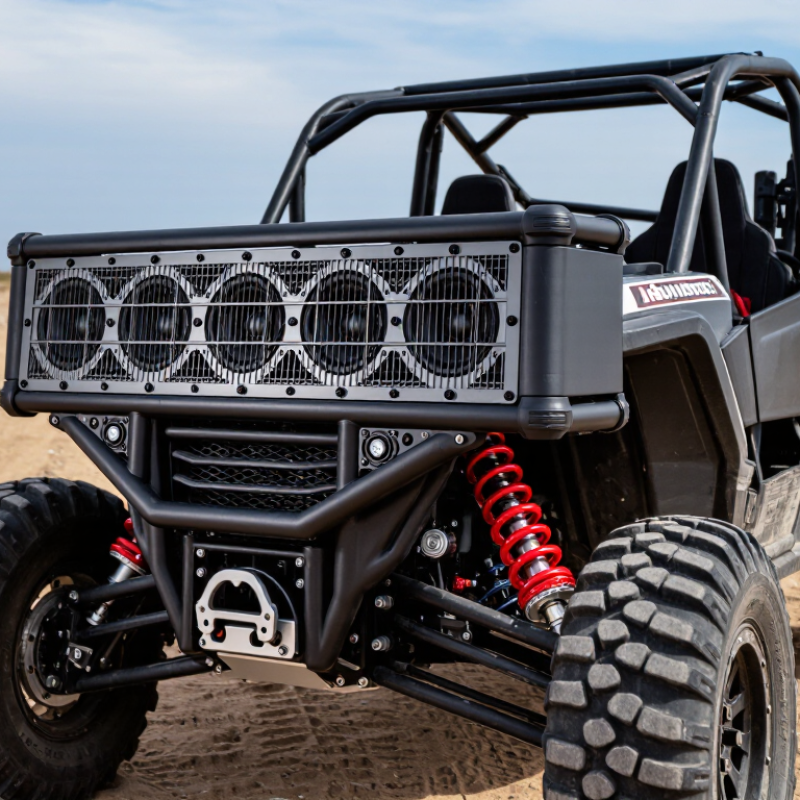
What to Consider Before Choosing a Sound Bar for Your Polaris RZR
Choosing a sound bar for an off-road side-by-side requires more than chasing the highest wattage. Start with fitment. Measure the cage, roof clearance, and mounting space before ordering. A compact unit may leave room for helmets and storage.
Dust, mud, rain, and vibration can quickly expose weak construction. Look for a tested water-resistance rating, sealed controls, corrosion-resistant hardware, and a reinforced housing. Waterproof claims deserve careful reading. Some products resist splashes but cannot handle direct spray or prolonged exposure.
Power demand matters on slow trail rides. Check the sound bar’s current draw and your vehicle’s charging capacity. Excessive demand can weaken starting performance, especially with lights and winches running. Bluetooth is convenient, but physical controls are useful when wearing gloves. Confirm connection stability around trees, hills, and other vehicles.
Sound quality changes outdoors. Strong midrange helps voices and music remain clear above engine noise. Deep bass can feel impressive, yet it may create distortion at high volume. I once preferred a smaller system because it stayed balanced over rough ground. That choice was not perfect; louder output would have helped in open areas.
Mounting deserves practical attention. Use locking fasteners, rubber isolation washers, and a position protected from branches. Recheck the hardware after several rides. A professional installation should also protect wiring from sharp edges, heat, and water entry. Verify the warranty terms, installation limits, and replacement support before purchase. Those details often matter more than a flashy specification.
How to Compare Sound Quality, Power, and Weather Resistance
2026 Best Sound Bar for Polaris RZR: Which One to Buy?
For a Polaris RZR, compare real output, not impressive peak wattage. RMS power shows sustained performance during engine noise and trail impact. Look for clean sound between 80 Hz and 18 kHz, with adjustable bass and treble. A soundbar with separate amplification can preserve vocals when the throttle rises. Grand View Research projects the global soundbar market to grow strongly through 2030, reflecting better digital processing and compact amplifier design. Still, more watts do not guarantee better sound.
Weather Resistance
Weather resistance needs careful checking. An IP rating follows IEC 60529 testing, but it does not measure vibration, mud pressure, or repeated temperature changes. For dusty trails, seek sealed controls, protected connectors, and corrosion-resistant mounting hardware. A unit rated IP67 offers stronger protection than IPX5 against water exposure, but installation still matters.
Keep cables away from sharp frame edges. I once trusted a “waterproof” label too quickly; the exposed connector failed first. That mistake remains worth remembering.
Tips
Choose RMS power, not peak power.
Test vocals at your normal riding speed.
Check the warranty for outdoor use.
WHO’s World Report on Hearing warns that over 1.5 billion people live with hearing loss, so avoid chasing volume alone. A practical setup should sound balanced at 70 percent volume, leaving headroom for wind and engine noise. Some specifications remain vague, and that should make you pause.
Which Sound Bar Features Fit Different RZR Riding Needs
For 2026, the best sound bar for a Polaris RZR depends on how and where you ride. Trail riders need compact designs that resist dust, water, and constant vibration. Look for a sealed enclosure, a strong mounting system, and clear controls. A high water-resistance rating provides useful protection during rain or muddy crossings. Still, no rating replaces regular cleaning after a wet ride.
Noise changes everything. Open desert riders should prioritize strong output, balanced mids, and low distortion at higher volume. Deep bass sounds exciting, but excessive bass can hide voices and warning sounds. Bluetooth is convenient for short trips, while a wired input can provide more dependable playback. A remote control also helps when gloves make small buttons difficult to operate.
For long-distance rides, battery capacity and charging options matter more. Choose a sound bar that can connect to the vehicle’s power system without complicated wiring. A low-profile body reduces interference with helmets, storage, and overhead gear. I once used a compact model with impressive volume, but its controls were awkward on rough ground. That experience changed my buying checklist. Measure the mounting space first, inspect cable protection, and consider whether passengers need separate volume control. Keep it simple. Certain specifications look impressive, yet practical access often matters more on the trail.
2026 Best Sound Bar for Polaris RZR: Which One to Buy?
Use this feature-priority chart to match a sound bar with different RZR riding conditions. Scores represent practical buying priorities on a 0–100 scale, not measured performance from a specific product.
How to read it: Trail riders should prioritize clear vocals and mounting stability, dune riders benefit from stronger output and bass impact, mud riders need weather resistance and secure installation, while group riders typically value battery runtime and sound projection.
Top Sound Bar Types for Trail, Desert, and Off-Road Use
For 2026, the best sound bar for a side-by-side depends on your terrain. Trail riders usually need a compact, integrated bar with clear vocals and moderate volume. Narrow trails punish bulky equipment. Choose a sealed enclosure, corrosion-resistant grille, and vibration-resistant mounting points. A simple control layout helps when gloves cover your hands.
Desert riding demands more output. Wind noise rises sharply above 40 miles per hour. A high-power amplified bar with digital signal processing can preserve bass and speech. Look for adjustable equalization, efficient power use, and protection against dust. However, excessive bass may drain the battery during long rides. Check the vehicle’s charging capacity before installation. More power is not always better.
Rough off-road routes require the toughest design. A weatherproof, fully enclosed bar handles mud, splashes, and sudden temperature changes. Rubber-isolated brackets reduce rattling across rocky ground. Modular speaker pods can improve left-right separation, but they add wiring and failure points. Keep cables away from suspension movement and hot engine parts. I would still retighten every fastener after the first ride. My early installations often looked secure, yet loose brackets appeared after one harsh weekend. Sound quality matters, but survival matters more.
How to Install and Maintain a Polaris RZR Sound Bar
Installing a sound bar in an off-road vehicle requires planning, not just loud speakers. Choose a position above the occupants’ shoulders, away from branches and moving parts. Check the mounting width before drilling anything. A secure fit prevents rattling on rough trails.
Disconnect the battery before touching the wiring. Route power cables away from hot engine parts and sharp metal edges. Add an appropriate fuse close to the battery. Use sealed connectors and cover every exposed terminal. I once left a cable slightly loose, and vibration caused intermittent audio. That small mistake was frustrating and avoidable. Test the sound bar at low volume before reinstalling all panels.
Tips: Mark the mounting holes with tape first. Use thread-locking compound on fasteners exposed to vibration. Leave a little cable slack for suspension movement, but avoid loose loops. After the first ride, inspect every bolt and connector. Recheck them after several dusty trips.
Maintenance is simple when performed regularly. Wipe mud and dust from the housing with a damp, soft cloth. Do not spray water directly into speaker grilles or connection points. Inspect the power cable for cuts, crushed sections, or heat damage. Clean corrosion early with an electrical contact cleaner approved for vehicle use. Reduce volume if the sound becomes distorted. Excessive volume can strain the speakers and make trail sounds harder to hear. Seasonal storage also deserves attention. Disconnect the battery, dry the unit completely, and store the vehicle under cover.
 (780) 669-9420