
Blog
- Home
- Blog
What Is the Best Ready Concrete Batching Plant from China?
Choosing the best Ready Concrete Batching Plant from China starts with the job, not the brochure. A compact unit for urban projects must fit tight access roads and limited space. A plant serving several construction sites needs higher output, reliable controls, and quick service support. There is no universal winner. That matters.
The Global Cement and Concrete Association has reported global concrete production at roughly 14 billion cubic metres annually. That scale makes consistent batching more than a convenience: small errors in aggregate moisture, weighing, or water dosing can affect every truckload. Professor Karen Scrivener, a leading cement chemist, has described concrete’s reach this way: “Concrete is the second most consumed substance on Earth after water.” Her observation helps explain why plant selection deserves careful scrutiny, though it does not identify one supplier as best.
For a Chinese plant, compare verified hourly capacity with your real production schedule, then examine mixer type, batching accuracy, control-system records, dust control, and spare-parts availability. Ask for references from projects using similar aggregates and operating conditions. Request a clear equipment list, commissioning plan, and warranty terms in writing. A polished factory video is not proof of long-term reliability. Nor is the lowest price always a bargain; downtime can cost more than the initial saving. Some details are easy to miss. This guide evaluates practical criteria, available evidence, and questions buyers should ask before choosing a Ready Concrete Batching Plant from China.
What Is a Ready-Mix Concrete Batching Plant?
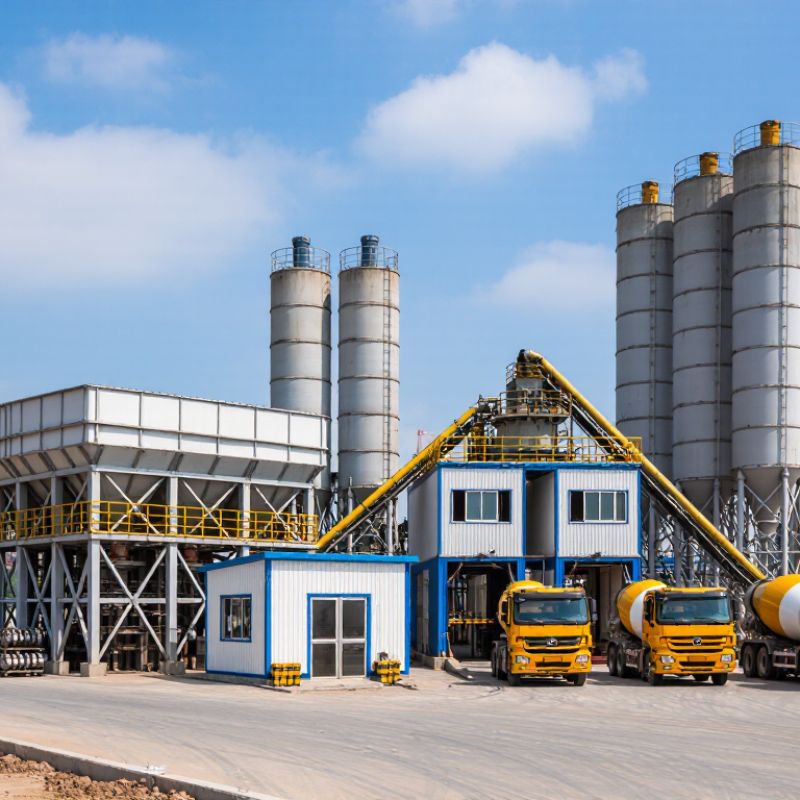
A ready-mix concrete batching plant measures and combines cement, water, sand, and aggregates to make concrete for delivery to a job site. Its bins hold separate aggregate sizes, while scales and flow meters help control each batch. A mixer blends the materials until the concrete has a consistent appearance and workable texture. The finished mix is commonly loaded into a truck mixer, which keeps it moving during transport.
Plant layouts vary. A stationary plant suits steady production near a project, while a mobile plant can be relocated when work shifts. Neither option is automatically better; output needs, site access, material storage, and delivery distance all matter. Even accurate equipment depends on sound operation. Moisture in sand can change the water balance, and worn weighing parts may affect consistency. Small details, big consequences.
Tips: Check the plant’s stated output against realistic production needs, not just peak capacity. Ask how often scales are calibrated and how operators adjust for aggregate moisture. A clear maintenance routine matters, too. It is easy to overlook, but downtime can disrupt delivery schedules and leave crews waiting.
How Does a Concrete Batching Plant Work?
A batching plant turns measured ingredients into fresh concrete. Separate bins hold sand and aggregates, while silos store cement or supplementary powders. A control system weighs each material against the selected mix design. Water and admixtures are measured too. Moisture hides. If damp sand is treated as dry, the actual water-to-cement ratio can rise and weaken consistency. Operators check readings and adjust the water allowance before production.
The materials then enter a central mixer or a transit-mixer truck, depending on the plant setup. In truck mixing, ASTM C94/C94M describes 70 to 100 revolutions at mixing speed after materials are added. The concrete is checked for consistency, often with a slump test, before dispatch. A measured batch is not automatically a good batch; worn load cells, blocked gates, or rushed checks can still cause variation.
The scale of cement use helps explain why reliable batching matters. The U.S. Geological Survey’s Mineral Commodity Summaries 2024 estimated global cement production at about 4.1 billion metric tons in 2023. That figure is not a measure of ready-mix output, but it shows the scale of the material supply chain. At the plant, operators record batch weights, inspect aggregate moisture, and clean mixer blades. Real sites are less tidy than diagrams. Small adjustments, and occasional rechecks, are part of accurate production.
What Is the Best Ready Concrete Batching Plant from China? How Does a Concrete Batching Plant Work?
There is no single best plant for every project. The right choice depends on required output, concrete mix specifications, site conditions, transport distance, and installation needs. The capacities below are indicative ranges; actual output varies by configuration, mix design, operating conditions, and local standards.
| Plant Configuration | Indicative Rated Output | Typical Mixing Arrangement | Mobility and Setup | Suitable Applications | Key Selection Consideration |
|---|---|---|---|---|---|
| Mobile wet-mix plant | Approximately 25–90 m³/h | Concrete is mixed in a central mixer before discharge. | Modular components support relocation; setup and transport requirements depend on the model and local regulations. | Temporary projects, remote sites, and projects that move between locations. | Consider transport dimensions, setup time, water supply, and the required production rate. |
| Compact or small stationary plant | Approximately 25–60 m³/h | Usually uses a central mixer; aggregate bins and batching equipment are arranged for a smaller footprint. | Designed for a fixed site with a relatively compact layout. | Small construction projects, precast operations, and sites with limited space. | Check whether storage capacity and truck loading arrangements can meet peak demand. |
| Stationary wet-mix plant | Approximately 60–240 m³/h | Aggregates, cementitious materials, water, and admixtures are batched and mixed centrally. | Typically installed at a fixed production site with dedicated foundations and material storage. | Ready-mix supply, infrastructure construction, and sustained high-volume production. | Evaluate actual hourly demand, mixer cycle time, truck dispatch, and maintenance access. |
| Dry-batch plant | Capacity varies by batching and loading configuration. | Ingredients are weighed at the plant and generally mixed in the delivery truck during transit. | Commonly installed at a fixed site; the layout depends on storage, weighing, and truck-loading needs. | Ready-mix operations where truck mixing is appropriate and delivery routes support the process. | Confirm mix requirements, delivery time, truck mixer capacity, and applicable quality standards. |
| Step | Process | What Happens |
|---|---|---|
| 1. Store materials | Material feeding and storage | Aggregates are stored in bins, cementitious materials in silos, and water and admixtures in suitable tanks or containers. |
| 2. Set the mix | Recipe selection | The operator selects a mix design that specifies the required proportions and material types for the order. |
| 3. Measure ingredients | Batching and weighing | Weighing systems meter aggregates, cementitious materials, and other ingredients. Water and admixtures are measured according to the mix design. |
| 4. Mix or load | Central mixing or dry batching | In a wet-mix plant, the ingredients are mixed in a central mixer. In a dry-batch plant, the batched ingredients are loaded for mixing in the delivery truck. |
| 5. Discharge and deliver | Concrete dispatch | The concrete is discharged into a mixer truck and transported to the job site while being agitated as required. |
| 6. Check and maintain | Quality and equipment control | Operators monitor batch records, material consistency, equipment condition, and required quality checks throughout production. |
Which Factors Determine the Best Plant for a Project?
What Is the Best Ready Concrete Batching Plant from China?
The best plant is not always the largest or fastest. It must match local materials, climate, transport distance, and daily demand. The Global Cement and Concrete Association reports that about 14 billion cubic metres of concrete are produced worldwide each year. This scale makes plant selection a practical engineering decision, not a simple price comparison.
Production capacity should reflect the project’s pouring schedule. A 60 m³/h plant may suit housing work, while highways often require 120 m³/h or more. Check whether the rated output reflects real operating conditions. Moisture sensors, calibrated load cells, and stable aggregate bins strongly affect concrete consistency. ACI 304R stresses controlled batching and uniform material handling. Small weighing errors can become visible cracks, delays, or rejected loads.
Energy use also deserves attention. The International Energy Agency estimates that cement production creates about 7% of global CO2 emissions. Efficient motors, shorter mixing cycles, and reliable dust control can reduce operating waste. Maintenance access matters too. A technician should reach the mixer, valves, and sensors without dismantling half the plant. Spare-part availability is often overlooked. It should not be. I have seen impressive specifications fail when one sensor caused several idle days. Local standards, electrical systems, and after-sales training must be checked before ordering. A lower purchase price may hide higher transport, installation, and downtime costs.
What Types of Concrete Batching Plants Are Made in China?
China produces several concrete batching plant types for different construction conditions. Stationary plants suit large, continuous projects such as highways, bridges, and commercial developments. They usually offer strong output, larger aggregate bins, and stable automation. Mobile plants use a towable or modular structure, making relocation easier between short-term sites. They are practical when roads, housing projects, or remote foundations change frequently. Compact plants require less space and can serve urban projects with limited access. Not every site needs maximum capacity.
Chinese manufacturers also make wet-mix, dry-batch, and containerized batching plants. Wet-mix plants blend cement, water, aggregates, and additives before discharge. This design supports consistent concrete quality over longer delivery routes. Dry-batch plants combine materials during truck mixing, reducing plant complexity and initial space requirements. Containerized models simplify transport and installation, although their working area may feel restricted. Twin-shaft mixers are common for high-volume production, while planetary mixers can support demanding concrete formulas.
From practical equipment reviews, I would assess output, mixer torque, weighing accuracy, dust control, and spare-part access together. A quoted capacity is not always the real hourly result. Moisture changes in sand can affect weighing accuracy. That detail is easy to miss. Operators also need clear controls and safe maintenance access. The best Chinese plant is the type that matches local aggregate, climate, transport distance, and project rhythm, not simply the largest machine.
What Is the Best Ready Concrete Batching Plant from China?
Concrete batching plant types and their indicative rated output ranges
Mobile plants are suited to projects that need relocation, while compact plants balance a smaller footprint with moderate output. Stationary plants are typically selected for sustained, higher-volume production. The ranges shown are indicative market configurations, not fixed standards; actual capacity depends on plant design and operating conditions. The best choice depends on required output, site layout, and mobility needs.
How Can Buyers Compare Chinese Plant Manufacturers?
When comparing Chinese ready-mix plant manufacturers, look beyond the quoted price. Match each proposal to your required hourly output, concrete recipes, and available site space. Ask for a layout showing aggregate bins, conveyor routes, mixer access, and truck clearance. Details matter.
Request evidence from comparable installations, not just polished brochures. A plant running steadily in dusty conditions says more than a large production claim. Ask how the manufacturer tests weighing accuracy, moisture adjustment, and mixer performance before shipment. See the records.
Compare the control system, electrical components, and wear-part specifications line by line. Confirm what is included, what costs extra, and how quickly common spares can be supplied. Ask for remote troubleshooting arrangements and technician training. Get the response in writing.
A factory visit can reveal practical differences: clean cable routing, labeled parts, and safe access for maintenance. If travel is not possible, request a live video inspection and dated test footage. References help, but they are not proof of identical performance. Plant capacity, aggregate moisture, and operator skill can change actual output, so leave room for uncertainty. A cheaper offer may still be suitable; it simply needs clearer evidence and a realistic support plan.
(780) 669-9420