

Blog
- Home
- Blog
7 Tips to Get the Best Fire Door Quotation
A Fire Door Quotation is more than a price beside a product photograph. It should show how safety, performance, and installation fit your building. When several suppliers submit different figures, the lowest number can look attractive. It may also hide missing hardware, unclear testing evidence, or delivery limits. This guide presents seven practical tips for requesting and reviewing a quotation with confidence.
Start with accurate project information. Share opening sizes, wall types, door ratings, frame materials, glazing needs, hardware schedules, and expected quantities. Add site access details and your preferred delivery date. A supplier who asks careful questions is often assessing risk, not slowing the process. Request itemized costs for doors, frames, seals, closers, handles, delivery, installation, and taxes. Check whether the price includes site measurements and final adjustments. Small omissions become expensive later.
Reliable decisions also depend on evidence. Ask for applicable test reports, certification details, product limitations, maintenance guidance, and warranty terms. Compare equivalent specifications, not just totals. A professional supplier should explain assumptions in plain English and identify anything needing confirmation. Still, no quotation is perfect on the first review. In practice, projects can lose time because a handing direction or threshold detail was assumed. Leave room for questions, revisions, and a written record. These seven tips help turn a vague estimate into a clearer, more dependable purchasing decision.
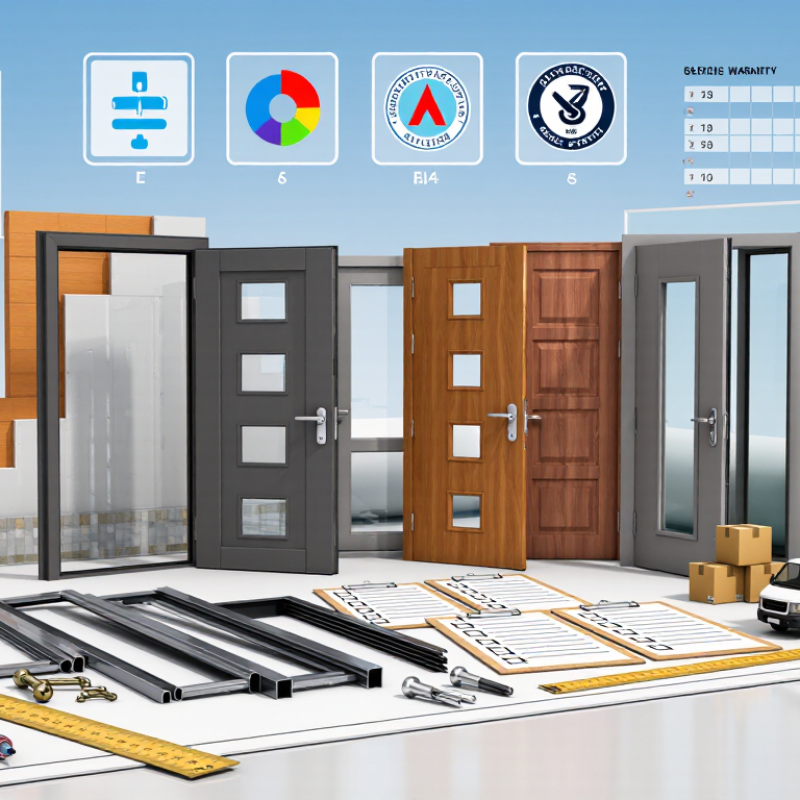
Define the Fire Door Requirements Before Requesting a Quotation
A reliable fire door quotation begins with a clear requirement, not a quick request for price. State the required fire-resistance period, such as 30, 60, or 90 minutes. Confirm the opening size, wall type, traffic level, and installation location. A door for a hospital corridor may need different hardware from one used in a warehouse.
Describe the complete door set, not only the leaf. Include the frame material, glazing, hinges, closer, lock, vision panel, threshold, and smoke seals. Mention whether the door is single or double leaf.
If the opening has unusual dimensions, attach a measured drawing and clear photographs. Small details matter. They can change the quotation considerably.
Ask suppliers to identify tested configurations and provide supporting certification for the proposed assembly. Check whether the test applies to the exact door, frame, hardware, and glazing combination. Local building requirements should also be confirmed by a qualified professional.
In practice, many quotation problems come from missing installation information, not dishonest pricing. I have seen schedules list “fire door” without naming the rating or swing direction. That wording is too vague. It invites assumptions.
Leave room for honest review, because the first specification may still contain errors. A complete request should separate supply, delivery, installation, and any site preparation costs. This makes comparisons more reliable and reduces unexpected changes later.

Compare Door Materials, Ratings, Certifications, and Required Features
7 Tips to Get the Best Fire Door Quotation
Tip 1: Compare the door material carefully. Steel often suits high-traffic areas, while timber can provide warmth and easier visual integration. Glazed doors improve visibility but need tested fire-resistant glass. Composite options may balance weight, strength, and cost.
Tip 2: Check the fire rating, not just the price. Confirm whether the quotation covers 30, 60, or 90 minutes of resistance. The complete door set matters. A rated leaf can fail if the frame, hinges, seals, or closer are unsuitable. Small details matter.
Tip 3: Request certification for the exact configuration. Ask for test reports, certification numbers, and permitted hardware combinations. Verify documents with the issuing body and local authority. Do not accept vague claims such as “fire approved.” Tip 4: Compare required features line by line, including smoke seals, intumescent strips, vision panels, panic hardware, and automatic closers.
Tip 5: Make installation part of the comparison. Poor fitting can reduce performance, even when the door is correctly manufactured. Tip 6: Ask whether future inspection and maintenance are included. This is often overlooked. Tip 7: Require a fully itemised quotation covering surveys, delivery, installation, certification, and remedial work.
A cheaper quotation may look attractive, but missing accessories can create unexpected costs. In practice, unclear specifications cause many disputes. I would also leave room for review, because site conditions sometimes reveal details no drawing showed.
Request Detailed Quotations From Qualified Fire Door Suppliers
A detailed fire door quotation reveals far more than a final price. Ask qualified suppliers to list the door rating, leaf thickness, frame material, and tested assembly. Request evidence of relevant certifications and recent inspection records. A low-cost quote may omit essential hardware.
Give suppliers accurate opening sizes, wall construction, traffic levels, and installation conditions. Include closers, hinges, locks, vision panels, seals, and thresholds in the request. The quotation should separate materials, delivery, installation, testing, and future maintenance. It should also identify exclusions, taxes, lead times, and warranty terms.
Ask how the proposed assembly performs when installed on site. Written confirmation matters. Check whether the installer has experience with similar buildings and can provide project references. I once saw a quotation that looked complete, yet it excluded frame preparation and final adjustment. That gap caused delays. My own review process is not perfect either; unusual wall conditions can be missed during a remote assessment. Arrange a site visit when measurements or access routes remain uncertain. Compare qualified suppliers line by line, not by headline price.
Check Pricing, Installation Scope, Warranties, and Delivery Terms
7 Tips to Get the Best Fire Door Quotation
A reliable quotation starts with comparable pricing. Ask whether the figure includes the door leaf, frame, hinges, closer, seals, glazing, and threshold. Confirm taxes, delivery, removal of old doors, and making good around the opening. A low price may exclude essential hardware. That difference matters.
Request a clear installation scope. It should identify site measurements, preparation, fitting, adjustment, waste removal, and final inspection. Ask who checks the door after installation. The quotation should reference suitable test evidence and applicable local requirements. Do not accept vague wording such as “standard fire door.” Get it written. Small omissions can become expensive variations.
Check the warranty period for materials and workmanship separately. Ask what cancels coverage, especially poor maintenance, unauthorised alterations, or unsuitable building movement. Delivery terms deserve equal attention. Confirm the lead time, unloading responsibility, storage conditions, and the process for reporting transport damage. Delivery matters. One practical improvement is to require photographs before installation. This creates useful records, although photographs cannot replace a competent inspection. Compare at least three detailed quotations, not three headline prices. A polished document can still hide unclear exclusions.
7 Tips to Get the Best Fire Door Quotation
Compare quotations by evaluating compliance, installation scope, warranty coverage, delivery terms, and price transparency—not price alone.
Suggested quotation review weighting: Product compliance and fire rating should receive the greatest attention, followed by installation scope. Warranty, delivery terms, and transparent pricing help identify hidden risks and long-term costs. Confirm all details against applicable local fire-safety codes and project specifications.
Evaluate Supplier Reliability Before Selecting the Best Quotation
7 Tips to Get the Best Fire Door Quotation
Evaluate Supplier Reliability Before Selecting the Best Quotation
Price can mislead. A dependable supplier should provide traceable test evidence, clear product specifications, and installation guidance. Check whether the quotation identifies the complete doorset, including the frame, seals, glazing, hinges, closer, and latch. Fire performance belongs to the tested assembly, not one attractive door leaf. Ask for evidence.
NFPA’s Fire Loss in the United States During 2023 report estimated 1,388,500 fires and approximately $22.2 billion in direct property damage. These figures show why a cheap, unsupported quotation deserves careful scrutiny. NFPA 80 also requires fire door assemblies to receive inspection at least annually where the standard is adopted. A reliable supplier should explain inspection access, maintenance duties, and replacement procedures before you sign.
Compare delivery records, technical response times, warranty terms, and installer qualifications. Ask for a sample inspection report and references from projects with similar fire ratings. Confirm that proposed hardware matches the tested doorset. Small substitutions can create large risks. Do not guess.
A supplier may have excellent paperwork but weak site coordination. That remains an uncomfortable possibility. My practical checklist can identify missing evidence, but it cannot replace a witnessed installation or competent local inspection. Select the quotation that remains transparent when challenged, not merely the one with the lowest total.
| No. | Quotation Evaluation Tip | Recommended Verification Dimension | Evidence to Request | Suggested Weight | Supplier A Score / 10 | Supplier B Score / 10 | Supplier C Score / 10 |
|---|---|---|---|---|---|---|---|
| 1 | Confirm the required fire-resistance rating | Door, frame, glazing, hardware, and seals should match the required rating, such as 30, 60, 90, or 120 minutes. | Project specification, test report, classification report, and product data sheet identifying the complete door-set configuration. | 20% | 9 | 7 | 9 |
| 2 | Check certification and test-standard compliance | Verify that testing is relevant to the target market and covers the complete assembly rather than the door leaf only. | Independent test documentation referencing applicable standards such as EN 1634-1, UL 10C, NFPA 80, or the project-specified equivalent. | 20% | 9 | 6 | 8 |
| 3 | Compare the quotation scope line by line | Identify whether the price includes the frame, hinges, closer, lockset, smoke seals, glazing, delivery, installation, and taxes. | Itemized quotation with quantities, specifications, unit prices, exclusions, optional items, currency, tax treatment, and validity period. | 15% | 8 | 8 | 7 |
| 4 | Evaluate supplier quality-control reliability | Assess traceability, incoming-material checks, production inspections, final inspection, and corrective-action procedures. | Quality-management certificate where applicable, inspection checklist, batch traceability method, nonconformance process, and sample inspection records. | 15% | 8 | 7 | 9 |
| 5 | Verify production capacity and lead time | Confirm that the quoted schedule covers approval, manufacturing, testing, packing, shipping, and installation coordination. | Written production schedule, stated monthly capacity, confirmed delivery milestones, shipping terms, and escalation procedure for delays. | 10% | 9 | 8 | 7 |
| 6 | Assess warranty and after-sales support | Review warranty duration, covered components, response time, spare-parts availability, and responsibility for installation defects. | Signed warranty terms, service-level commitment, maintenance instructions, spare-parts list, and documented claims process. | 10% | 8 | 6 | 8 |
| 7 | Use total cost of ownership instead of price alone | Compare purchase price together with installation, transport, maintenance, replacement parts, compliance risk, and potential delay costs. | Five-year cost estimate, delivery and installation breakdown, maintenance requirements, payment terms, and clearly stated commercial assumptions. | 10% | 8 | 9 | 7 |
| Weighted Reliability and Quotation Evaluation Result | 100% | 8.55 / 10 | 7.15 / 10 | 8.05 / 10 | |||
| Recommended selection approach | Select the highest-scoring quotation only after confirming that its certificates, scope, lead time, installation method, and warranty terms satisfy the project specification. | ||||||
(780) 669-9420