
Blog
- Home
- Blog
7 Best Mini Final Drive Options Which One Is Right?
Choosing a Mini Final Drive is rarely as simple as matching a model number. The right unit must suit your machine, working conditions, and operating habits. A compact excavator may need high torque for digging, while a tracked carrier may demand smoother travel and stronger heat control. Small differences matter. Mounting dimensions, hydraulic flow, reduction ratio, brake design, and shaft size can change performance significantly.
This guide examines seven practical Mini Final Drive options for different equipment needs. Each choice is considered through real workshop concerns, including installation space, seal quality, parts availability, service support, and long-term operating cost. A drive that looks affordable may become expensive if replacement parts are difficult to source. That lesson is easy to overlook. We will also discuss rated torque, travel speed, continuous duty limits, and compatibility with common hydraulic systems. These details help narrow the selection before you contact a supplier or begin installation.
No single final drive is perfect for every machine. The best option depends on verified specifications, not attractive photographs or vague promises. Check the original drive carefully. Record port positions, mounting holes, flange dimensions, and hydraulic requirements. Even experienced technicians can miss a small measurement. That happens. The options below are intended to support a more informed comparison, not replace professional inspection. When uncertain, confirm the data with the equipment manufacturer or a qualified hydraulic specialist. Reliability begins with accurate information.
What Is a Mini Final Drive and How Does It Work?
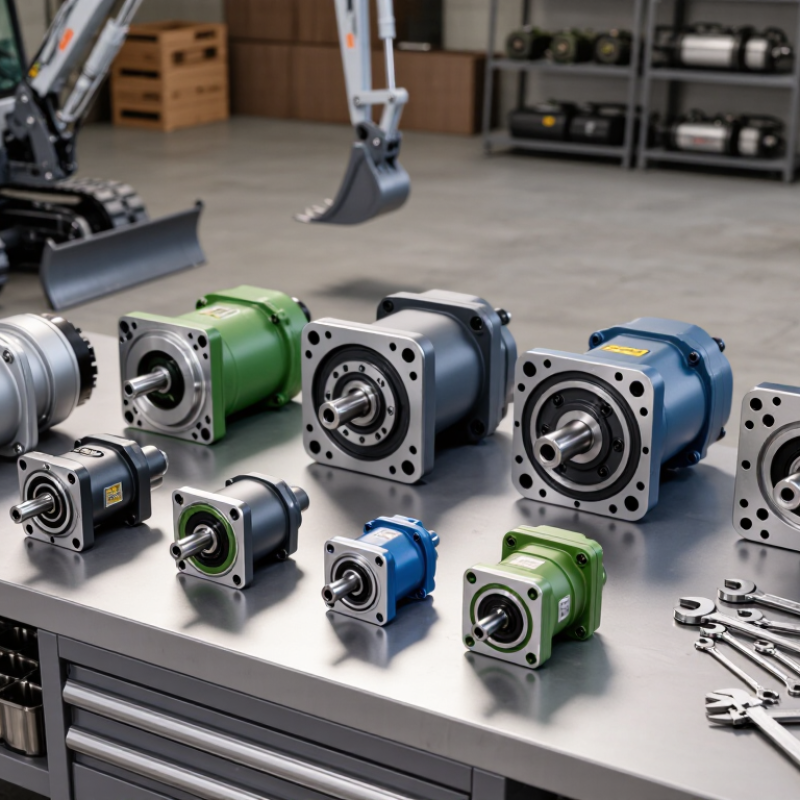
A mini final drive is the compact power unit that turns hydraulic energy into track movement. It usually combines a hydraulic motor, reduction gears, bearings, and a protective housing. Hydraulic fluid enters the motor and creates rotation. The planetary gear system then reduces speed while increasing torque. This lets a mini excavator climb, turn, and work on uneven ground with controlled force.
The final drive faces heavy loads near the tracks. Mud, stones, heat, and sudden direction changes can affect its service life. In practical maintenance, unusual noise, slow travel, oil leakage, or one track moving differently deserves attention. These signs may indicate worn gears, damaged seals, restricted hydraulic flow, or incorrect oil. Diagnosis is not always simple. A weak pump can look like a failing drive, which is an easy mistake to make.
Tips: Check the travel motor’s specifications, gear ratio, mounting pattern, shaft size, and hydraulic ports before choosing a replacement. Match the unit to the machine’s operating weight and working conditions. Clean the area before opening any connection. Small dirt particles can damage internal components quickly. Inspect track tension too, because an over-tight track adds unnecessary load. A professional pressure test can confirm whether the problem is hydraulic or mechanical. Even experienced technicians can miss a blocked filter or a slightly misaligned fitting.

Seven Mini Final Drive Options for Different Equipment Needs
Mini final drives must match the machine, not just its rated horsepower. A 2024 Grand View Research report valued the global excavator market at about USD 63.3 billion in 2023. It also projects steady growth through 2030. That expansion increases demand for compact, durable travel systems. A compact planetary drive suits mini excavators working in gardens and narrow trenches. A high-torque planetary drive handles heavier digging and frequent slope travel. A two-speed drive adds control when moving between work areas and job sites.
A radial piston drive fits demanding duty cycles with repeated starts, stops, and shock loads. An axial piston drive offers smooth travel for compact carriers and tracked platforms. A wheel-motor-style final drive works better where clearance and simple installation matter.
A sealed drive with reinforced bearings supports muddy landscaping and utility work. A heavy-duty drive suits drilling attachments, though it may add unnecessary weight. That choice is easy to underestimate.
Off-Highway Research reported continued strength in compact construction equipment demand in its 2024 market outlook. However, reported machine growth does not guarantee longer component life. I would check sprocket size, reduction ratio, hydraulic flow, case-drain limits, and brake torque together. Catalog torque alone can mislead. Field experience shows poor hose routing often damages an otherwise suitable drive. Soil, incline, duty cycle, and operator habits still matter. A smaller drive may be efficient, but not forgiving.
Key Differences in Power, Torque, Speed, and Durability
7 Best Mini Final Drive Options: Which One Is Right?
Choosing a mini final drive starts with the machine’s actual workload, not its advertised top speed. Compact planetary drives usually offer strong torque in a small housing. High-torque versions suit digging, climbing, and repeated starts. Hydraulic drives can deliver smooth control, while electric drives provide efficient response and simpler maintenance. Worm gear units may reduce cost, but their heat management and efficiency require closer attention. Spur and helical gear designs can run quickly, though they may tolerate less shock loading. Heavy-duty sealed units protect internal parts in mud, dust, and standing water.
Torque matters during pushing and turning. Speed matters during travel time. Power connects both. A drive with high speed but limited torque may stall on a slope. A powerful unit may move slowly and create extra heat. Durability depends on more than gear material. Check bearing size, lubrication quality, seal design, duty cycle, and allowable radial load. Small errors here become expensive repairs. That lesson is easy to overlook.
Tips: Match the drive to real operating conditions. Record machine weight, travel speed, sprocket size, hydraulic flow, and pressure. Compare continuous torque, peak torque, and reduction ratio separately. Inspect oil after early operating hours. Metallic particles or unusual noise deserve immediate attention. Also, leave a safety margin. The perfect specification on paper can perform poorly when tracks are overloaded, terrain changes, or maintenance becomes irregular.
7 Best Mini Final Drive Options Which One Is Right? - Key Differences in Power, Torque, Speed, and Durability
| Option | Drive Design | Typical Reduction Ratio | Typical Output Torque | Typical Output Speed | Approx. Efficiency | Durability Profile | Best Use | Main Advantage | Main Limitation |
|---|---|---|---|---|---|---|---|---|---|
| 1. Compact Planetary Hydraulic Drive | Hydraulic motor with multi-stage planetary gearbox | 10:1–30:1 | 1,000–8,000 N·m | 20–150 rpm | 80–90% | Very high shock-load capacity when correctly lubricated | Mini excavators, tracked carriers, compact construction equipment | High torque in a compact package | Requires clean hydraulic oil and correctly matched flow and pressure |
| 2. Two-Stage Planetary Gearbox | Electric motor or hydraulic input with two planetary stages | 9:1–25:1 | 300–3,000 N·m | 50–300 rpm | 90–96% | High load capacity and good resistance to intermittent shock | Robotics, mobile platforms, compact winches, electric vehicles | Excellent torque density and efficiency | More expensive and sensitive to poor lubrication or misalignment |
| 3. Helical Gear Final Drive | Parallel-axis helical gears, usually single or double stage | 3:1–15:1 | 150–2,000 N·m | 100–600 rpm | 94–98% | High continuous-duty durability with low vibration | Conveyors, automated equipment, light electric machinery | Quiet operation and strong continuous efficiency | Lower reduction per stage and less suitable for extreme shock loads |
| 4. Worm Gear Drive | Worm shaft driving a bronze or hardened worm wheel | 10:1–60:1 | 100–1,500 N·m | 15–200 rpm | 50–85% | Moderate; heat and sliding wear increase under continuous heavy loads | Lifts, gates, positioning systems, low-speed machinery | High reduction ratio and compact right-angle layout | Lower efficiency and greater heat generation than planetary or helical gears |
| 5. Cycloidal Reducer | Eccentric bearing with cycloidal disc and output pins | 10:1–100:1 | 200–4,000 N·m | 10–250 rpm | 80–93% | Very good shock-load resistance and low backlash when properly built | Robotic joints, indexing systems, compact high-torque drives | High reduction ratio with strong overload tolerance | More complex construction and possible vibration at higher speeds |
| 6. Chain-and-Sprocket Reduction | Roller chain with driver and driven sprockets | 2:1–8:1 per stage | 100–2,500 N·m | 50–1,000 rpm | 95–98% when aligned and lubricated | Good, but exposed chains require regular tensioning and protection | Agricultural equipment, conveyors, simple mobile machines | Low cost, easy ratio changes, and straightforward maintenance | Needs more space and produces noise, backlash, and wear over time |
| 7. Direct-Drive Torque Motor | Large-diameter electric motor with no mechanical reduction stage | 1:1 | 50–1,500 N·m | 10–500 rpm | 90–97% motor-system efficiency | Excellent mechanical reliability because there are few wear components | Precision turntables, AGVs, robotics, low-speed electric drives | Very low backlash, quiet operation, and minimal maintenance | Requires a larger motor, higher current, and advanced control electronics |
Note: Values are typical engineering ranges for compact final-drive systems. Actual torque, speed, efficiency, and service life depend on motor size, hydraulic pressure or voltage, duty cycle, lubrication, load direction, ambient conditions, and installation quality.
How to Match a Final Drive to Your Mini Machine
Matching a final drive to a mini machine starts with operating data, not catalogue size. Record the machine’s weight, hydraulic flow, pressure, sprocket diameter, travel speed, and ground conditions. A 2024 U.S. Department of Energy hydraulics report places typical hydraulic-system efficiency near 50–60%. That loss affects travel force and heat. Select a drive with a continuous torque rating above the machine’s calculated requirement, not merely its peak output.
Check the numbers twice. A compact excavator working on packed clay needs different gearing from one moving across soft soil. The 2024 Off-Highway Research outlook identifies compact equipment as a major growth area, increasing demand for smaller, high-duty powertrains. This trend makes thermal capacity important. A high reduction ratio improves pushing force, but it can reduce travel speed. A lower ratio moves faster, yet may stall on slopes. There is no universal winner.
Installation details often decide reliability. Match the hydraulic motor’s displacement, case-drain limits, mounting pattern, shaft dimensions, and port orientation. Confirm the final drive’s continuous duty cycle, because occasional peak torque can hide overheating. I have seen selections fail after focusing only on rated pressure. That is an easy mistake. Leave a practical safety margin, then test travel temperature, turning resistance, and track speed under real load. Paper calculations help, but field evidence should have the final word.
7 Best Mini Final Drive Options: Which One Is Right?
Comparing typical mechanical efficiency helps match a final-drive design to a mini excavator, loader, tracked carrier, or compact utility machine.
Values are representative engineering figures for compact drive systems, not guaranteed ratings. Planetary and helical systems generally provide high efficiency and compact packaging, while worm drives offer strong self-locking characteristics but typically generate more heat. Final selection should also consider torque, speed, duty cycle, shock loading, braking, sealing, and available installation space.
Installation, Maintenance, and Long-Term Performance Factors
Choosing among seven mini final drive options begins with machine weight, hydraulic flow, and mounting dimensions.
Installation errors often cost more than the drive itself. Before removal, clean around the hoses and photograph every connection. Confirm the replacement’s port position, shaft diameter, bolt pattern, and reduction ratio.
Use calibrated torque tools, fresh seals, and specified hydraulic oil. Do not force misaligned bolts. A drive should sit flat against the hub, with no visible gap.
After installation, raise the machine safely and run each track slowly. Listen for grinding, pulsing, or uneven movement. Stop immediately if the case heats rapidly or leaks appear.
Long-term performance depends heavily on contamination control.
Inspect hoses, drain plugs, and track tension during scheduled service. Overtight tracks increase bearing load and heat. Loose tracks can derail and damage nearby components.
Check the oil after the initial operating period, because assembly debris may appear. Metallic flakes deserve investigation, not dismissal.
In field work, I have seen a correctly matched drive fail after dirty hydraulic fluid entered through an open hose. That mistake is easy to repeat.
A compact unit may suit light landscaping, while a higher-duty option handles repeated travel better. Match the drive to cycle time, slopes, soil resistance, and expected working hours.
Keep records of oil condition, operating temperature, and unusual noise. No inspection schedule is perfect.
I still recheck fittings after the first day, because small leaks can hide beneath fresh mud. A short idle test cannot reveal every weakness.
Performance becomes clearer after several loaded cycles.
(780) 669-9420