2026 Best Resistive Touch Screen Types for Buyers?
Choosing the best Resistive Touch Screen in 2026 requires more than comparing prices or advertised touch counts. Buyers should match the screen type with real working conditions, user habits, and equipment design. A factory operator wearing thick gloves needs different performance from a customer using a kiosk with a bare finger.
Four-wire resistive screens remain attractive for cost-sensitive products and simple control panels. They can detect pressure from gloves, plastic tools, and styluses. Five-wire resistive screens often provide better durability because the sensing layer handles repeated pressing more effectively. Eight-wire designs may offer improved signal stability, although their value depends on the controller and application. These differences can look minor on paper. They become obvious after months of daily operation.
This guide examines touch accuracy, surface hardness, optical clarity, response time, temperature range, and expected service life. It also considers installation depth, interface compatibility, sealing requirements, and replacement availability. A bright, responsive panel may still disappoint if sunlight washes out the display. A rugged screen may feel less smooth during frequent menu navigation. No type wins everywhere.
Reliable purchasing decisions should combine manufacturer datasheets, sample testing, and field feedback. Buyers should press the actual panel with gloves, a stylus, and repeated contact points before approving a large order. That practical test often reveals weaknesses that specifications hide. Some recommendations may remain application-dependent. That is worth admitting. The best choice is not always the newest design, but the one that performs consistently in its intended environment.
What Is a Resistive Touch Screen and How Does It Work?
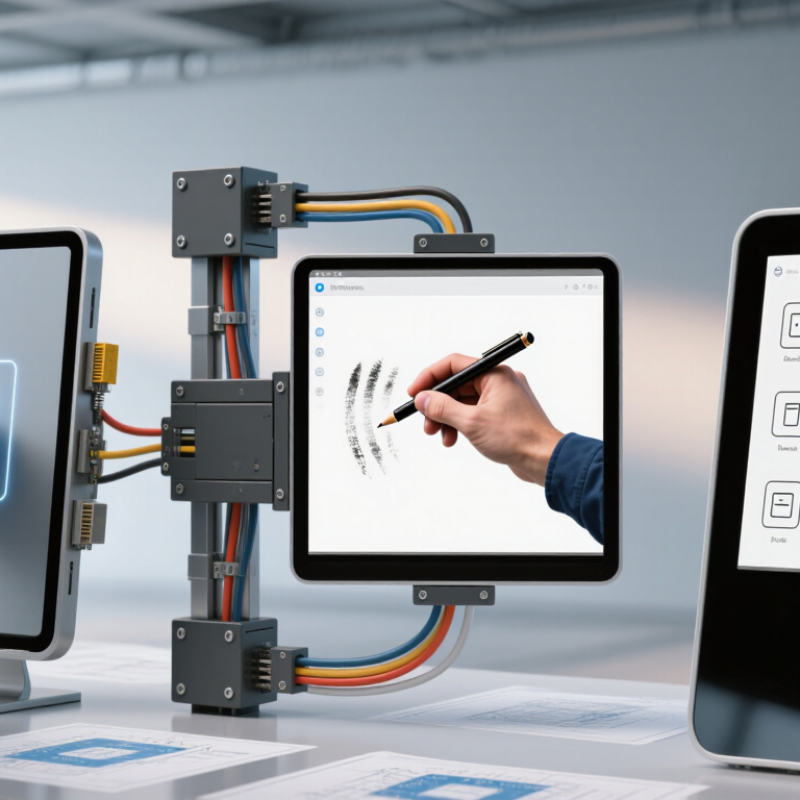
A resistive touch screen detects pressure rather than body heat or electrical conductivity. Its surface contains two thin conductive layers, separated by tiny spacer dots. Pressure closes the circuit. When a finger, gloved hand, or plastic stylus presses the panel, the layers meet at one location. The controller measures changes in voltage across the layers and calculates the touch coordinates. This simple structure explains why resistive screens work in workshops, medical settings, kitchens, and outdoor terminals.
Common designs include four-wire and five-wire constructions. Four-wire panels can be economical, but repeated pressing may gradually affect calibration. Five-wire panels usually offer better durability because the lower layer handles most sensing work. In practical evaluations, buyers should test accuracy near corners, response through gloves, and performance after repeated taps. A screen may feel responsive in a showroom yet behave differently with dust, moisture, or a thick protective cover. That detail is easy to miss.
Resistive technology usually provides strong resistance to accidental contact. It can also remain usable where users cannot remove gloves. However, many models offer weaker multi-touch performance and slightly lower optical clarity than newer alternatives. The surface may require firm pressure, which can slow fast data entry. I have found that “rugged” does not always mean comfortable. Buyers should compare pressing force, surface hardness, expected touch cycles, and controller compatibility. A careful hands-on trial remains more reliable than a specification sheet alone.
Which Resistive Touch Screen Technologies Are Available in 2026?
In 2026, buyers can choose several resistive touch screen technologies. The common 4-wire design remains affordable and simple. It suits kiosks, point-of-sale terminals, and basic industrial panels. However, its calibration can drift after repeated pressing. That weakness is easy to overlook.
The 5-wire resistive screen offers better durability and longer touch accuracy. It detects pressure through a stable bottom circuit, even when the top layer wears. Eight-wire designs add sensing paths for improved calibration and fault monitoring. They can help in medical or factory interfaces, where gloves, styluses, and dust are normal. Force-sensitive resistive technology is also gaining attention for applications needing pressure-level input, not only touch location. MarketsandMarkets’ 2024 touchscreen display research forecasts market growth above 6% annually through 2029. Its application analysis highlights industrial and medical equipment as continuing demand areas. Still, market reports often group resistive products with broader touchscreen categories. Buyers should question overly precise type-share claims.
Tips: Match the screen to the user’s pressure habits. A 4-wire panel may work for occasional menu selection. Choose 5-wire or 8-wire construction for frequent tapping and harsh workspaces. Check the specified touch life, operating temperature, surface hardness, and calibration method. A simple test with gloves and a blunt stylus can reveal practical problems. Do not assume higher wire counts guarantee better performance. Controller quality, sealing, and installation pressure matter too. Even experts can miss that detail.
How Do Resistive Touch Screen Types Compare in Performance?
Resistive touch screen types differ most in accuracy, durability, and response under real working conditions. A 4-wire panel usually costs less and responds well to a finger, glove, or plastic stylus. However, its sensing layers may wear faster, causing calibration drift after repeated pressing. It suits simple terminals and compact control panels.
A 5-wire panel generally offers better durability because the sensing function remains on one substrate. It can handle frequent touches, heavier pressure, and rough industrial use more reliably. Its accuracy often stays more consistent over time. An 8-wire design can provide additional sensing paths, but performance depends heavily on controller compatibility and panel size. More wires do not automatically mean better touch quality.
In a practical test, press the same target with a bare finger, work glove, and blunt stylus. Check whether the cursor lands near the contact point. Then repeat the test near the screen edges. A 5-wire panel usually performs more steadily there, while a 4-wire panel may need recalibration. Optical clarity also matters; thicker layers can reduce brightness and create visible reflections. I once focused too much on pressure sensitivity and overlooked glare under overhead lighting. That was a poor evaluation habit. Buyers should test response time, edge accuracy, surface wear, and readability in the actual installation environment.
What Factors Should Buyers Evaluate Before Choosing a Type?
Choosing the best resistive touch screen in 2026 requires more than comparing prices. Fortune Business Insights’ 2024 Touch Screen Market report valued the broader market at USD 81.74 billion and projects USD 155.6 billion by 2032. That growth does not prove resistive technology fits every application. It does show why careful specification matters.
Start with the operating environment. Four-wire screens suit cost-sensitive, smaller interfaces, but their touch accuracy can drift after repeated use. Five-wire designs usually offer better durability and longer calibration stability. Eight-wire options can improve redundancy, yet they may increase controller and integration costs. I have seen buyers overlook glove use, stylus pressure, and wet-finger performance. That mistake appears late, during field testing. Test the actual enclosure, not only a loose panel.
Optical clarity, surface hardness, response time, and expected touch cycles deserve equal attention. A 2023 MarketsandMarkets analysis identifies industrial automation, healthcare, and transportation as important touchscreen application areas. These settings often demand reliable operation under vibration, dust, and temperature changes. Ask suppliers for measured data, including viewing transmission, operating temperature, electrostatic-discharge performance, and calibration drift. Check compliance with relevant IEC testing methods. Total cost includes installation, replacement panels, controller compatibility, and downtime. A cheaper screen can become expensive quickly. I would also question impressive durability claims without independent test conditions.
2026 Best Resistive Touch Screen Types for Buyers
What factors should buyers evaluate before choosing a type?
The relative 1–5 ratings summarize common engineering trade-offs: 4-wire panels generally offer the lowest cost, 5-wire panels usually provide better durability and calibration stability, and 8-wire panels can offer improved signal redundancy and design flexibility. Actual performance depends on panel construction, cover material, controller quality, operating environment, and integration requirements.
Which Resistive Touch Screen Type Fits Different Applications?
2026 Best Resistive Touch Screen Types for Buyers?
Choosing a resistive touch screen depends on the application, not just the price. A 4-wire panel suits simple terminals, handheld instruments, and older control systems. It responds to a finger, glove, or plastic stylus. Its lower cost is useful, but frequent pressing can reduce calibration accuracy over time.
A 5-wire resistive screen is often better for factory equipment, medical interfaces, and public kiosks. Its sensing layer is more durable, so repeated touches usually cause less drift. It also works well when operators wear thick gloves. However, its image clarity may be lower than projected-capacitive technology. That trade-off matters in sunlight.
A 8-wire design can support larger displays and demanding control panels. It offers stable coordinate detection when the screen area increases. Engineers should check surface hardness, sealing, temperature range, and expected touch cycles. Dusty workshops need a sealed front surface. Outdoor equipment needs protection against moisture and glare.
Match the screen to the user.
For menu selection, 4-wire technology may be enough. For continuous industrial input, 5-wire technology is usually safer. Large specialized displays may justify 8-wire construction. Yet specifications can look better than real use. Test the panel with actual gloves, tools, and lighting before approval. That step is easy to skip, and regrettable later. Calibration procedures also deserve attention because even a durable panel can feel inaccurate after installation.
 (780) 669-9420