2026 Best Micro Screw Suppliers for Global Buyers
Global sourcing for Micro Screw components can look straightforward until a prototype calls for a specific thread, head style, or material. Then a small mismatch can delay assembly or require a drawing revision. Small parts matter.
This guide explores suppliers serving international buyers in 2026, with attention to practical evidence rather than broad promises. Useful checks include dimensional capability, material options, surface finishes, production capacity, and export packaging. Buyers should also ask for current drawings, inspection records, sample availability, and clear lead-time estimates. A polished catalog helps, but it does not prove that a supplier can consistently meet a particular specification.
The right choice depends on the application and the buyer’s quality requirements. Compare suppliers against the same drawing and tolerance needs, then review samples before committing to larger orders. Ask how defects are recorded and how changes are approved. These questions can reveal gaps early. Still, no checklist removes every risk; supplier information may be incomplete, and a successful sample does not guarantee every production batch will match. That uncertainty deserves attention, not a confident guess.
The supplier profiles ahead are intended to help global buyers narrow their search and prepare better questions. Treat any shortlist as a starting point. Verify claims directly, confirm commercial terms in writing, and reassess when specifications or order volumes change.
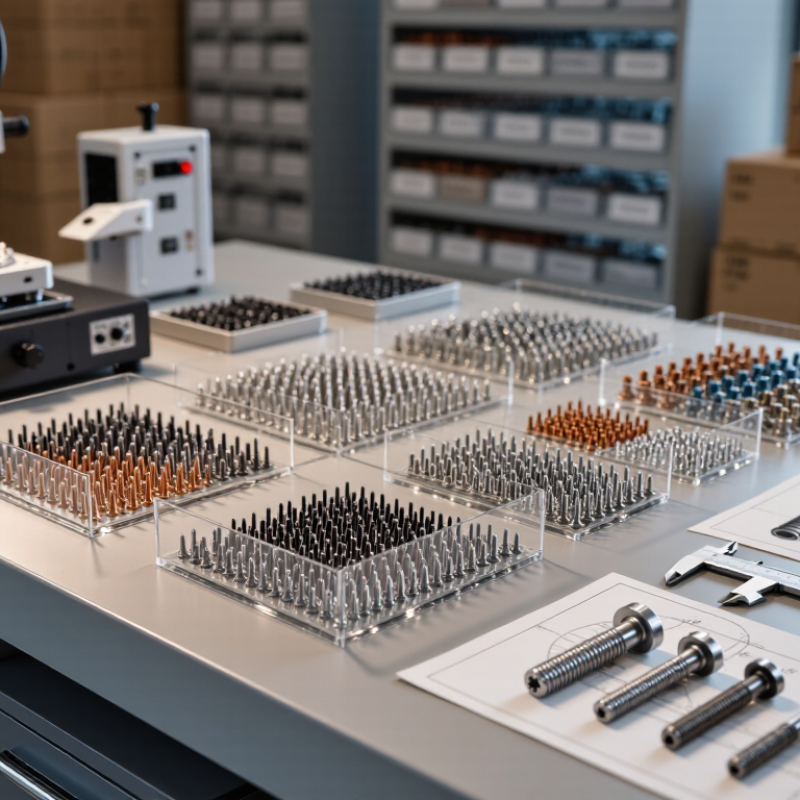
What Micro Screws Are and How They Are Used
Micro screws are miniature fasteners used where space and weight are limited. They commonly secure lenses, sensors, small motors, medical instruments, and compact electronic assemblies. Some are only a few millimeters long. Their small size makes them easy to overlook, but a poor fit can damage delicate threads or shift an assembled component.
Choosing a micro screw starts with the details: thread diameter and pitch, length, head style, drive type, and material. Stainless steel may suit parts exposed to moisture, while alloy steel can provide strength in compact assemblies. A slotted or Phillips drive is familiar, but tiny recesses can strip under excessive torque. In practice, the correct driver and a controlled tightening method matter as much as the screw itself. Check samples against the actual mating hole; drawings do not always reveal assembly difficulties.
For global buyers, supplier checks should cover dimensional tolerances, material documentation, inspection methods, and packaging. Ask how thread gauges and optical measuring tools are used, especially for recurring production orders. Keep samples from approved batches for comparison. Tiny differences matter. Yet even a clear specification can miss a practical issue, such as screws spilling from packaging or being hard to pick with automated equipment. Discuss those handling details before production begins.
Key Criteria for Evaluating Micro Screw Suppliers
Choosing a micro screw supplier starts with the part’s real operating conditions, not a catalog size. Check whether the supplier can hold the required diameter, thread pitch, and head dimensions across repeat production. Ask for inspection records and sample parts measured with suitable optical equipment. A screw that looks correct may still bind in a narrow housing.
Review material options, heat treatment, and surface finish together. These choices affect strength, corrosion resistance, and assembly behavior. Ask how batches are identified and how nonconforming parts are handled. Clear answers matter. Delivery capacity matters too: confirm lead times, minimum order quantities, and how urgent changes are managed. One point is easy to miss: test screws in the actual mating component, because drawings cannot reveal every assembly issue.
Tips: Send a controlled drawing and a representative mating part when possible. Request a small trial batch, then check fit, drive engagement, and head height before approving volume production. Keep the test conditions consistent. It may feel slower, but it can expose problems early. No supplier is perfect; compare documented performance and communication, not confident promises alone.
Leading Micro Screw Suppliers for Global Buyers in 2026
Leading Micro Screw Suppliers for Global Buyers in 2026 should offer more than a low unit price. Grand View Research estimated the global industrial fasteners market at USD 90.42 billion in 2023 and projected a 4.7% compound annual growth rate from 2024 to 2030. This broad category includes many fastener types, not micro screws alone, but it signals strong demand for dependable sourcing. Buyers should check thread dimensions, material specifications, surface finish, and production tolerances. A screw only a few millimeters long can still cause assembly delays if its head slot or thread varies between batches.
Ask suppliers for sample parts, inspection records, and clear answers about production capacity and lead times. For international orders, confirm packaging details and how the supplier handles nonconforming parts. Documentation helps, but it does not guarantee consistency. That part deserves scrutiny.
Tips: Send a drawing with tolerances and application details. Test samples in the actual assembly, not just with calipers. Keep a small buffer of approved parts; demand forecasts can be wrong.
2026 Best Micro Screw Suppliers for Global Buyers
Global buyer reference: ISO metric coarse thread pitches for selected small screw sizes
Thread pitch is the distance between adjacent thread crests. Values shown are standard ISO metric coarse-thread pitches, not supplier performance ratings; buyers should confirm the required thread specification with their manufacturer.
How Supplier Capabilities and Certifications Compare
Global buyers should compare micro-screw suppliers on measurable process control, not certificate count alone. The ISO Survey 2022 recorded 1,265,216 ISO 9001 certificates worldwide. That scale shows how common quality-management certification is; it does not prove a supplier can hold a 0.1 mm feature consistently. Ask for capability data, inspection plans, and traceability from material lot to finished screw. On a sample run, review thread dimensions, head geometry, and plating thickness—not just the attractive first-piece report.
Certifications should match the application. ISO 9001 supports documented quality processes, while IATF 16949 may be relevant for automotive supply chains. ISO 14001 indicates an environmental management system, not tighter dimensional control. Look for calibrated optical comparators or vision systems, documented gauge intervals, and statistical process control records. A supplier may show strong averages but weak lot-to-lot variation. That deserves a closer look. Paperwork alone is not enough.
Tips: Request recent inspection results from a production lot, not only a prototype. Confirm how nonconforming parts are contained and reported. If a supplier cannot explain its measurement method clearly, pause—even when the quotation is excellent.
How to Select and Qualify a Supplier for Your Needs
2026 Best Micro Screw Suppliers for Global Buyers
How to Select and Qualify a Supplier for Your Needs
A reliable micro screw supplier should prove more than production capacity. Ask for material certificates, lot traceability, and inspection records tied to your drawing revision. Check critical dimensions, thread fit, head height, and coating thickness. For a sample lot, request measurements from several points in the run, not just hand-picked pieces. Small fasteners leave little room for error.
The ISO Survey 2022 reported more than 1.2 million ISO 9001 certificates worldwide. Certification can indicate a documented quality system, but it does not guarantee that a supplier can hold your specific tolerances. Request the control plan and calibration records for the gauges used on your parts. Then compare sample results with your own inspection. A neat report is useful; a clear response to a failed measurement matters more.
Tips: Send a controlled drawing and expected annual volume before requesting a quote. Ask how the supplier separates lots and handles tool wear. Run a pilot order under realistic assembly conditions. Watch for inconsistent seating or stripped threads. One detail buyers sometimes miss: packaging can damage tiny screws before they reach the line. Check it, too.
 (780) 669-9420