2025 Top Valve Applications You Need to Know for Future Innovations
In the ever-evolving landscape of industrial technology, understanding the future of valve applications is critical for innovation and efficiency. Experts like Dr. Emily Tran, a prominent figure in fluid dynamics and valve engineering, highlight the importance of staying ahead in this field. She asserts, “The dedication to exploring advanced valve applications today will dictate the efficiency and sustainability of our industrial processes tomorrow.”
As we look toward 2025, several key trends in valve applications are poised to redefine how industries operate. From smart valve technologies that integrate IoT capabilities to advanced materials that enhance durability and performance, the future is ripe with opportunities. Industries ranging from oil and gas to pharmaceuticals are increasingly recognizing the transformative potential of these innovations, making it essential for professionals to gain insight into the latest advancements.
This article aims to delve into the top valve applications that will shape the future landscape, providing readers with knowledge that will not only enhance their understanding but also prepare them for the challenges and opportunities that lie ahead in this vital sector.
The Role of Smart Valves in Industry 4.0 and Data Integration
The integration of smart valve technology is poised to be a game changer in the context of Industry 4.0. As various industries increasingly adopt digital solutions, smart valves are becoming essential components for optimizing operations. With their ability to collect and transmit real-time data, these valves facilitate improved decision-making and enhance process efficiencies. This technological evolution is reflected in the significant growth projections for the global valves market, expected to reach USD 137.90 billion by 2033.
Moreover, the rise of IoT-enabled smart valve solutions is set to drive competitiveness within sectors reliant on automated processes. The North American control valve market alone is anticipated to grow from USD 2.305 billion in 2025 to USD 3.018 billion by 2030, showcasing a compound annual growth rate of 5.54%. As industries strive for greater integration of data across supply chains, the adoption of smart valves not only supports operational excellence but also contributes to the overarching goals of sustainability and resource efficiency.
2025 Top Valve Applications You Need to Know for Future Innovations
| Application Area |
Type of Valve |
Integration Level |
Data Utilization |
Industry Impact |
| Water Management |
Smart Control Valve |
High |
Real-time flow monitoring |
Improved resource allocation |
| Oil & Gas |
Electric Actuated Valve |
Medium |
Predictive maintenance analytics |
Increased safety and efficiency |
| Manufacturing |
Smart Pneumatic Valve |
High |
Data-driven decision making |
Enhanced production efficiency |
| HVAC Systems |
Thermostatic Valve |
Low |
Temperature regulation data |
Energy efficiency improvements |
| Food Processing |
Sanitary Valve |
Medium |
Quality assurance data |
Product safety enhancements |
Emerging Trends in Water Treatment and the Adoption of Specialized Valves
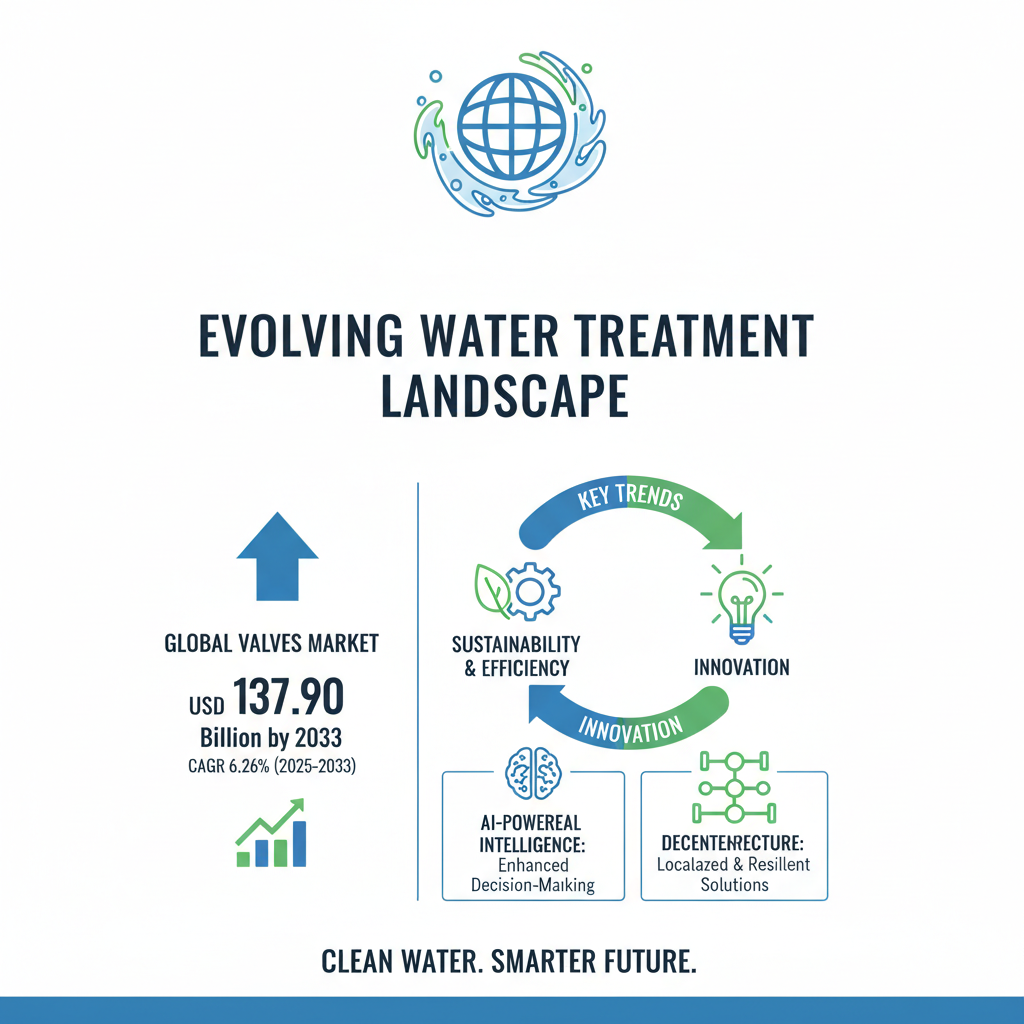
The landscape of water treatment is rapidly evolving, propelled by emerging trends and the growing adoption of specialized valves. With the global valves market anticipated to reach USD 137.90 billion by 2033, rising at a CAGR of 6.26% from 2025, the industry's focus is shifting towards sustainability and improved efficiency. Key innovations include AI-powered operational intelligence, which enhances decision-making in water management systems, and decentralized infrastructure, that allows for more localized and resilient water treatment solutions.
Significant growth is also noted in specific valve segments. For instance, the Slide Gate Valves Market is expected to reach USD 2.6 billion by 2035, showcasing a 2.7% CAGR between 2025 and 2035. The demand for PTFE and PFA Lined Diaphragm Valves is projected to surge, with an expected market size of USD 498.0 million and a 5.7% CAGR during the forecast period. The insights these trends provide are invaluable for stakeholders aiming to leverage innovations in water treatment technology, ensuring both ecological sustainability and operational efficiency.
Innovations in Oil and Gas: The Impact of Advanced Valve Technologies
The oil and gas industry is on the brink of transformation, driven by the advent of advanced valve technologies that promise to enhance efficiency and safety across operations. These innovations, from smart valves equipped with IoT capabilities to automated control systems, are significantly reducing the risk of leaks and failures. By implementing such technologies, companies can effectively streamline processes while adhering to stringent environmental standards.
Tips: When selecting valve technologies, consider the specific application and environment. High-pressure systems may require different materials and sealing methods compared to low-pressure setups. Always prioritize compatibility with existing systems to minimize disruptions during integration.
Moreover, these advanced valve technologies not only improve operational efficacy but also play a crucial role in predictive maintenance. By utilizing data analytics, companies can monitor valve performance in real-time, allowing for timely interventions and minimizing downtime. This proactive approach ensures that operations remain efficient while also extending the lifespan of critical equipment.
Tips: Regular training for employees on new technologies is essential. Ensure that your workforce is equipped with the knowledge to utilize advanced features effectively, enabling them to respond quickly to any anomalies or performance issues. Adapting to these innovations will position your company for future growth and sustainability.
Advancements in Biopharmaceuticals and Their Demand for Precision Valves
The biopharmaceutical sector has seen remarkable advancements in recent years, primarily driven by the growing demand for precision in drug development and manufacturing processes. According to a recent report by MarketsandMarkets, the global biopharmaceuticals market is projected to reach $526.0 billion by 2025, reflecting a compound annual growth rate (CAGR) of 8.3% from 2020. This surge necessitates the integration of high-performance valve systems that can ensure the integrity and accuracy of biopharmaceutical applications.
Precision valves are critical in areas such as drug formulation, bioprocessing, and sterile manufacturing. The need for precise control of fluid dynamics in these processes cannot be overstated, as even minimal variations can affect product efficacy and safety. A study by Research and Markets estimates that the market for precision valves in biopharmaceutical applications will grow at a CAGR of 6.5%, highlighting the industry's shift towards automated processes and smart technologies. This growing demand for precision valves not only supports enhanced quality control but also drives innovation in valve design and materials, paving the way for future breakthroughs in the biopharmaceutical field.
Sustainability Initiatives Driving Valve Innovations in Renewable Energy Sectors
In recent years, the renewable energy sector has been at the forefront of driving valve innovations, with sustainability initiatives shaping the demand and design of valve applications. According to a report by MarketsandMarkets, the global valve market in renewable energy is expected to reach USD 13.25 billion by 2025, growing at a CAGR of 6.8% from 2020. This growth is largely fueled by the increasing adoption of clean energy sources like wind and solar power, which require advanced valves for effective fluid control and system efficiency.
Moreover, as industries strive for net-zero emissions, valves that facilitate the handling of biofuels and hydrogen are gaining prominence. A study by ResearchAndMarkets highlights that the demand for hydrogen as an energy carrier is projected to surge, pushing the valve technology market for hydrogen-related applications to grow significantly. This shift not only emphasizes the need for high-performance, corrosion-resistant materials but also demands innovative designs that can meet the rigorous safety standards required in renewable energy installations. With these advancements, the valve sector is set to play a crucial role in the transition towards a sustainable energy future.
 (780) 669-9420